
Pneumatic vs Hydraulic Light Tower Mast: Buyer Guide
Compare pneumatic and hydraulic light tower masts by duty cycle, controls, stored energy, inspection, maintenance, and acceptance testing.
Compare pneumatic and hydraulic light tower masts by drive medium, deployment frequency, service access, payload or stability needs, and available model documents—then confirm the selected unit’s manual before awarding a configuration. This page is a side-by-side decision aid, not a substitute for a single-system evaluation or an operator manual.
Part 1. What decision does a pneumatic-vs-hydraulic comparison actually resolve?
It resolves which mast-drive family should enter shortlisting. It does not decide trailer versus cart chassis, diesel versus solar power, lux layout, or whether a specific Keyyou SKU is already approved for the site.
| Decision | Belongs here | Belongs elsewhere |
|---|---|---|
| Air-driven vs fluid-driven mast | Yes | — |
| Detailed pneumatic evaluation | No | Pneumatic lifting evaluation guide |
| Detailed hydraulic selection | No | Hydraulic lifting selection guide |
| Hand-crank vs electric mast | No | Hand-crank vs electric mast comparison |
| First deployment after arrival | No | Trailer setup checklist |
Part 2. How do the two mast drives differ in operating principle?
A pneumatic mast uses compressed air or gas-assisted extension. A hydraulic mast uses pressurized fluid in cylinders and a pump or power pack.
Industry overviews commonly frame pneumatic systems around lighter or faster air-driven travel and hydraulic systems around heavier-duty fluid-driven control. Those are comparison prompts, not Keyyou ratings.
| Facet | Pneumatic mast focus | Hydraulic mast focus |
|---|---|---|
| Drive medium | Air / gas-assisted extension | Hydraulic fluid and cylinders |
| Typical buyer question | Air supply, seals, and leak response | Pump, hoses, fluid condition, and holding control |
| Common trade-off language | Simpler fluid system vs air-system care | Stronger powered lift vs hydraulic service needs |
| What to verify next | Selected model documents | Selected model documents |
Important: Do not import another brand’s height, lift time, or payload table into a Keyyou award decision. Source: selected model operator manual; industry mast comparison language.
Part 3. Which site factors should tip the comparison?
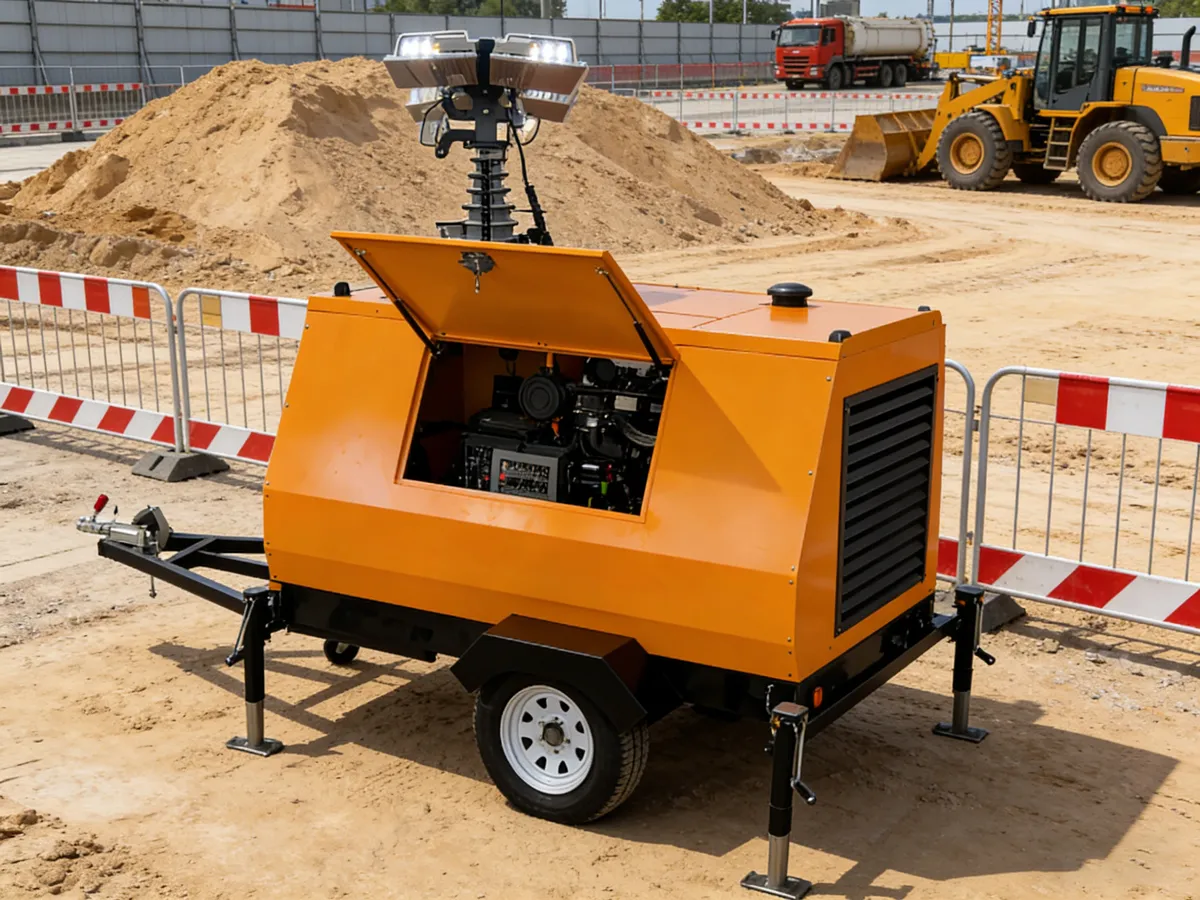
Atlas Copco’s light-tower selection guidance ties mast choice to application: powered hydraulic masts are often preferred for time-sensitive deployment, while slower installs can accept a simpler manual raise. Use the same application logic when comparing pneumatic and hydraulic options on your site.
| Site factor | Prefer a closer look at pneumatic | Prefer a closer look at hydraulic |
|---|---|---|
| Relocation frequency | Moderate moves with air-system support available | Frequent raises where powered fluid lift is specified |
| Service capability | Team prepared for air-system inspection | Team prepared for hydraulic service routines |
| Payload / fixture mass concern | Confirm against pneumatic model documents | Confirm against hydraulic model documents |
| Sensitive surfaces / leak concern | Ask for air-system leak response procedure | Ask for hydraulic containment and inspection procedure |
| Document readiness | Manual and spare-parts list available | Manual and spare-parts list available |
Part 4. Which maintenance and service questions belong on the scorecard?
OSHA vehicle-inspection guidance supports correcting apparent defects before equipment is placed in service. For mast drives, record the questions the supplier must answer in writing.
- Which daily visual checks are assigned to the site team?
- Which fluid, air, hose, seal, or lock items require authorized service?
- What spare parts and tools are expected on site?
- How are leaks, pressure loss, or failed holds escalated?
- Which defects stop mast movement until inspection is complete?
Buyer guides often note that powered mast systems can reduce physical effort while adding maintenance complexity. Treat that as a planning prompt, then use the selected manual for intervals and methods.
Part 5. How should teams read single-system evaluation guides without double-counting?
Use this comparison to choose a shortlist family. Then open the matching single-system guide for deeper evaluation:
- Pneumatic shortlist → pneumatic lifting evaluation guide
- Hydraulic shortlist → hydraulic lifting selection guide
Do not copy specification checklists from both guides into one award sheet as if they were interchangeable. Each guide assumes one drive family.
Part 6. Which RFQ inputs separate the two options?
Ask for relocation frequency, expected fixture or accessory mass class, preferred mast-drive family, available service skills, leak/containment expectations, and the operator manual for the offered configuration.
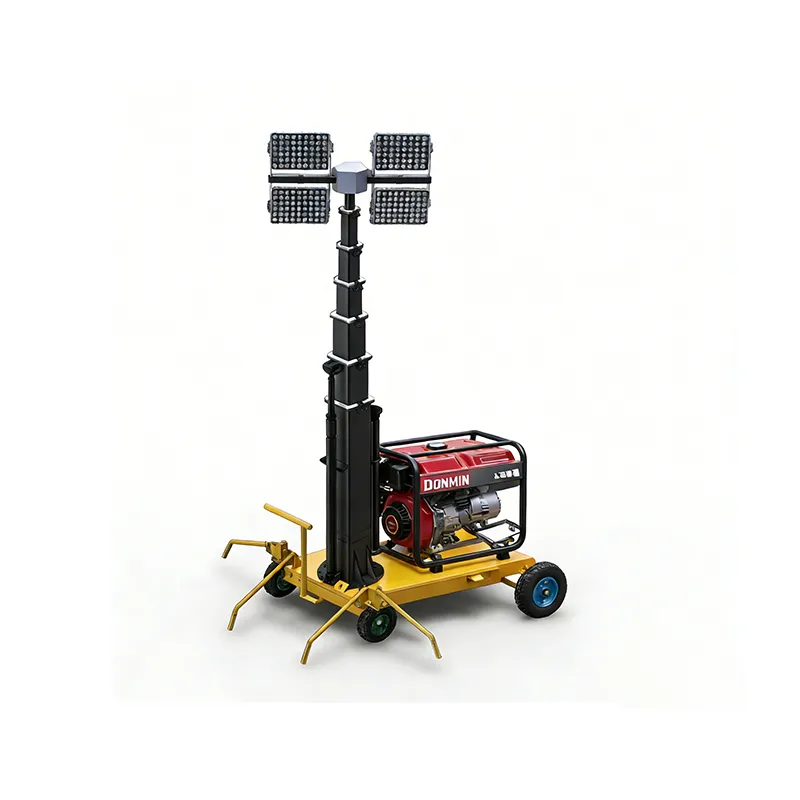
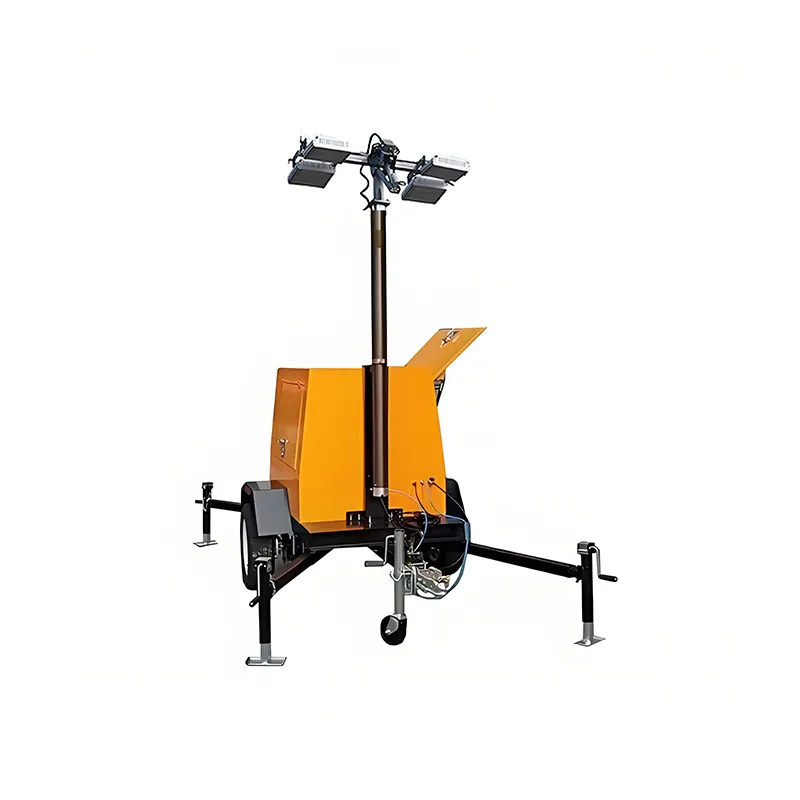
Product recommendation: review the listed trailer pneumatic-pole configuration and the listed trailer hydraulic-pole configuration as document-start points when those constructions match the shortlist. Neither page proves a lift time, wind rating, or site approval. Related chassis options appear under the trailer-style mobile light tower range.
Fit Boundary
This comparison is suitable for choosing a mast-drive family. It is not suitable as a commissioning procedure, a wind or payload calculator, a leak-rate guarantee, or evidence that a Keyyou unit meets a project specification without documents. For a configuration discussion, send the mast-drive requirements.
Part 7. When is this comparison not enough?
Stop at comparison and request qualified document review when manuals are unavailable, payload or stability needs are undefined, service capability is unclear, or the site still needs setup, transport, or power-source decisions. OSHA aerial-lift guidance also reminds teams that solid support and work-zone controls remain part of safe mast use after the drive type is chosen.
For height shortlisting after drive-family choice, use the light tower mast height selection.
Use duty cycle and maintenance capability to make the final choice
A pneumatic-versus-hydraulic decision becomes clearer when the buyer records annual deployment cycles, ambient temperature, moisture and dust, available engine or electrical power, transport vibration, operator skill and local service capability. Frequent mast movement can place a premium on controlled actuation and quick setup. Occasional deployment may put more weight on simplicity, storage condition and inspection access. Neither mechanism compensates for an unstable base, unsuitable wind conditions or poor operator training.
Evidence to request during bid evaluation
- A drawing of the complete mast, luminaire load, cable routing, locks and transport restraints.
- The approved raising and lowering sequence, including emergency recovery after loss of power or pressure.
- Operating temperature, wind and environmental limits for the offered configuration.
- Inspection points and defect criteria for cylinders, hoses, valves, seals, tubes, fasteners and locking devices.
- Fluid or air-quality requirements, service intervals, consumables, special tools and recommended spares.
- A production-representative demonstration followed by operator training and documented acceptance.
Hydraulic systems require control of stored pressure, gravity and other hazardous energy during maintenance. Pneumatic systems also store pressure and can be affected by moisture, contamination, leaks and seal condition. The NIOSH hazardous-energy control resource specifically calls for pressurized and gravity energy sources to be identified. Follow the manufacturer’s current isolation, support and depressurization instructions; repairs should be completed only by personnel qualified for the task.
During acceptance, raise and lower the mast through the intended sequence, verify that locks and indicators work, inspect for leaks or abnormal movement, confirm the emergency lowering method and check the transport restraint. Repeat the affected review whenever the luminaire, cable, mast component, power system, controller or base configuration changes.
Lifecycle cost comparison
Use the same number of annual deployment cycles and service years for both options. Include compressor or hydraulic power demand, fluids or air-treatment components, hoses, seals, cylinders, valves, controls, inspection labor, special tools, technician travel, downtime and residual value. A lower component count does not guarantee lower cost if parts are unavailable locally, and a faster lifting cycle does not create value when the tower rarely moves.
Request a parts diagram and identify the items normally held in stock. Ask the supplier to describe a loss-of-pressure fault, a stuck raised mast and an emergency lowering call. The clarity of the answer, required tools, safe isolation steps and parts lead time reveal more than a broad promise of worldwide service.
FAQs
What is the difference between pneumatic and hydraulic light tower masts?
Pneumatic masts extend with compressed air or gas assistance. Hydraulic masts use pressurized fluid and cylinders. Exact capability still depends on the selected model documents.
Which mast type is better for frequent repositioning?
Powered mast systems are often preferred when raises are frequent and time-sensitive. Confirm whether the offered pneumatic or hydraulic package matches that operating pattern in its manual.
Do pneumatic masts always need less maintenance?
No. They avoid some hydraulic-fluid tasks, but air seals, pressure integrity, and model-specific service items still require a documented plan.
Can a buyer copy height or lift-time claims from a product page into an RFQ award?
No. Use the page only to start a document review, then confirm values in the offered configuration’s approved materials.
How should this article be used with the pneumatic or hydraulic evaluation guides?
Use this page to shortlist a drive family, then use the matching single-system guide for deeper evaluation.
What should stop a mast-type decision?
Stop when manuals are missing, service capability is unclear, payload or stability needs are undefined, or visible defects remain open.
What belongs in an RFQ for mast-drive comparison?
Relocation frequency, drive-family preference, service skills, leak/containment expectations, fixture/accessory notes, and requested manuals.