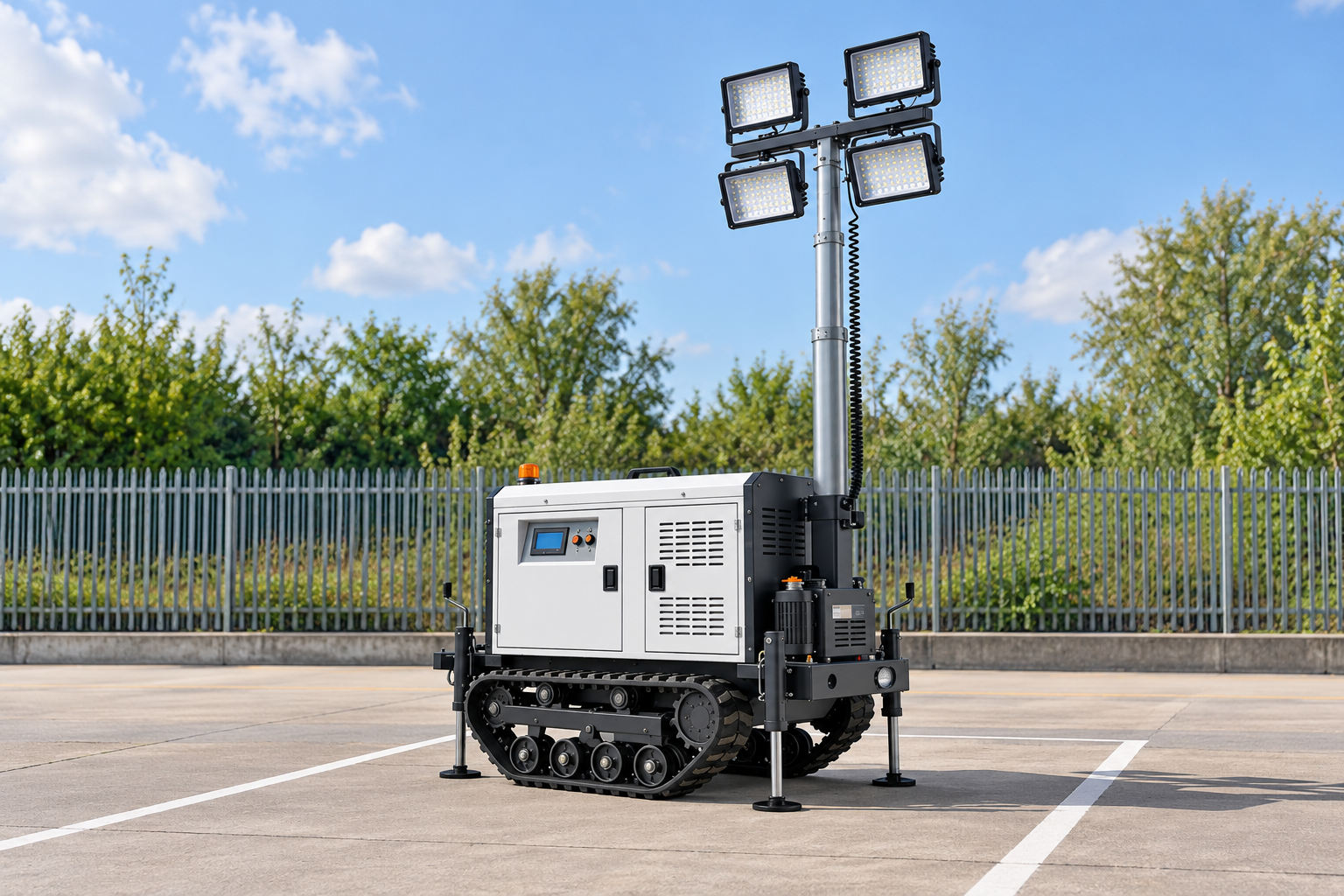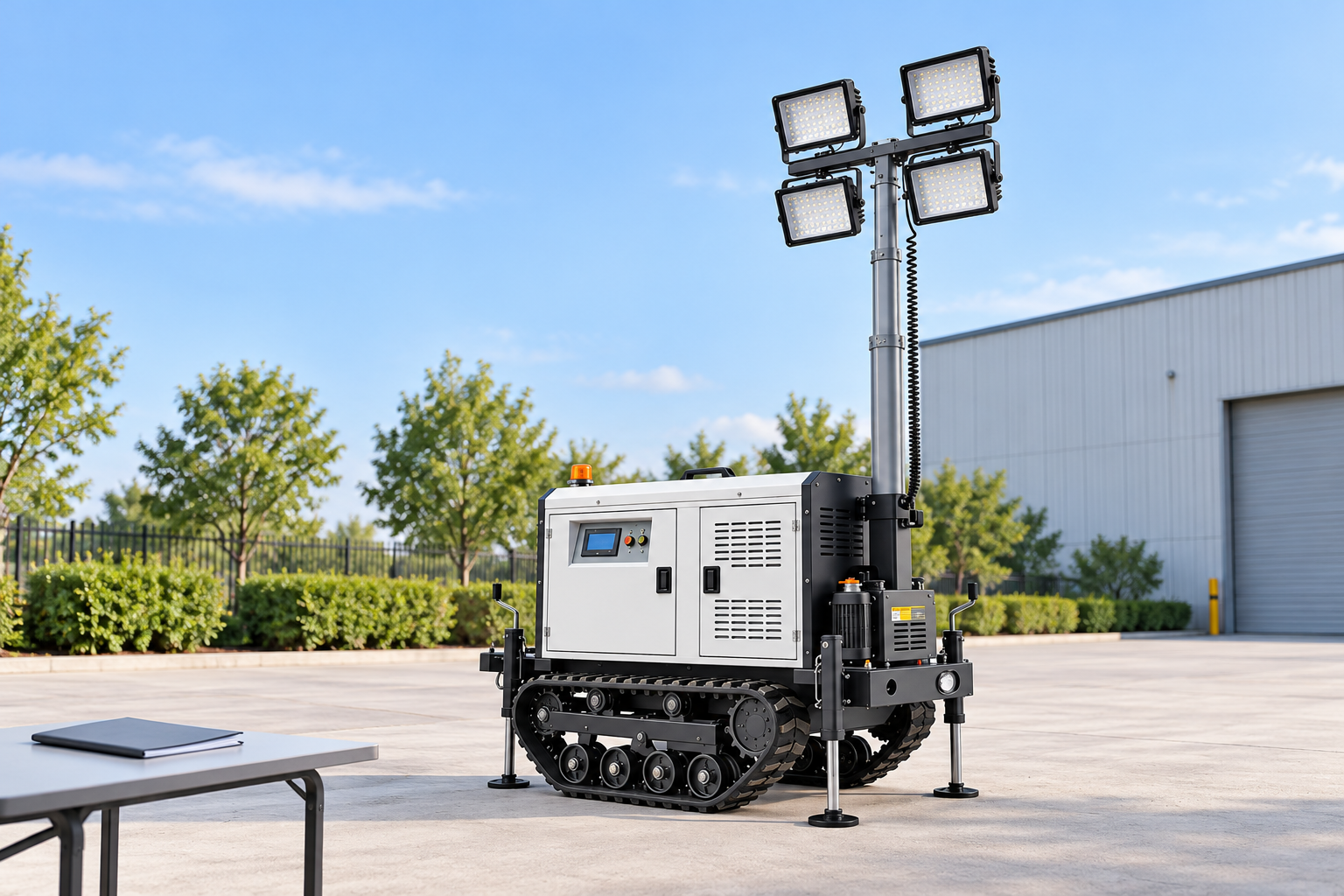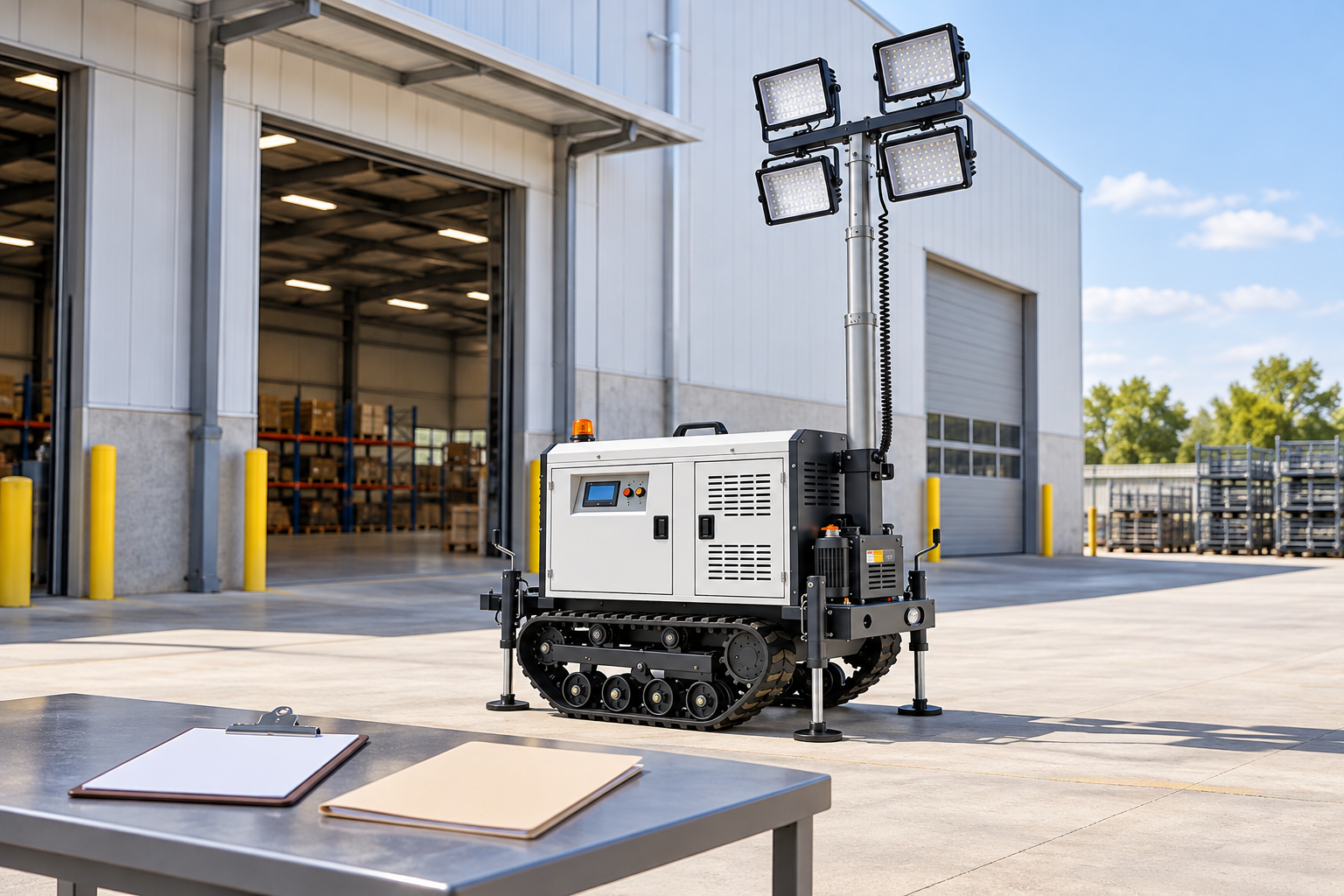

Portable Light Towers for Contractors Site Lighting Solution
Industry Insight: Why Portable Light Towers Are in Demand
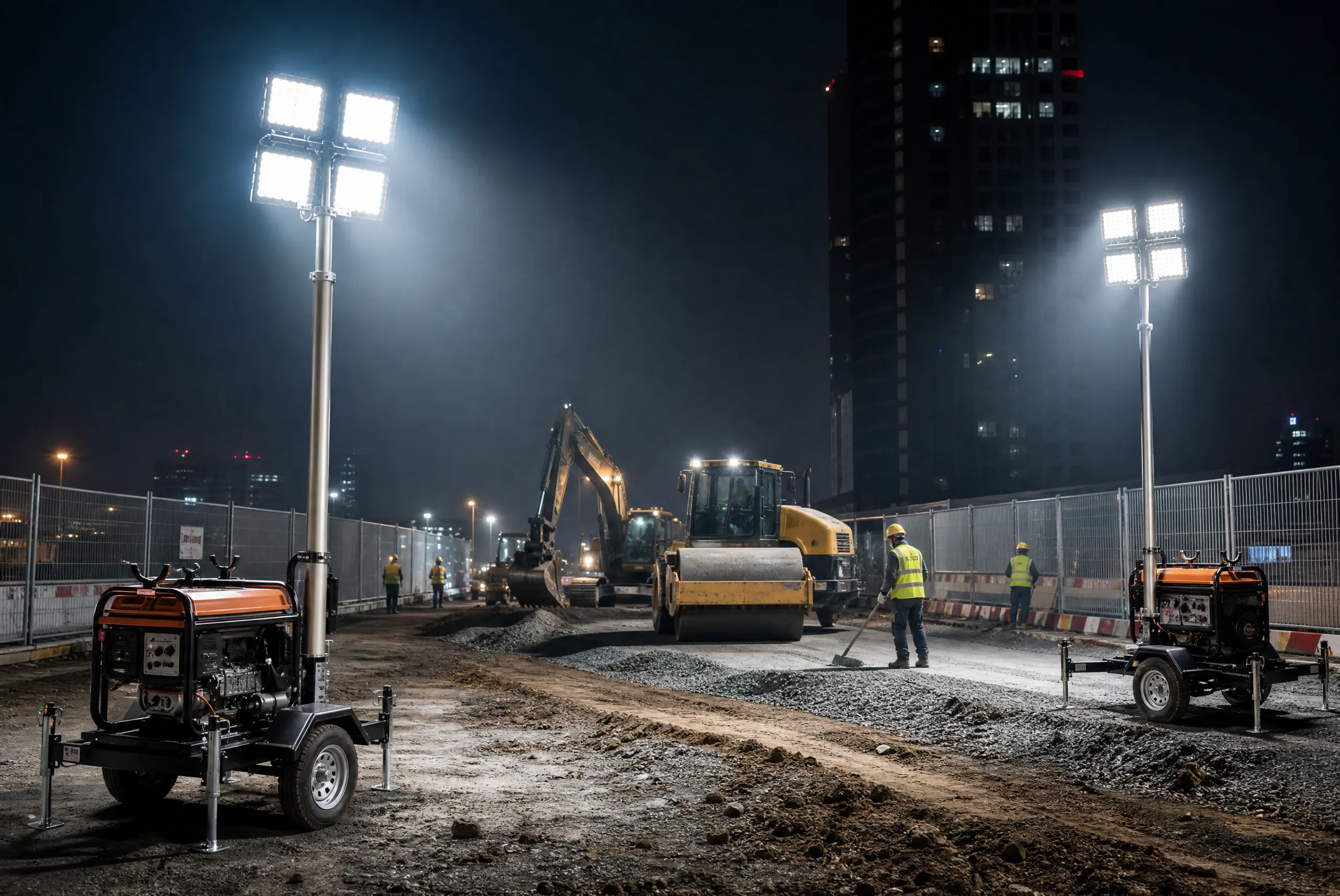
The use of portable light towers is driven mainly by night time work such as construction, road repair, emergency response, mining, outdoor maintenance, and infrastructure works. Many job sites require lighting at off peak hours in order to maintain work schedules or minimize traffic disruption. In remote locations, lighting equipment is often capable of functioning on its own, without any connection to the electricity grid. Portable light towers This issue is addressed through the use of a mobile unit that integrates lighting and energy generation. Thanks to its portability, a luminous pole can be placed wherever it is needed and rearranged as necessary. This technology is able to assist in road work, bridges, asphalt and concrete work, storage of different materials, repair of utility services, or in the area of industrial use. The significance of proper job site lighting is also emphasized by authoritative safety standards. The OSHA 29 CFR 1926.56 standard sets forth requirements regarding light levels in construction zones, including the minimum requirements for lighting levels of construction sites, corridors, warehouses, shops, etc. Although the actual requirements may differ from project to project, the standard proves that light is an essential component of safe job site management. LED adoption is one of the important factors for portable light towers becoming more popular. According to the U.S. Department of Energy, LED products are often more energy efficient than other lighting techniques and last longer if designed right. This means that for portable devices such as light towers this factor can affect generator’s dimensions, fuel consumption, service needs, and costs. The consideration of lighting is also tracked by the International Energy Agency in its discussion of worldwide energy efficiency. This puts more context around the need for customers to be paying closer attention to energy efficiency and lighting effects as well as duration of usage before selecting portable tower lights. The table below summarizes common applications and buyer priorities.| Application | Main Lighting Need | Buyer Priority |
|---|---|---|
| Road construction | Night work and traffic zone lighting | Mast height, beam direction, trailer stability |
| Building sites | Area lighting and material handling | Coverage, runtime, service access |
| Mining and quarrying | Remote continuous operation | Fuel tank size, frame strength, dust resistance |
| Rental fleets | Repeated multi-customer use | Durable chassis, standard parts, easy maintenance |
| Emergency response | Fast temporary lighting | Reliable start, simple operation, stable power |
Product Structure: What Buyers Should Check
The full mobile lighting tower consists of several important components. An essential element is its LED lighting arrangement, which determines its intensity, angle of light, power consumed, and area covered. It is essential that consumers not limit their assessment and selection of light towers to lamp wattage alone. Factors such as luminosity, lamp distribution, robustness of the device, ability to dissipate heat, and lamp longevity should also be considered. The height and coverage area of lighting is a function of the telescopic mast design. A tall mast means lower shadows and better lighting coverage per area, but it has to be upheld by a rigid frame, safety locking mechanism, suitable rotation mechanism, and effective struts. Prospective buyers should be sure to check mast height, lifting method, rotation angle, wind resistance, and cable protection prior to purchasing. The generator unit serves as the main power unit for many mobile diesel lights. When purchasing, buyers often examine power ratings, voltage values, frequencies, as well as fuel tank sizes and lifetime, generator types, noise, engine serviceability, and the availability of spare parts. A generator that has low capacity may lead to unstable operations, while another-sized generator could consume fuel excessively. Trailer chassis impacts mobility and transport safety. Contractors as well as rental fleets should examine the tow bar, axle, tires, brake, lifting points, chassis width, and loading size. The robust simplicity of the chassis design allows reduced maintenance needs for equipment being moved frequently between job sites.Key Specifications for Portable Light Towers
When looking for portable light tower for sale, its price is the first thing buyers pay attention to. However, price matter should be evaluated together with technical specifications, manufacturing quality and terms of service and maintenance. The models with similar appearance may operate in a completely different way on site.| Specification | What Buyers Should Check |
|---|---|
| LED lamp power | Single lamp power, lamp quantity, total lighting load |
| Lumen output | Brightness level and light distribution |
| Mast height | Maximum height, rotation angle, lifting method |
| Generator capacity | Rated power, voltage, frequency, standby output |
| Fuel tank and runtime | Tank capacity and continuous operating hours |
| Wind stability | Outrigger design, chassis width, mast locking system |
| Noise level | Suitability for urban or night work |
| Electrical configuration | Socket type, breakers, grounding, control panel |
| Maintenance access | Filter, oil drain, battery, wiring, engine compartment |
| Transport structure | Tow bar, axle, tires, brake option, loading dimension |
Manufacturing and Quality Assurance
Quality of the manufacturing process significantly influences reliability of portable light towers. Manufacturing generally begins with preparation of steel materials. Frame parts, masts, brackets, tow bars, and supports are cut and shaped according to the acquired designs. The accuracy of dimensions at this stage determines proper alignment of the mast, stability of the trailer, and uniformity of the final product. Welding is an important process in manufacturing. The parts of the equipment like the chassis, mast base, lift points, tow structures, and outrigger mount must withstand outdoor loads and transportation vibration during functionality. High welding quality helps minimize the occurrence of structural defects when the product is in service. Various treatments like surface grinding, primer application, powder coating, and painting are used for covering parts after welding to protect them from rain, dirt, mud, sunlight, fuel, and corrosion. Based on the information given, at the final assembly stage, all basic components such as axle, wheels, tow bar, support legs, mast, electric fixtures, generators set, batteries, control unit, the fuel system, wiring, and the enclosure are assembled altogether. There shouldn’t only be the final inspection, but also quality control for portable light towers must involve the quality assurance, testing of components, welding inspection, coating inspection, mast operation test, running of generators, tests on the lighting performance, inspection of the electrical safety and the final inspection of packaging. ISO 9001 principles for quality management apply to this sector of manufacturing because these principles stress the importance of process regulation, documenting procedures, and continual improvement initiatives which prioritize quality of products and services. Many of the activities in the B2B sector such as inspections, component check, assembly and testing can be explained due the institution of these principles. Wenzhou Keyyou Trading Co., Ltd. Specializes in the export of light towers and relevant equipment, and it has a link with Zhejiang Longye Electric Technology Company, which is also a manufacturer that was established in 2017, with abundant experience in the development of emergency light towers. The factory export model enables international buyers to customize products, communicate about production, and coordinate export services. As per the details provided by the company, Wenzhou Keyyou and its assembly factory set a target of keeping the failure rate at 3 percent, offering a guarantee of one year for generators and electrical parts, and three years for shield components. The buyers need to verify the warranty coverage pertaining to each part in the final quote and purchase agreement. Note 3: The warranty terms, the internal quality benchmarks and the component coverage can differ according to the model or the customized order one may choose. It is vital that the purchaser always confirms this information in their official order documents.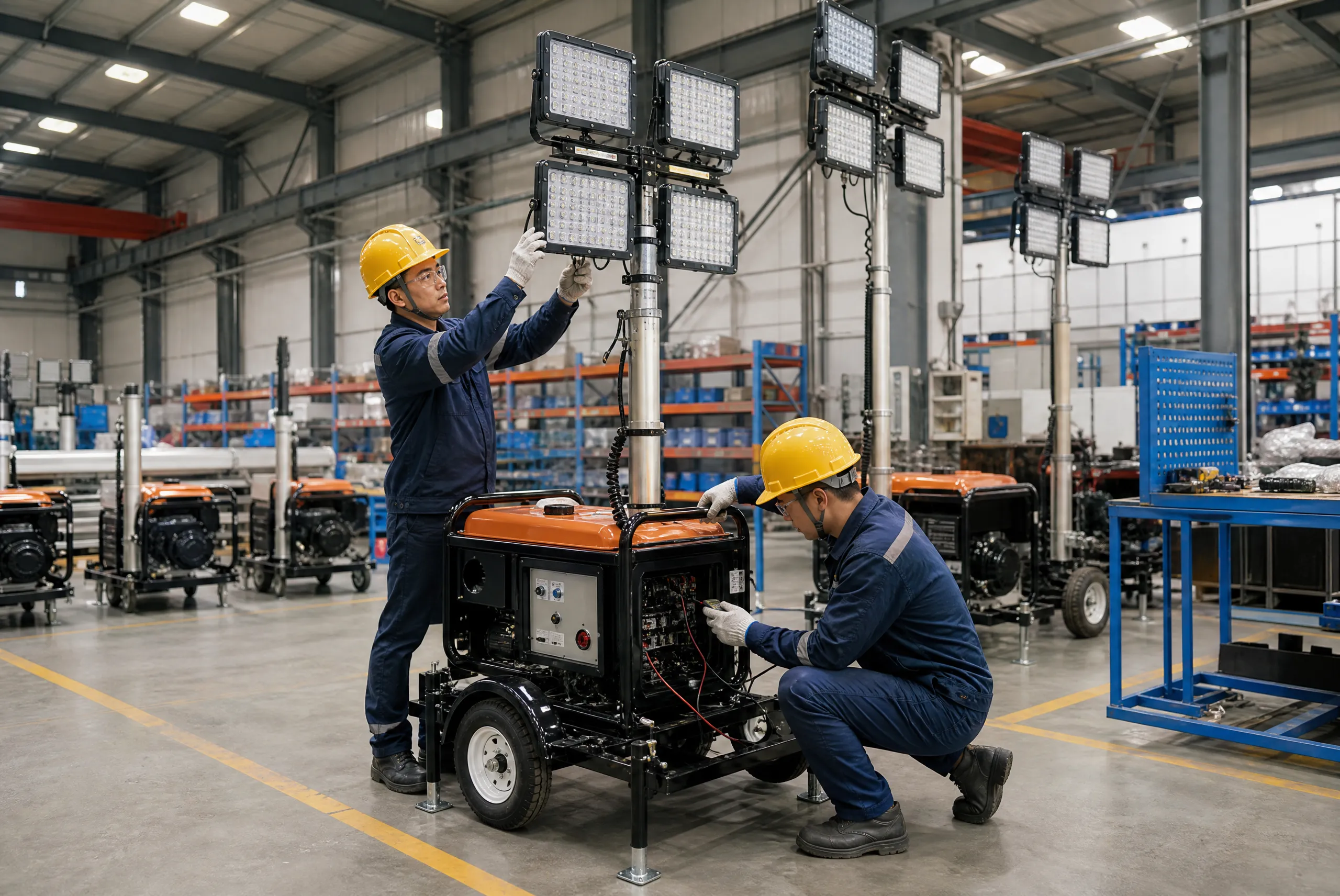
OEM Options for B2B Buyers
OEM customization is prevalent in portable light towers industry. Various buyers can have alternative needs, including brand names, voltage, documents, trailer models, and control setup. Effective customization enables products to comply with the needs of local markets and customers. Contractors usually concentrate on mast height, operating time, generator power, number of fixtures, and transportation mechanism while engaging in OEM discussions. For rental fleets, customizing a product usually implies paints and color, symbols, replacement parts, simple controls, a robust chassis, and the accessibility of servicing. While dealing with distributors, OEM operations usually involve logo printing, voltage and frequency, type of socket, language of documentation, method of packaging, and design of the label. Those looking for customized branded portable light towers can utilize Wenzhou Keyyou services. The customization services offered by the organization can be beneficial for distributors, rental fleets, and local equipment suppliers that are in need of a uniform look of their product lineup.| Buyer Type | Common OEM Need | Purchasing Advice |
|---|---|---|
| Contractors | Mast height, runtime, generator size | Match configuration to site area and work hours |
| Rental companies | Color, standard parts, easy service | Choose durable models with simple maintenance |
| Distributors | Logo, local voltage, documentation | Confirm market rules and packaging needs |
| Mining buyers | Strong frame, long runtime, dust care | Review service access and chassis strength |
| Emergency users | Fast setup, stable power, visibility | Focus on reliability and simple operation |
How to Choose the Right Portable Light Towers
The appropriate mobile lighting towers should be selected based on purpose, site condition, duration of work, transport requirements, and the capability to maintain the equipment. The buyer should not just rely solely on the looks of the tower or its price. When it comes to construction projects, factors such as coverage area, ease of installation, fuel consumption, and access to service are significant. When it comes to road construction, factors such as beam angle, trailer stability, towability, and prompt installation should receive more consideration. In terms of mining and remote industry implementation, runtime, structural integrity, dust and generator resistance are key elements. In the case of rental fleets, standardization, the availability of spare parts, and ease of use can help to mitigate long-term maintenance strain. Buyers should prepare a clear technical specification before reaching out to the supplier. Useful information will include the intended usage, lighting requirements, estimated working hours, local voltage frequency, transportation requirements, OEM requirements, expected number of items, delivery timeframes, spare parts needs, and other general information. With this in mind, a producer can suggest the most appropriate set-up depending on the product needed by the client: be it diesel portable lighting towers, portable LED lighting towers, truck-mounted lighting towers, or special generator systems. Furthermore, it permits clients to evaluate offered prices from various manufacturers on the same technical basis. Wenzhou Keyyou Trading Co., Ltd. claims to be a key partner for the export of light towers as well as associated apparatus. In making a choice, buyers must evaluate the quote keeping in mind such aspects such as the configuration, brand of the components, warranty, packing, paperwork, and service parts, and not just the price.Conclusion
Portable light towers They are suitable for the following activities: construction, roadwork, mining, municipal maintenance, emergency response, outdoor industrial activities, and rental operations. As technology advances toward LED technology, dependable diesel generators, safer mast construction, and lower maintenance, buyers must consider the products from both points of view – technical and operational. It is important to make proper considerations while buying generators depending on a particular project. Some of the factors that should be taken into consideration when making a purchase involve lighting coverage, mast height, generator capacity, fuel consumption, and runtime. Other factors to look at while making a purchase include the chassis strength, available OEM options, and documentation support. When contractors, suppliers, and rental firms explore the options for available portable light towers, it is important to assess the precise requirements of a particular site before determining the technical specifications of the machine. This will help avoid instances when the equipment used is not strong enough for the operations performed or is over-configurated, leading to more expensive long-term running costs.Related light tower resources
Frequently Asked Questions
1. What are portable light towers used for?
Portable light towers They are utilized to provide temporary illumination on construction job sites, road construction projects, mining sites, public utility repair, emergency rescue operations, outdoor industrial jobs, and rental vehicle operations.
2. What specifications should buyers compare before purchasing?
When making a purchase, customers must consider the LED power, lumen brightness, height of the mast, light coverage area, power generating ability, tank size, running time, wind stability, noise level, voltage, trailer design, and technical maintenance access level.
3. Are portable LED light towers more efficient than traditional models?
The energy consumption of mobile LED light towers is usually less, they are easier to start up, with the lifetime of the lamp being longer, and the maintenance being minimized when compared to most of the traditional lighting solutions. However, it may still depend on the requirements of the jobsite.
4. Can portable light towers be customized for OEM orders?
Yes. OEM options may include logo printing, paint color, voltage, frequency, LED lamp quantity, mast height, generator brand, control panel layout, trailer structure, documentation language, and packaging.
5. How is quality checked before shipment?
Quality checks may include material inspection, welding inspection, coating inspection, mast operation testing, generator running tests, lighting performance checks, electrical safety inspection, and final packaging review.
6. What information should buyers provide for an accurate quotation?
Buyers should provide application scenario, lighting area, working hours, voltage and frequency, transport requirement, OEM needs, target quantity, delivery schedule, and preferred generator or engine configuration.
Disclaimer
This article is intended for general B2B product selection and procurement information. Buyers and end users should also follow local safety regulations, equipment manuals, workplace requirements, road transport rules, and applicable operating instructions when using portable light towers and generator-powered lighting equipment.References
- Occupational Safety and Health Administration, OSHA. “29 CFR 1926.56 — Illumination.” Official standard page: OSHA 29 CFR 1926.56 — Illumination OSHA construction standards search page: OSHA 29 CFR Part 1926 Construction Standards Used to support discussion of jobsite illumination requirements and temporary lighting in construction work areas.
- U.S. Department of Energy, Energy Saver. “LED Lighting.” Official LED lighting guidance page: U.S. Department of Energy — LED Lighting U.S. Department of Energy lighting resources page: U.S. DOE — Solid-State Lighting Used to support discussion of LED energy efficiency, lamp life, and reduced maintenance.
- International Energy Agency, IEA. “Lighting.” Official lighting topic page: International Energy Agency — Lighting IEA reports and data page: International Energy Agency — Reports Used to support discussion of global lighting efficiency trends.
- International Organization for Standardization, ISO. “ISO 9001 Quality Management Systems.” Official standard introduction page: ISO 9001 Quality Management Systems ISO standards search page: ISO Standards Search Used to support discussion of process control, quality procedures, inspection records, and manufacturing consistency.