
Airport Runway Maintenance Light Towers: Placement and Control
Plan runway maintenance light towers within airport-approved work boundaries, equipment envelopes, glare checks, power windows, and recovery.
Runway maintenance light towers belong inside an airport-approved construction or maintenance arrangement. They provide task illumination for an authorized work window; they do not replace runway edge lights, closure markings, or airfield visual guidance. Begin with the airport’s work boundaries, access controls, permitted equipment heights, and reopening sequence. Then assess the task and operating views after dark. Selection should follow the approved plan, rather than beginning with a tower’s maximum mast height or nominal coverage claim.
Establish the airport work window
Describe the maintenance activity: pavement repair, marking preparation, electrical inspection, drainage work, or another defined task. Obtain the current closure and access arrangement from airport operations. Identify which neighboring movement areas remain active and who controls access. A drawing should show the relevant work limits, entry points, permitted vehicle routes, and boundaries that temporary equipment must respect.
FAA guidance on operational safety during airport construction provides a reference framework for construction safety planning in the United States. The airport determines the applicable requirements, current documents, and approval process. A lighting contractor should work within that process rather than treating a product specification as permission to deploy airside. Record the responsible contacts and the time by which people, equipment, cables, and any other temporary installation must be clear.
Separate maintenance light from aeronautical light
Runway and taxiway visual aids perform specific operational functions. Temporary work lighting has a different purpose and must not obscure, imitate, or create confusion with those aids. Do not add colored decorative lamps or make an unreviewed arrangement that appears to mark a usable route. Ask airport operations to review the lighting from relevant operating directions and positions.
This distinction remains important when the immediate work area is closed. Adjacent operations, approaches, and later reopening can still be affected. Include the entire installed height and lamp direction in the submitted plan. The absence of aircraft in a work photograph does not establish that the lighting is acceptable for airfield use. Authorization depends on the airport’s review of the actual location, configuration, and operating context.
Identify the surface detail to be seen
Different runway jobs require different views. Personnel repairing a joint need to distinguish the work face and tools; a pavement inspection may require recognition of surface defects; marking work needs a clear view of boundaries and the prepared surface. List those tasks and their observation positions before choosing a tower quantity. The open paved area can look bright while local equipment casts a shadow directly across the work.
Review how the crew and machinery move through the job. A source that reveals the first section may sit behind the paver or service vehicle at the next stage. Additional approved task lighting can be needed where mast lighting does not reveal the detail. Avoid attaching fixtures to machinery or creating an improvised electrical arrangement without the relevant approvals. The lighting plan should identify the task boundary and the accepted sequence for any changes.
Submit the whole deployment envelope
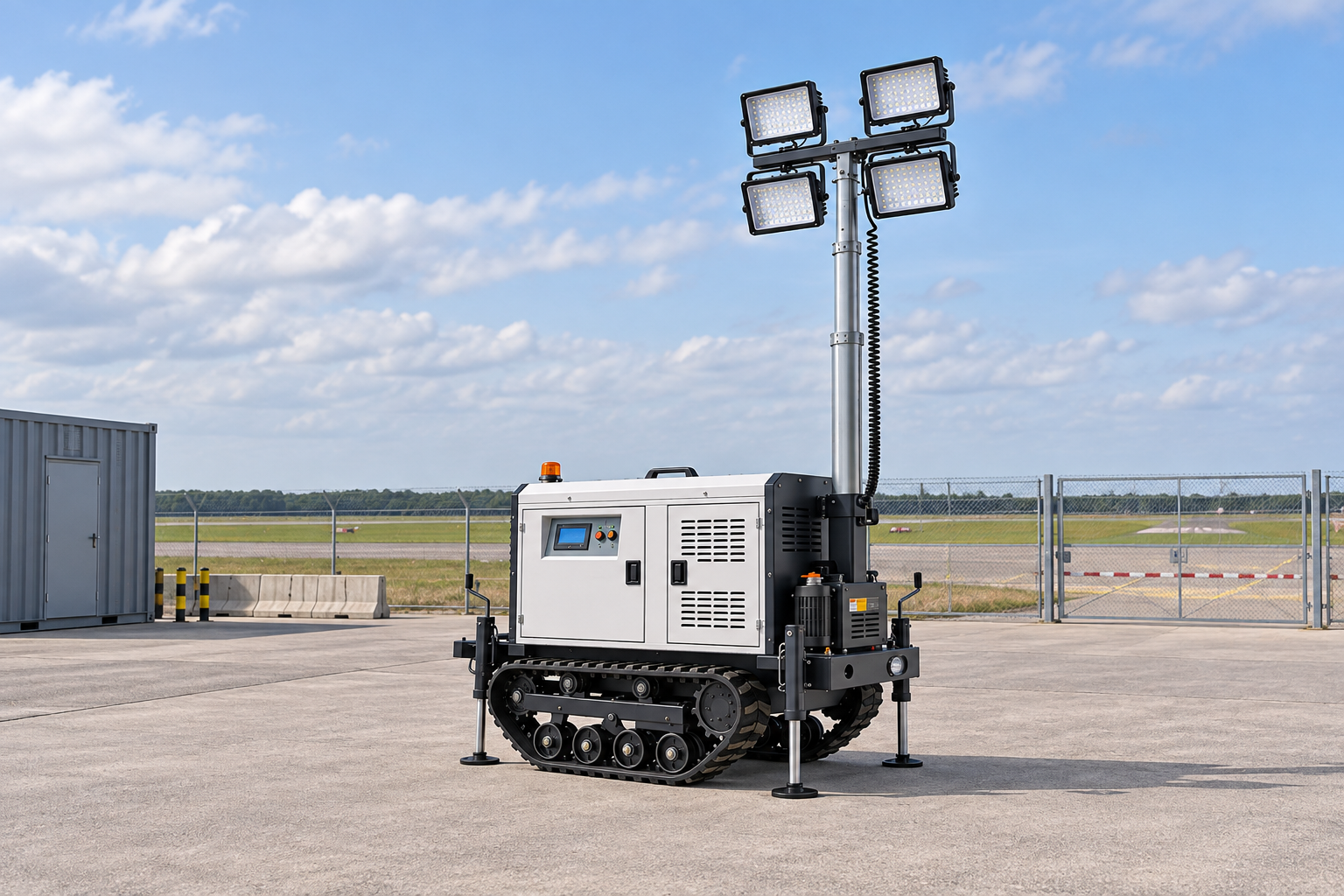
Provide transport and deployed dimensions for the exact configuration, including supports, mast, lamp array, and relevant wind limits. The airport decides whether the position and height are permitted. Do not infer an acceptable height from another airport project or select the tallest setting merely because it is available. The delivered unit must match the configuration reviewed for the work.
Show access to controls and servicing, as well as the route for installation and withdrawal. A tower must not force vehicles into a different route or leave removal dependent on moving other equipment at the last minute. If the work window is short, the practical setup and recovery sequence can be as important as endurance. Follow the exact instructions for securing the mast and equipment before movement; mobility is a transport feature, not authorization to travel with an elevated mast.
Assess glare with airport operations
Inspect direct and reflected light from the views identified by the airport. Wet pavement can produce a different reflection from a dry daytime trial. Consider nearby work vehicles, airport service roads, and any operational viewpoint that the airport requires. Brightness at the job alone cannot demonstrate that surrounding views are acceptable.
Adjust the location and aiming only within the accepted configuration and manufacturer’s limits. After a change, repeat the affected checks and record the new settings. Do not assume that a beam directed downward has no off-site effect, or that a tower behind a barrier is invisible from another position. Keep the reviewed arrangement connected to the actual airport work stage, especially when maintenance advances along the runway.
A runway maintenance planning table
The table provides procurement and coordination questions. It does not specify airport obstacle limits, lighting values, or approval for the pictured equipment.
| Planning decision | Evidence to submit | What to verify |
|---|---|---|
| Work window | Closure, access and reopening arrangement | Lighting fits the authorized maintenance stage |
| Equipment envelope | Transport and deployed dimensions | Airport accepts the exact location and configuration |
| Task visibility | Required detail and worker positions | Shadows do not hide the current work |
| Operational views | Airport-selected glare observations | Visual aids and instructions remain recognizable |
| Recovery | Lowering, cable removal and inspection sequence | Temporary installation is cleared before release |
Plan power and service inside the window
State the proposed lamp mode, setup duration, working duration, contingency allowance, and withdrawal time. Ask for runtime information under those conditions. A headline figure measured at reduced output cannot automatically support the requested full-output period. Include practical service constraints: an airside fuel delivery or a replacement battery may require coordination that is unnecessary on an ordinary building site.
The airport and electrical team should review external supply connections and routes. Cable recovery belongs in the reopening sequence. For engine-powered lighting, review exhaust, fuel handling, and service arrangements independently of optical coverage. Keep combustion exhaust from occupied vehicles or buildings and follow the exact equipment instructions. Hybrid equipment needs its engine-start behavior documented so the work team does not assume it will remain in battery mode throughout the window.
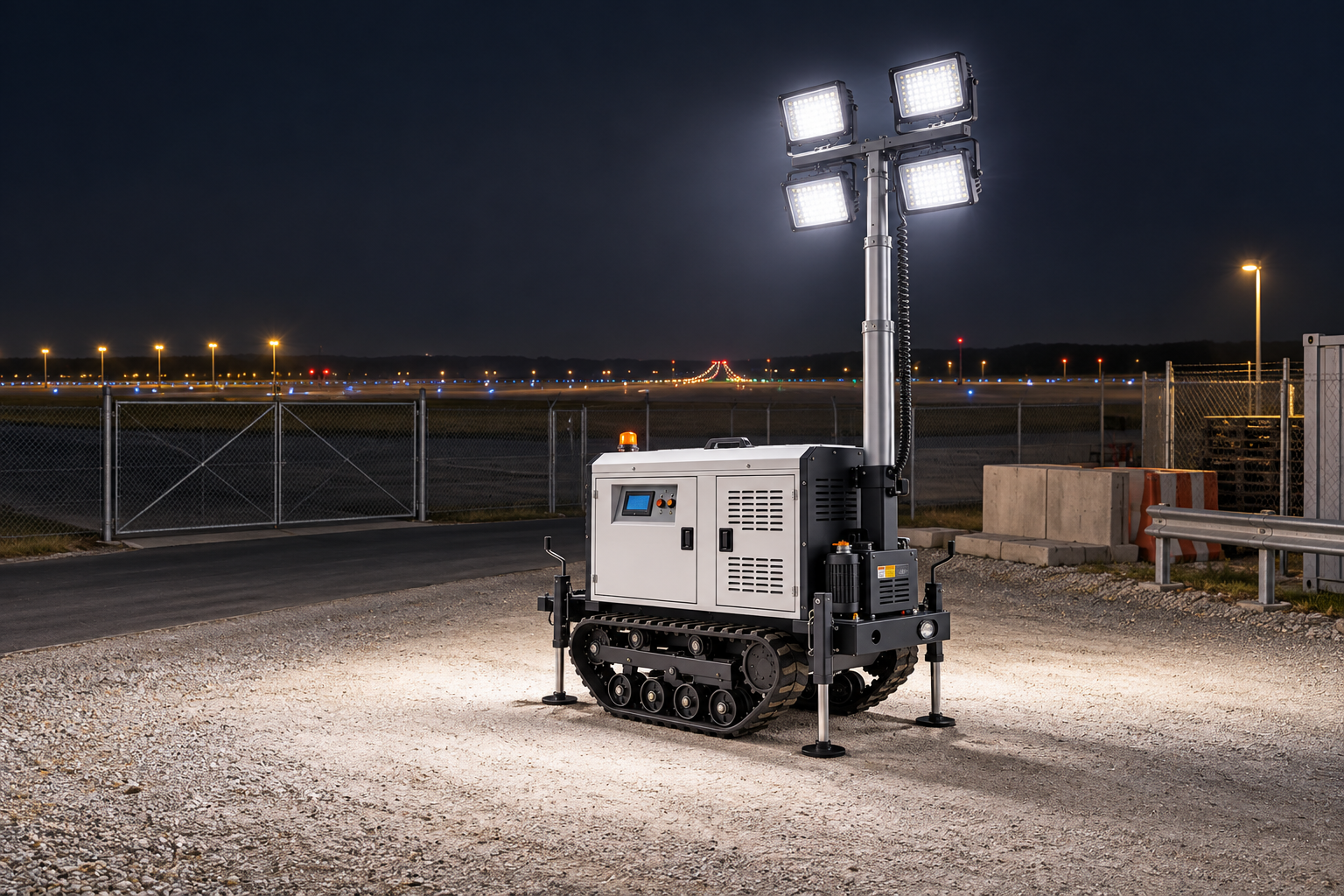
Check the installed work stage after dark
Evaluate the actual job with representative machinery and barriers present. Record lamp position, aiming, mast configuration, output mode, weather, and the approved work boundaries. The competent team should define any measurement criteria and method. Where measurements are used, record the instrument, locations, plane, and conditions. A photograph is useful for documenting configuration but cannot establish task or glare acceptance by itself.
Resolve the specific remaining problems before relying on the arrangement. This may mean a task light at the inspection position, a different approved tower location, or a revised sequence for moving equipment. Keep the limitations explicit. If a later work stage changes the task, machinery, or viewing direction, the earlier acceptance should be reviewed rather than copied forward automatically.
Make lighting removal part of reopening
Agree on the point at which the primary light can be switched off. The team may still need illumination for collecting tools, recovering cables, inspecting the pavement, and removing temporary equipment. A plan that ends lighting when the repair finishes can leave these activities unsupported. Coordinate the final working illumination with the airport’s inspection and release process.
Record who confirms that the tower and associated equipment are clear, and who communicates the lighting status to airport operations. The maintenance lighting team should never declare the runway operational merely because its equipment has been removed. Airport release follows the airport’s process. A successful lighting installation therefore includes an orderly recovery and handover, as well as useful illumination during the repair.
Equipment documentation for this application
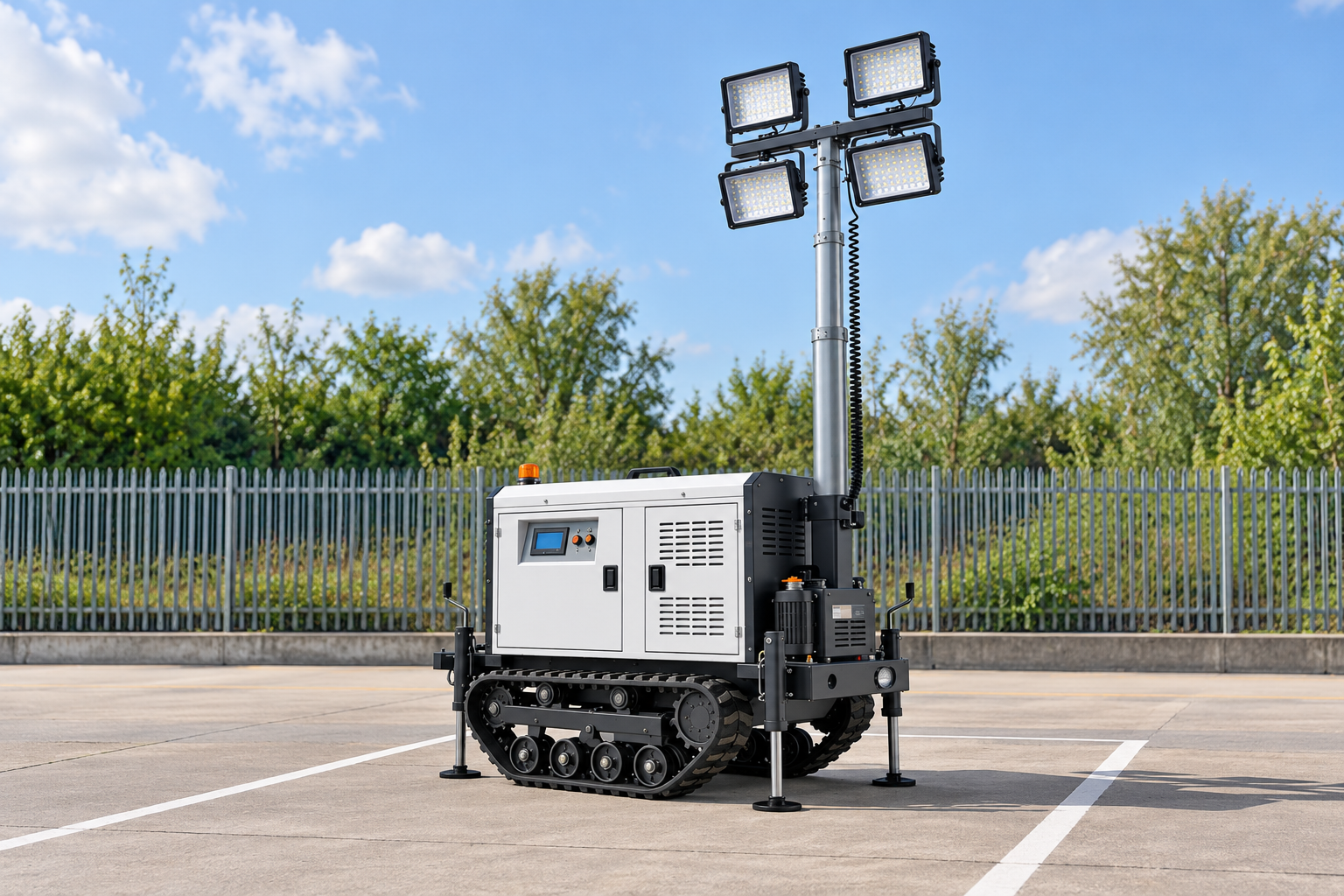
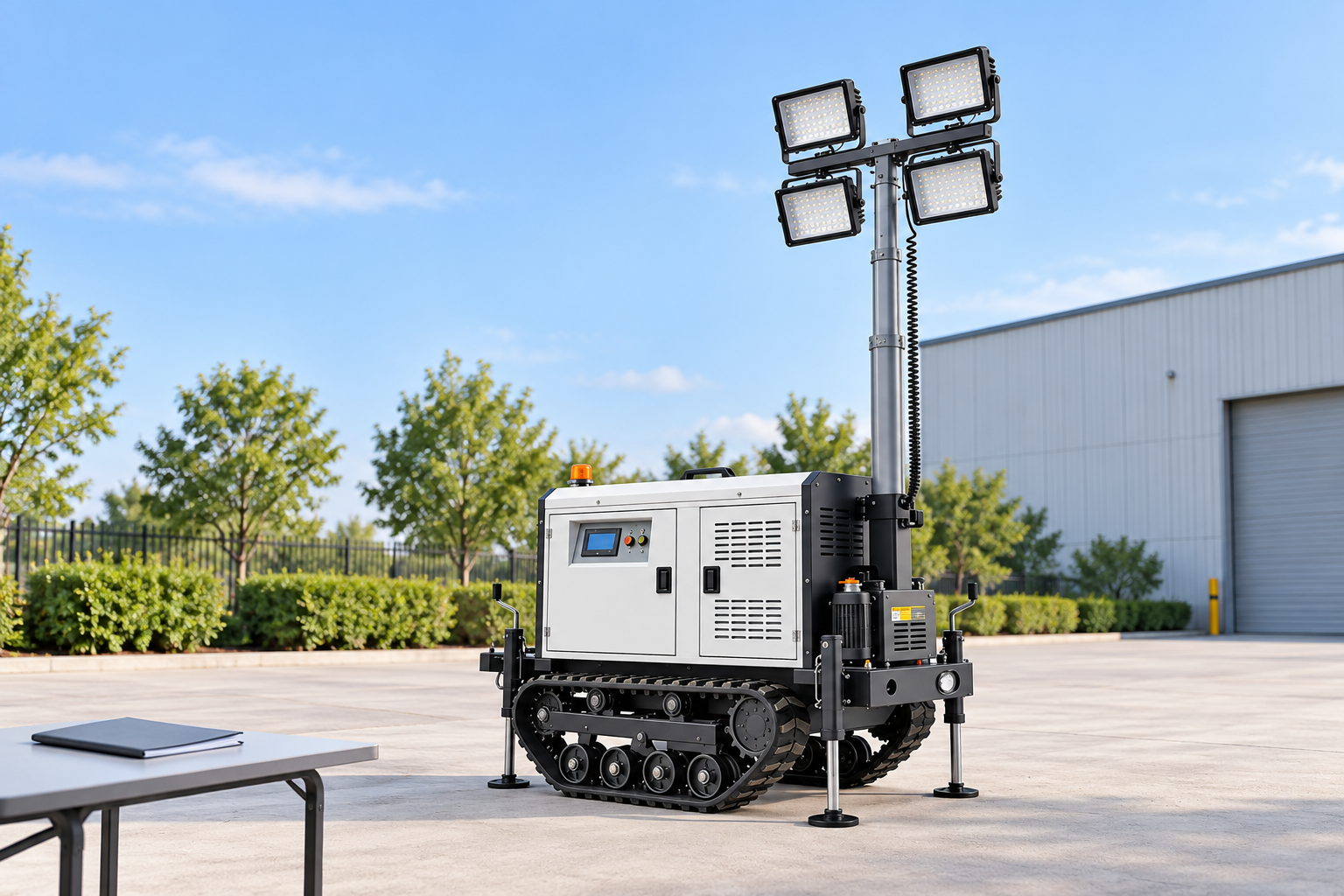
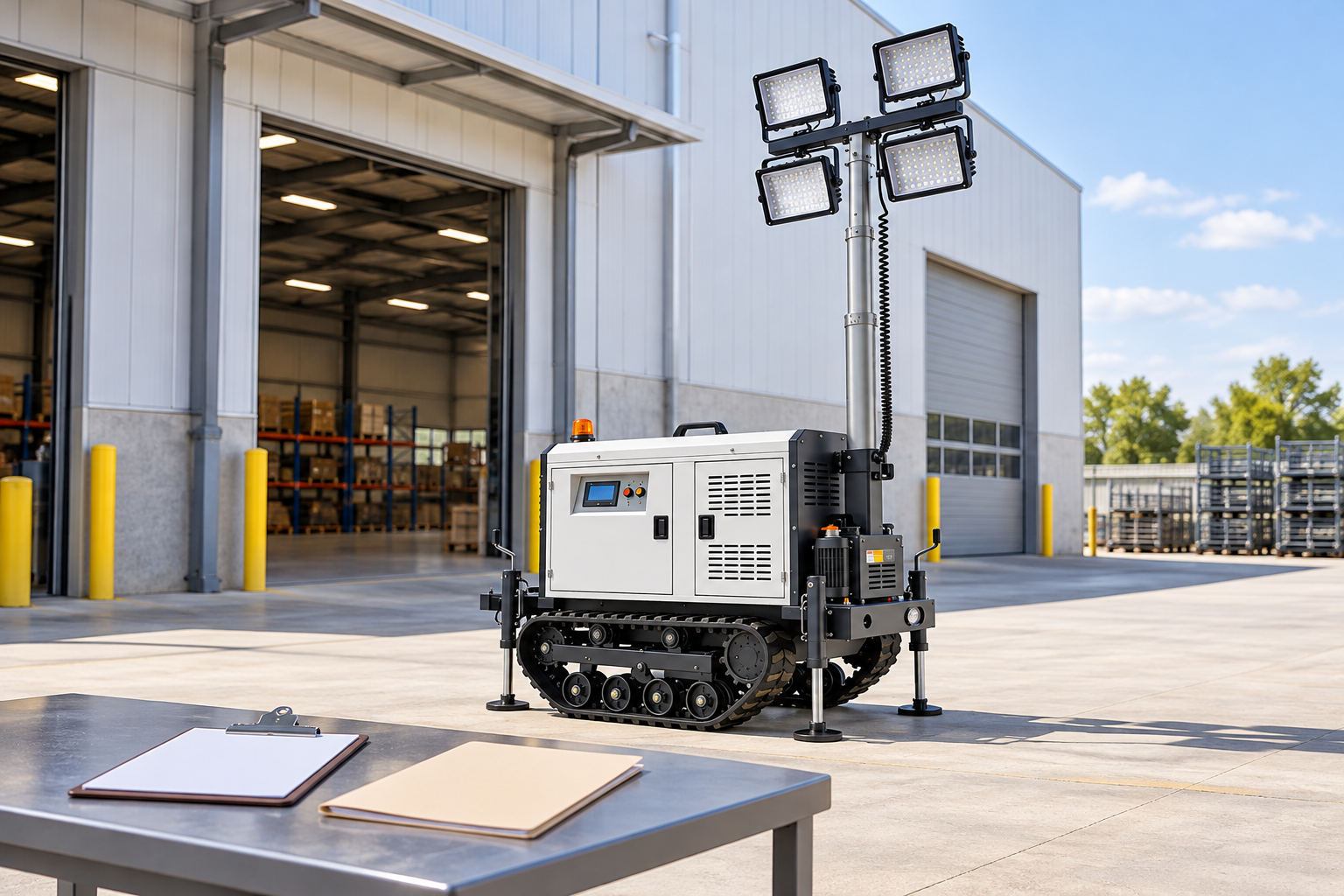
The pictured Keyyou tracked lifting light tower identifies the product category discussed here. Its appearance is not evidence of runtime, environmental certification, or suitability for every proposed work location. Request the current configuration-specific documents and compare them with the accepted task, deployed envelope, power arrangement, and service plan. If those records do not establish a match, resolve the configuration with the responsible team before relying on the installation.
For broader equipment planning, read the mobile light tower guide. Use the separate glare-control guide when reviewing observer views, and the maintenance and troubleshooting guide when arranging inspection and service. These resources support their own tasks; they do not replace acceptance of the current site layout.
Generator safety education and reference scope
Where the selected power arrangement includes an engine, the CDC video below explains carbon-monoxide precautions. Its household examples provide introductory education, not a site installation approval. The responsible team must review the exact equipment, exhaust location, occupied spaces, fuel handling, and electrical arrangement. Battery-only operation has a different power scope, and hybrid engine-start conditions still require review.
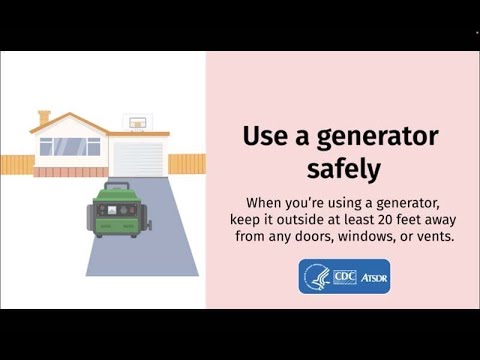
Watch Use a Generator Safely from the CDC.
Frequently asked questions
Can a tower replace runway lighting or closure markers?
No. Work illumination and aeronautical visual aids serve different functions. The airport controls the approved construction or maintenance arrangement and relevant operational views. Keep the temporary tower clearly within its accepted task scope; neither its brightness nor the fact that the immediate work area is closed establishes approval to replace aviation guidance.
How should mast height be selected?
Submit the exact deployed envelope and proposed configuration to the airport for review. Do not select height solely from advertised coverage or another project. The accepted location, equipment, and setting need to match the delivered unit. Changes in height or lamp arrangement can require another review of both the physical installation and optical effects.
Should the light stay on after the repair ends?
Follow the accepted recovery sequence. Personnel can still require illumination to collect tools, remove cables, inspect the surface, and recover temporary equipment. Airport operations controls release of the runway under its process. Agree in advance when the lighting can be switched off and how remaining recovery tasks will be supported.