
Wind Solar Light Tower Turbine Sizing: Energy, Site Data, and Reserve
Size a wind-solar trailer turbine using lighting demand, site wind data, the actual power curve, battery reserve, and approved mechanical configuration.
Wind solar light tower turbine sizing starts with the lighting energy requirement and the wind resource at the actual turbine position. Select a turbine by the energy its documented power curve can contribute during the required service period, then check battery reserve, solar generation, electrical compatibility, and the trailer's approved mechanical configuration. A nameplate rating alone does not establish overnight runtime. For buyers, the useful question is how the offered turbine reduces a defined energy shortfall without introducing an unsupported mounting or control arrangement. This guide concerns small wind generation on a mobile lighting trailer, rather than the dimensions of utility wind turbines.
Define the lighting duty before requesting turbine capacity
Record the electrical input of each lamp at the intended setting and its required hours. Include documented control and auxiliary consumption, rather than using lumens as electrical power. Separate essential lighting from loads that may be reduced during an interruption. The required service can be an access route through one night or several shifts at an isolated work compound; the calculation must reflect that particular duty.
For an explicitly illustrative example, a combined lighting input of 240 W for ten hours requires 2,400 Wh, or 2.4 kWh, before additional loads and system losses. This example is not a specification for a Keyyou tower. It establishes the unit conversion and allows a buyer to ask whether the proposed renewable generation, usable stored energy, and recovery plan support that demand. Substituting a different lamp setting changes the calculation even if the physical trailer looks identical.
Identify the shortfall that wind is expected to cover
Assess photovoltaic generation separately using the intended location, season, shading, and offered panel configuration. Define the usable battery reserve under the supplied discharge and temperature limits. Only then identify the contribution required from wind. A turbine is not automatically useful because a site has occasional strong gusts, and the wind and solar resources should not be assumed to compensate for one another every day.
An installation might need wind primarily during evening hours, during low-sunlight periods, or while recovering battery reserve. These are different requirements. An annual generation estimate can conceal a shortfall during the specific nights when lighting is essential. Ask for the generation assessment in periods that match the duty and reserve requirement. State how unavailable wind generation is handled, including whether another lighting arrangement must be brought to the site.
Use a site assessment at the offered hub position
The turbine hub on a mobile trailer can be relatively close to buildings, vegetation, stored material, or other equipment. A regional wind map is useful for screening but does not describe every obstruction at that position. Identify prevailing wind directions, nearby obstacles, local terrain, and changes likely during the project. Assess the proposed operating location rather than a nearby open field that will not contain the actual trailer.
The Department of Energy Small Wind Guidebook explains why local wind characteristics and turbulence matter for generation and loading. Its guidance supports resource assessment; it does not approve a particular trailer-mounted turbine or justify raising its mast beyond the supplied configuration. Obtain a qualified assessment where the project requires one. The light mast height and turbine hub height are separate dimensions and should not be treated as interchangeable in a quotation.
Request the actual turbine power curve
A power curve relates electrical output to wind speed under stated conditions. Ask for the curve for the exact turbine, including the measuring conditions, rated point, cut-in behavior, any control limits, and the conditions under which output stops. Confirm whether the quoted output is measured at the generator, controller, or another defined electrical point. Otherwise, figures from different offers may describe different boundaries.
Do not multiply rated watts by all operating hours to claim available energy. A small turbine can spend substantial time below its rated operating point, and periods below the generating threshold contribute little or no useful energy. Higher wind also does not justify unlimited output because the offered equipment has control and operating limits. For procurement, require the supplier to explain the energy method and uncertainty rather than sending only a single maximum wattage.
Combine wind-speed periods with the power curve
One transparent estimate divides the assessed time into wind-speed ranges. For each range, multiply the applicable turbine electrical output by the hours represented by that range; sum the resulting watt-hours. Apply documented losses or adjustments at their stated system boundary. Do not substitute one average wind speed into a nonlinear power curve and assume that it represents the energy of all periods.
For example, a hypothetical curve might give 80 W in one assessed range for five hours and 250 W in another for three hours. The corresponding example total is 1,150 Wh before losses: 80 multiplied by five plus 250 multiplied by three. These invented example inputs illustrate arithmetic only; they are not measured wind conditions, an equipment curve, or a promise of 1.15 kWh from the pictured trailer. Use the supplier's documented curve and accepted site inputs for an actual decision.
Keep battery energy and electrical power distinct
Energy capacity determines how much usable work can be supported over time. Power capability concerns the loads and charging rates that can be supplied at a particular moment. A battery that has adequate usable energy may still require checking for permitted charging current, discharge current, temperature behavior, and protective controls. Neither the turbine rating nor a battery label establishes compatibility on its own.
The Department of Energy storage explanation distinguishes these functions and the losses associated with storing and converting energy. Ask for the offered system's approved voltage, charge limits, controller arrangement, and battery requirements. Use documentation for the complete system. Do not instruct a technician to connect an arbitrary turbine to a solar charge controller or bypass protection because the nominal voltages appear similar.
Review the complete mechanical configuration
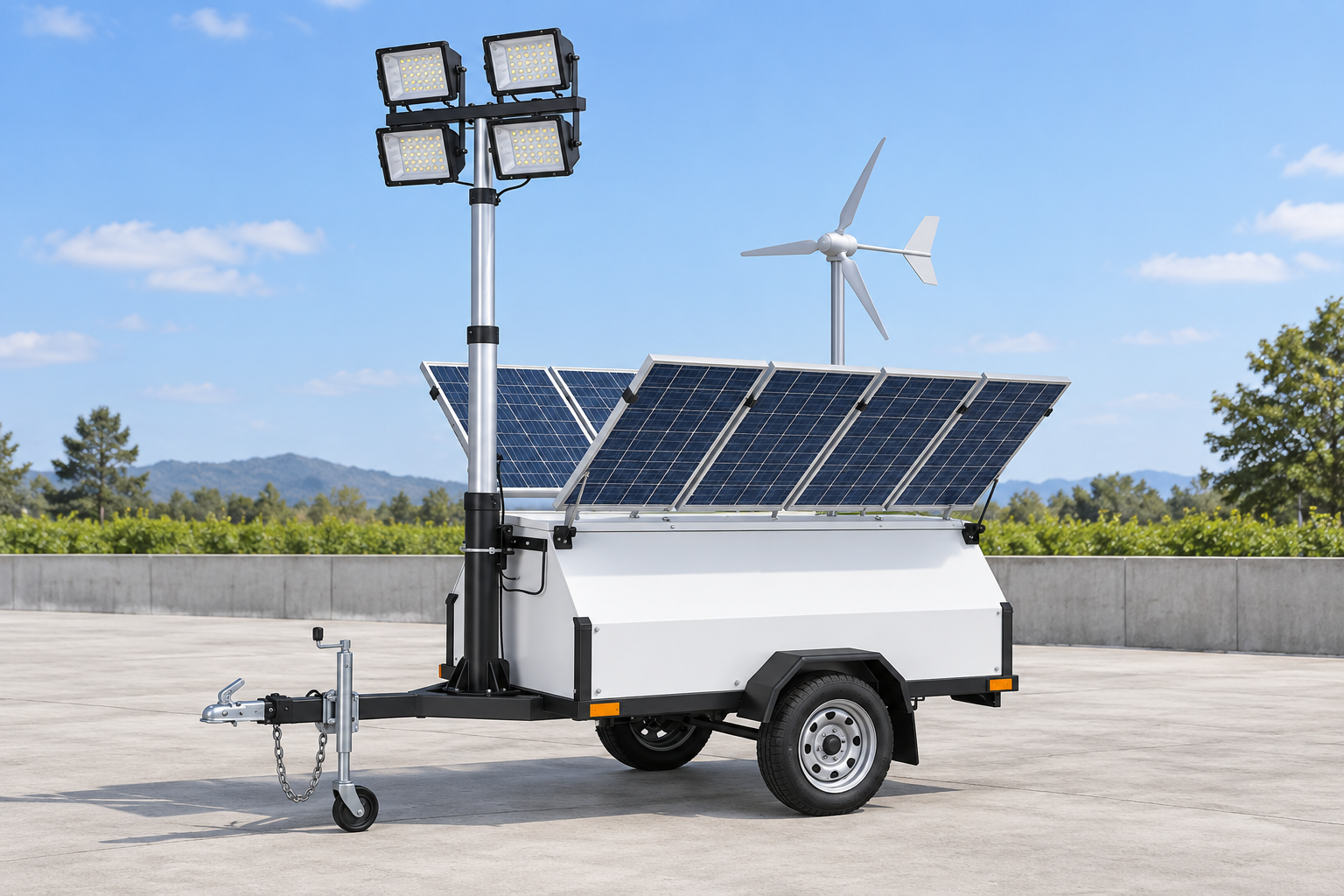
A turbine introduces its own rotor clearance, mass, attachment, and dynamic-loading requirements. Compare the exact quoted turbine and support with the approved trailer configuration, including transport provisions and the supplied deployment instructions. The solar panels, lighting mast, turbine mast, drawbar, and service access all occupy space. A visually larger rotor is not automatically a suitable upgrade.
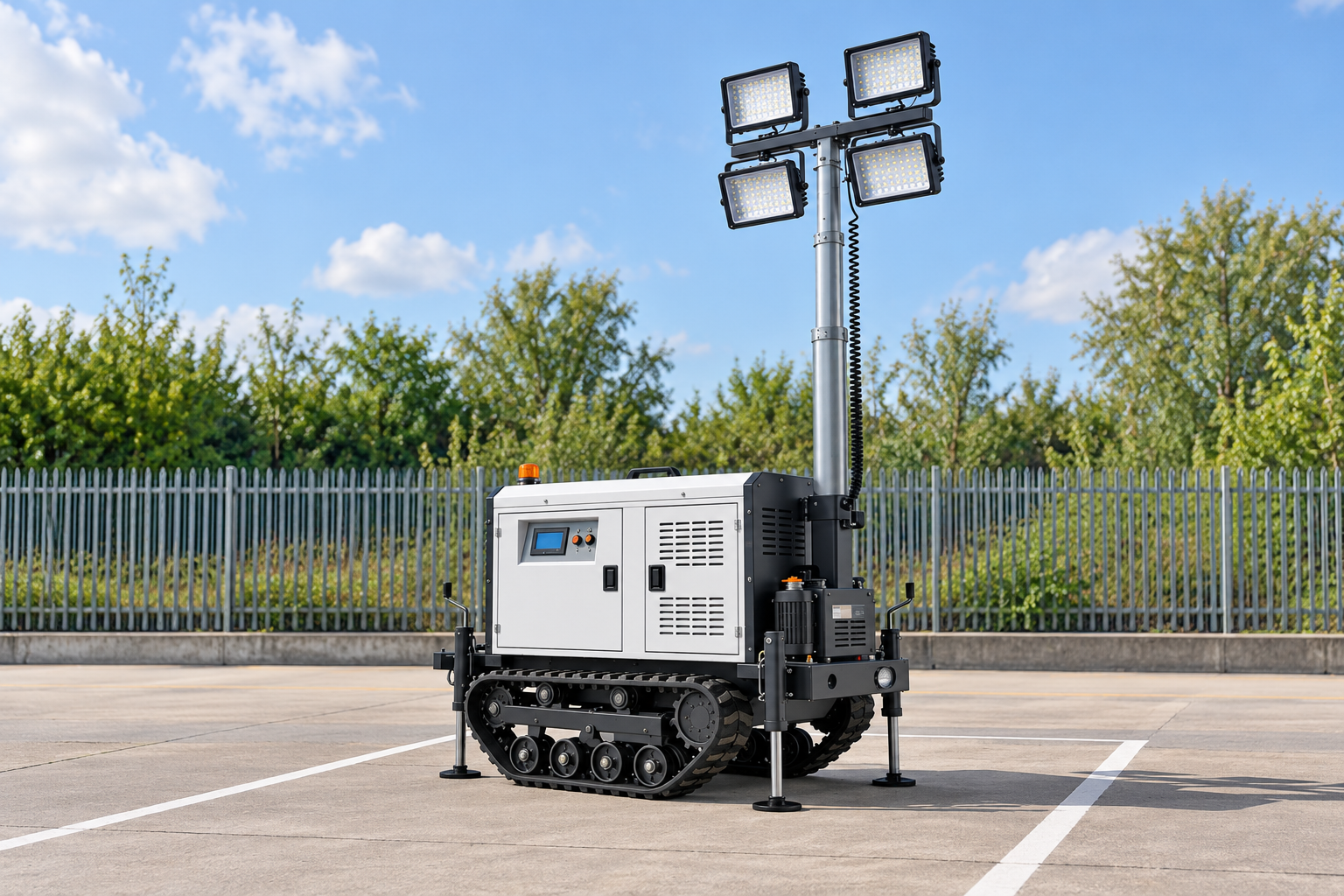
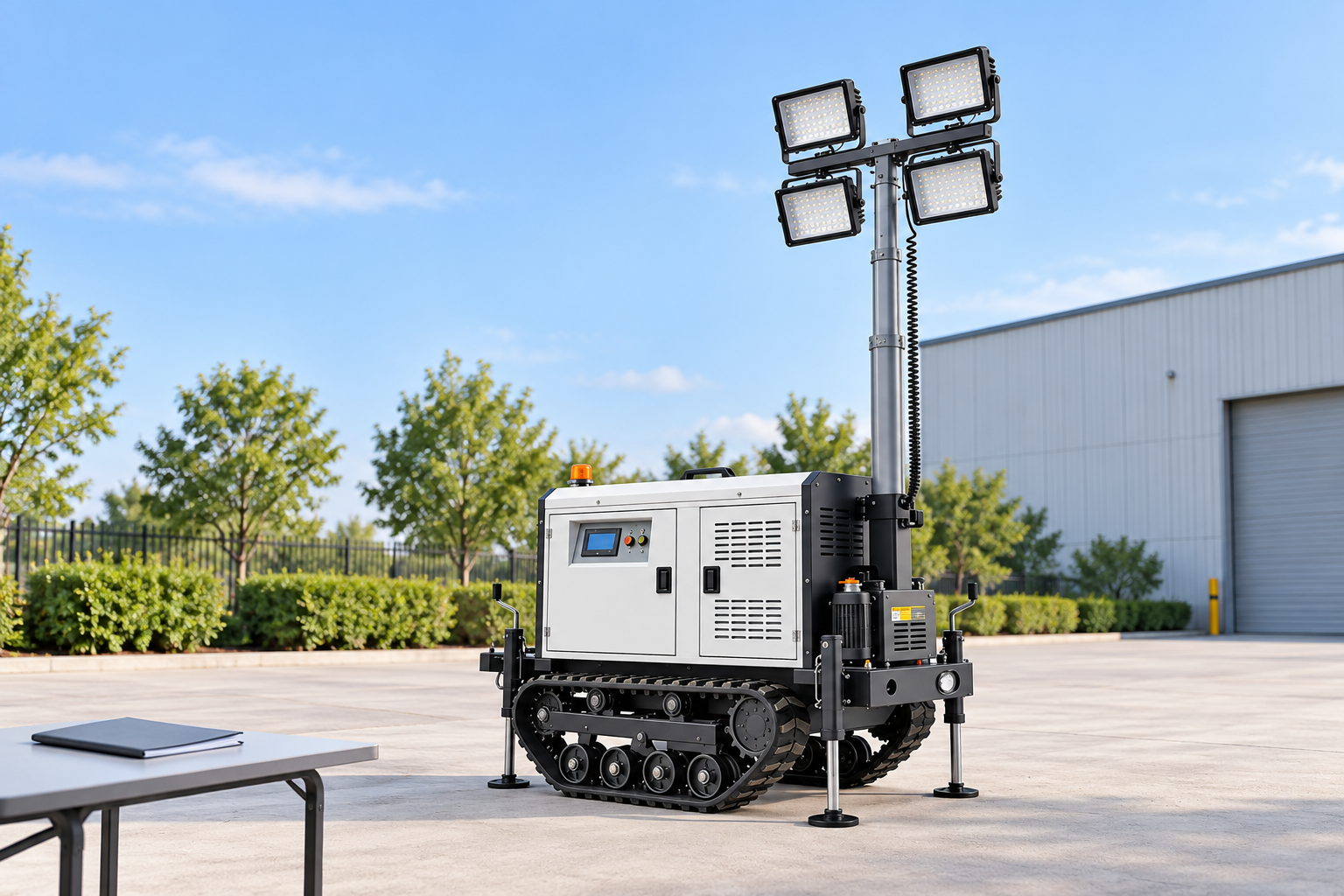
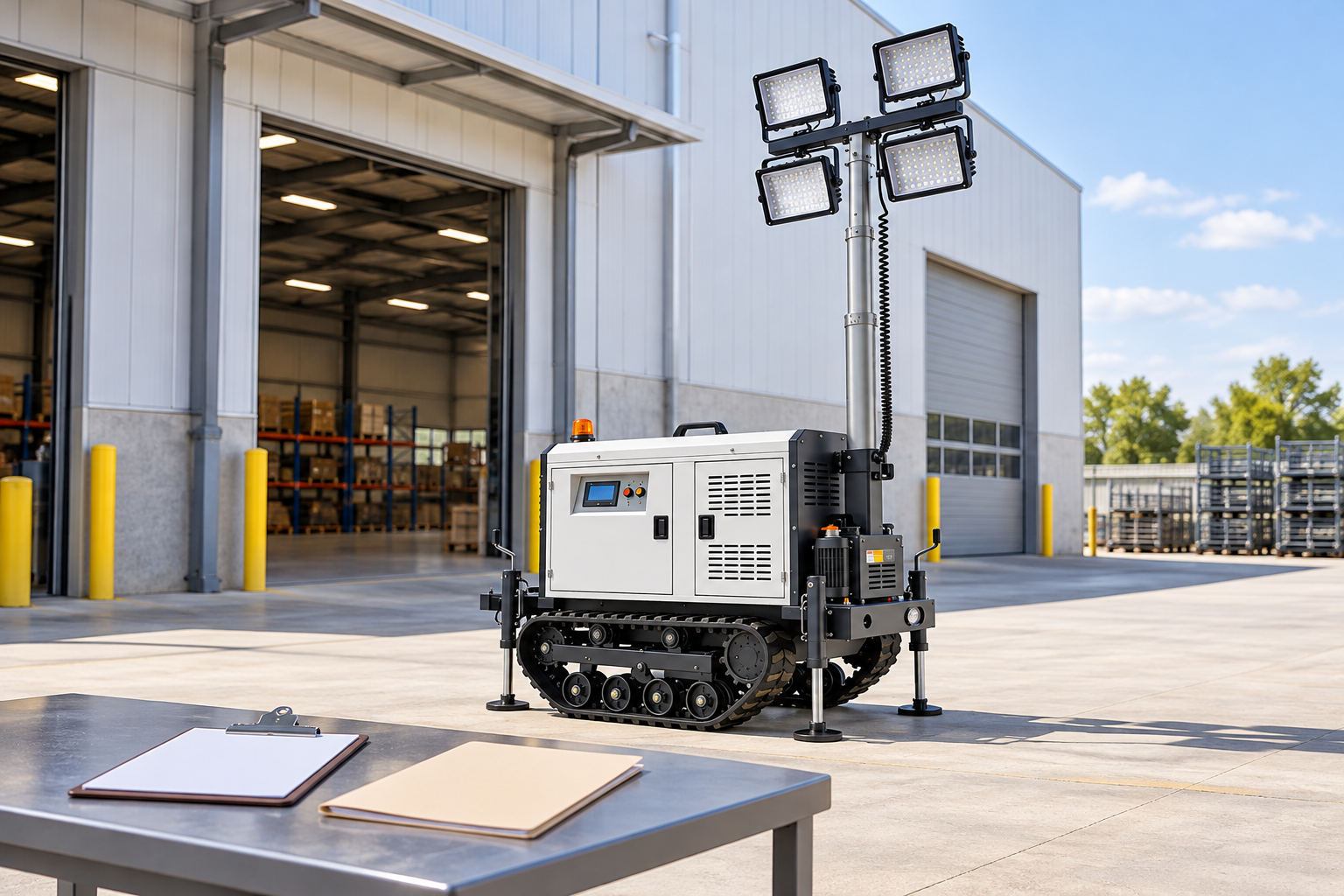
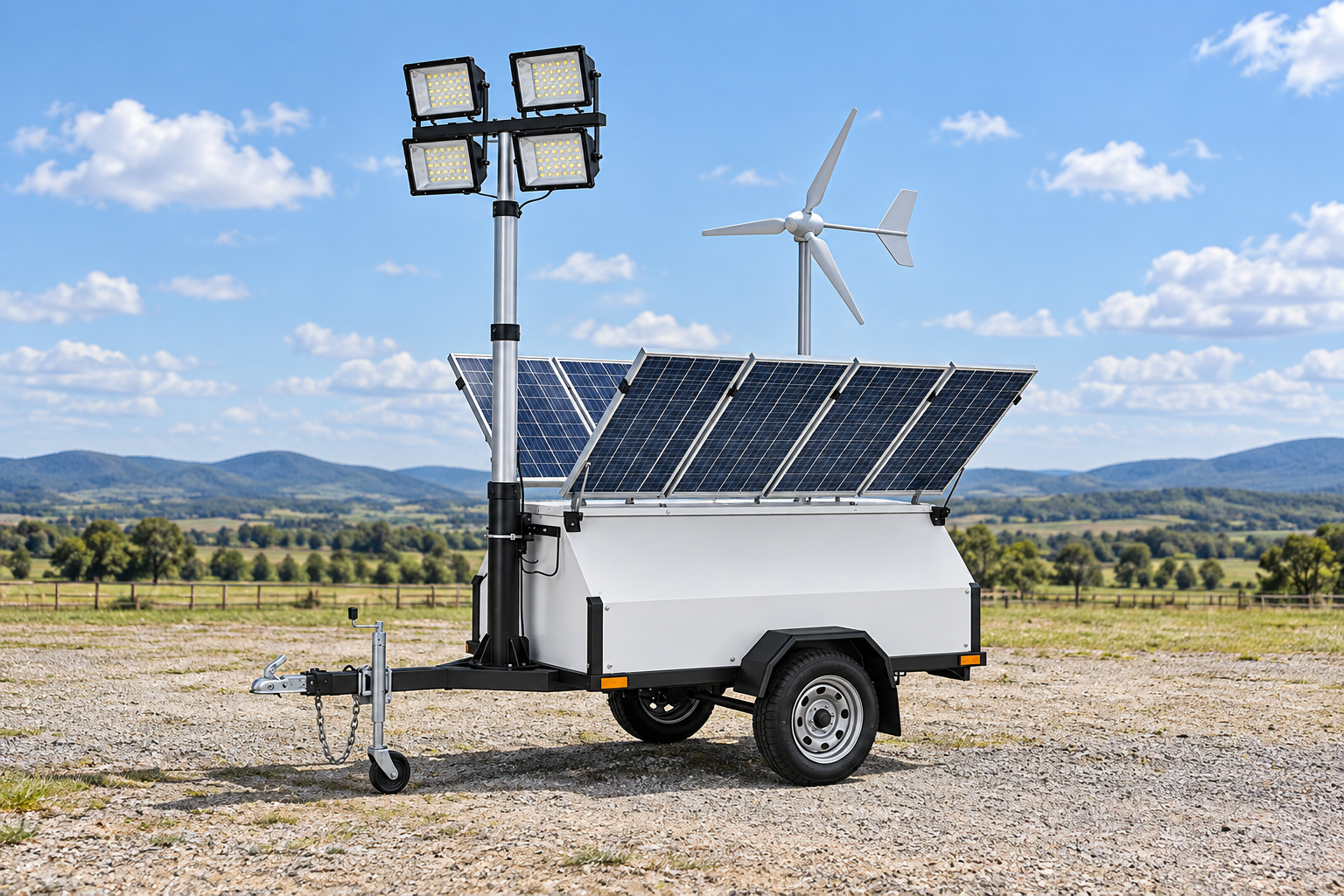
The pictures here are reference-based illustrations of the current Keyyou wind-solar trailer product: a white enclosure on a black wheeled chassis, four square floodlights, sloped solar modules, and a small three-bladed turbine on a separate rear support. They are not dimensions, structural calculations, or approval to add equipment. Confirm the actual configuration in the offer. Do not assume every option on a product page is included in one delivered unit.
Turbine sizing evidence table
| Sizing decision | Evidence required | Reason to withhold acceptance |
|---|---|---|
| Lighting duty | Lamp electrical inputs, hours, and auxiliary schedule | Quotation uses brightness as an energy requirement |
| Wind resource | Site inputs at the proposed hub position and relevant periods | Regional average is presented as the exact trailer resource |
| Turbine output | Model-specific power curve and measurement boundary | Only maximum or rated output is supplied |
| Energy contribution | Time-based calculation, documented losses, and uncertainty | Rated watts are multiplied by every night hour |
| Battery reserve | Usable energy, charge limits, and recovery assumptions | Nominal capacity is treated as fully usable reserve |
| Mechanical fit | Approved rotor, mast, transport, and deployment arrangement | A bigger turbine is proposed without system approval |
| Interruption plan | Defined essential service and response responsibility | Lighting continuity relies entirely on unverified wind |
This original qualitative table organizes the requested evidence. It does not specify a certified turbine size or equipment limit. Apply the power-curve and resource principles with the Department of Energy small-wind guidance, and use the supplied equipment documentation for system-specific acceptance.
Compare offers using the same service assumptions
Send each supplier the same duty schedule, site resource inputs, reserve requirement, and intended deployment conditions. Require the proposed configuration and energy calculation to state all assumptions. Where one offer includes a different battery or lamp setting, compare its delivered lighting service rather than comparing turbine wattage alone. Make changes to the comparison explicit so a seemingly higher generation figure does not hide a reduced load.
Request a separate statement of items requiring site approval or further engineering. Clarify which inspection records, operating instructions, spare parts, and transport arrangements are supplied. Keep commercial guarantees separate from engineering assumptions. A buyer can accept a bounded calculation while still requiring commissioning observations; that distinction avoids treating a marketing description as a verified site result.
Validate the result without inventing a field test
Plan verification around the actual offered equipment and the agreed method. Record the turbine configuration, operating location, lighting setting, available wind observations, charging data where accessible, and starting and ending battery condition. A short demonstration in favorable weather cannot independently establish performance through every low-generation period. Identify how the commissioning record will be compared with the design assumptions.
After deployment, investigate differences between expected and observed energy with the supplier and responsible personnel. Changes in obstacles, equipment location, battery condition, or settings may change the result. Keep operation within the supplied limits and avoid unapproved mast or control changes. The output of sizing should be a defined service with an understood reserve and response plan, rather than an unsupported claim that wind will always keep the lights on.
Equipment and complementary planning
Review the Keyyou wind-solar trailer product and the mobile light tower planning guide. Compare the separate issues covered by solar light tower energy balance and battery autonomy planning.
Understand wind generation before comparing ratings
The Department of Energy explains how a wind turbine converts moving air into electrical energy. The utility-scale equipment shown illustrates the generating principle; it is not a trailer specification, sizing rule, or approval of a mobile mounting. Use the exact small-turbine documents for the purchase.

Watch Energy 101: Wind Turbines.
Frequently asked questions
Can rated turbine watts establish nightly lighting runtime?
No. The actual power curve, the wind conditions at the installed hub position, system losses, and operating periods determine the generation contribution. Nightly demand and usable battery reserve must be assessed separately.
Can a larger rotor be fitted to the same lighting trailer?
Do not assume that it can. Obtain approval for the exact turbine, rotor clearance, support, electrical controls, transport arrangement, and deployed trailer configuration before changing equipment.
Should wind generation replace battery reserve planning?
No. Define the essential lighting duty, usable reserve, recovery assumptions, and response to unavailable generation. Wind contribution must be assessed over the periods relevant to that service, rather than assumed to be continuous.
Sources and scope
These primary educational sources support wind-resource and stored-energy principles. The calculation inputs are explicitly hypothetical, the evidence table is original, and the pictured trailer is not an engineering drawing. No nominal rating or site performance is asserted.