
Cold Starting a Diesel Light Tower: Batteries, Fuel, and Preheating
Prepare a diesel light tower for cold starts by checking battery capacity, winter-grade fuel, oil viscosity, approved preheating and safe starting procedures.
A reliable diesel light tower cold start depends on four matched systems: a battery that can deliver sufficient cranking current at the actual temperature, fuel suitable for the expected cold, oil of the engine-approved viscosity, and any manufacturer-approved intake or coolant preheating. Cold thickens lubricants, reduces battery output and makes compression-ignition conditions harder to achieve. Preparation should happen before the storm or night shift, not through repeated cranking after the engine fails to start. This guide provides a procurement and field checklist without inventing a minimum temperature for the pictured Keyyou product.
Why diesel starting changes as temperature falls
A diesel engine ignites fuel using heat created by compression. A cold cylinder head and block absorb more of that heat, while cold oil increases cranking resistance. At the same time, a lead-acid starting battery generally has less available output in cold conditions. Fuel can develop wax crystals below its relevant cold-flow limits, restricting filters and lines. These effects combine: slower cranking reduces compression heat just when the engine needs more of it.
Perkins’ cold-start performance explanation describes the engineering factors for its engines. The page demonstrates why cold-start capability is model-specific; its temperatures must not be applied to a different unidentified engine. For a Keyyou diesel option, obtain the exact engine model, starting-system voltage, battery specification, oil chart, fuel requirements and approved heating aids.
| Cold-start element | Was zu überprüfen ist | Do not assume |
|---|---|---|
| Starting battery | Correct type, state of charge, cold-cranking capability and clean connections | A warm-weather battery test proves winter performance |
| Engine oil | Maker-approved viscosity for expected ambient range | Thinner oil is always acceptable |
| Diesel fuel | Seasonal grade, storage quality and cold-flow suitability | Additives can rescue gelled fuel in every engine |
| Preheating | Installed glow/intake/block heater and exact procedure | Any external heater or starting fluid is safe |
| Cranking cycle | Maximum crank time and rest interval | Continuous cranking will eventually start it |
| Warm-up and load | Approved stabilization checks before planned demand | Long no-load idling is always beneficial |
Battery readiness comes before the start switch
Confirm the correct battery chemistry, voltage, capacity and cold-cranking specification for the engine. A battery can show acceptable open-circuit voltage yet collapse under starter load. Use an approved conductance or load test and record temperature, state of charge and terminal condition. Inspect clamps, ground straps and cables for looseness, corrosion or damaged insulation; extra resistance reduces voltage at the starter. Isolate energy according to the service procedure before touching connections.
Charging strategy matters for standby equipment. A maintained battery charger must be compatible with battery type and ambient range, correctly connected and protected. If the tower sits unused, parasitic control loads can gradually reduce charge. Log charger status and battery age rather than waiting for a failed winter start. Do not substitute a higher-capacity battery that exceeds the compartment, cable or charger design without written approval. Do not jump-start through improvised points.
Repeated cranking overheats the starter and cables while depleting the battery. Follow the engine’s maximum crank duration and mandatory rest interval. If the engine does not start within the allowed attempts, stop and diagnose instead of spraying starting fluid or bypassing controls. Some diesel engines with intake heaters or glow systems can be damaged or create a fire risk when ether is used. Only use a starting aid explicitly approved by the exact engine maker.
Fuel, oil and preheating must match the engine
Buy fuel suitable for the lowest expected storage and operating temperature, considering local seasonal blends. Keep water and contamination out of storage, and inspect the separator or filter under the engine manual. Wax restriction can resemble an empty tank or weak injection. Do not heat fuel with an open flame. Additives differ in purpose and compatibility; use only products and doses approved by the engine and fuel supplier before gelling occurs.
Oil viscosity affects cranking torque and lubrication after start. Use the engine maker’s ambient-temperature chart and the required performance specification. A lower viscosity chosen outside that chart can reduce protection; an oil correct for summer can make winter cranking unnecessarily hard. Record the actual oil installed, not merely what was ordered. Perkins’ winter diesel guidance discusses fuel, oil and battery preparation for its product families and reinforces the need to consult the applicable manual.
Approved glow plugs, intake heaters, coolant heaters or block heaters can improve starting, but each has a specified voltage, energizing time and inspection procedure. Verify heater power supply, cord protection, grounding and thermostat operation before cold weather. Route cords away from towing and stabilizer hazards. Never improvise a heater against fuel, wiring or plastic parts, and never operate an indoor combustion heater where exhaust can accumulate. Disconnect shore-power equipment in the sequence stated by the tower manufacturer before transport or starting.
A disciplined cold-start sequence
- Secure the tower. Park level, apply brakes/chocks as required, deploy only the supports specified for operation, and keep exhaust away from people and openings.
- Perform the walk-around. Check leaks, snow/ice blockage, air inlets, exhaust, fuel level, oil/coolant and visible cable condition without opening energized compartments.
- Confirm cold-weather aids. Verify approved fuel, oil, battery charge and heater completion; remove power cords as instructed.
- Use the exact control sequence. Allow glow or intake-preheat indicators to complete; do not bypass interlocks.
- Respect cranking limits. Stop after the specified time and wait the required interval. Investigate repeated failure.
- Verify stable operation. Check oil pressure, charging indication, frequency/voltage, abnormal smoke, leaks and alarms.
- Apply load as directed. Avoid both an immediate unapproved step load and prolonged unnecessary no-load idling.
Some white vapor immediately after a cold start can be temporary, but persistent smoke, misfire, unusual noise or alarms need diagnosis. Do not use exhaust color alone to authorize work. The wet-stacking guide explains why operating history and fluid checks matter. If oil level rises or smells strongly of fuel, stop and seek qualified service.

Plan the lighting job, not just the engine start
A cold engine that starts is not automatically ready for full site demand. Check the manufacturer’s warm-up instructions and controller indications, then introduce lighting load in the approved sequence. LED drivers may present inrush, while a cold battery charger or heater adds demand. The generator load-factor guide separates steady and transient requirements. For mountain winter work, also use the altitude derating guide; cold temperature does not cancel every altitude or cooling-system constraint.
Build contingency into the shift. If the tower fails to start, workers still need safe access lighting and traffic control. Keep an approved alternate light available rather than repeatedly cranking in darkness. Schedule battery testing before forecast cold, store compatible filters and service parts, and define who may authorize a jump start or heater repair. Log ambient temperature, preheat time, crank attempts, voltage, alarms and time to stable operation so recurring faults can be identified.
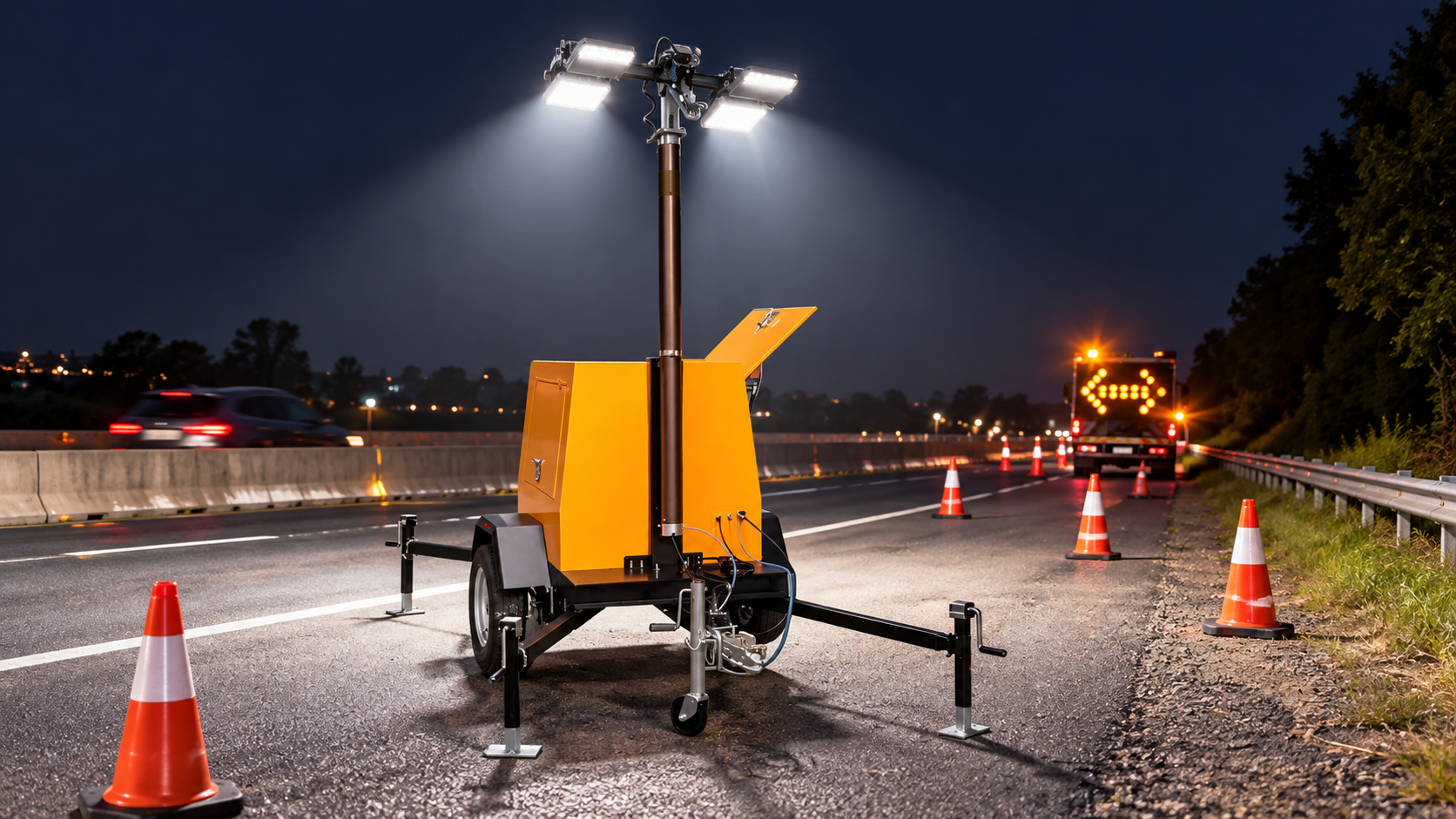
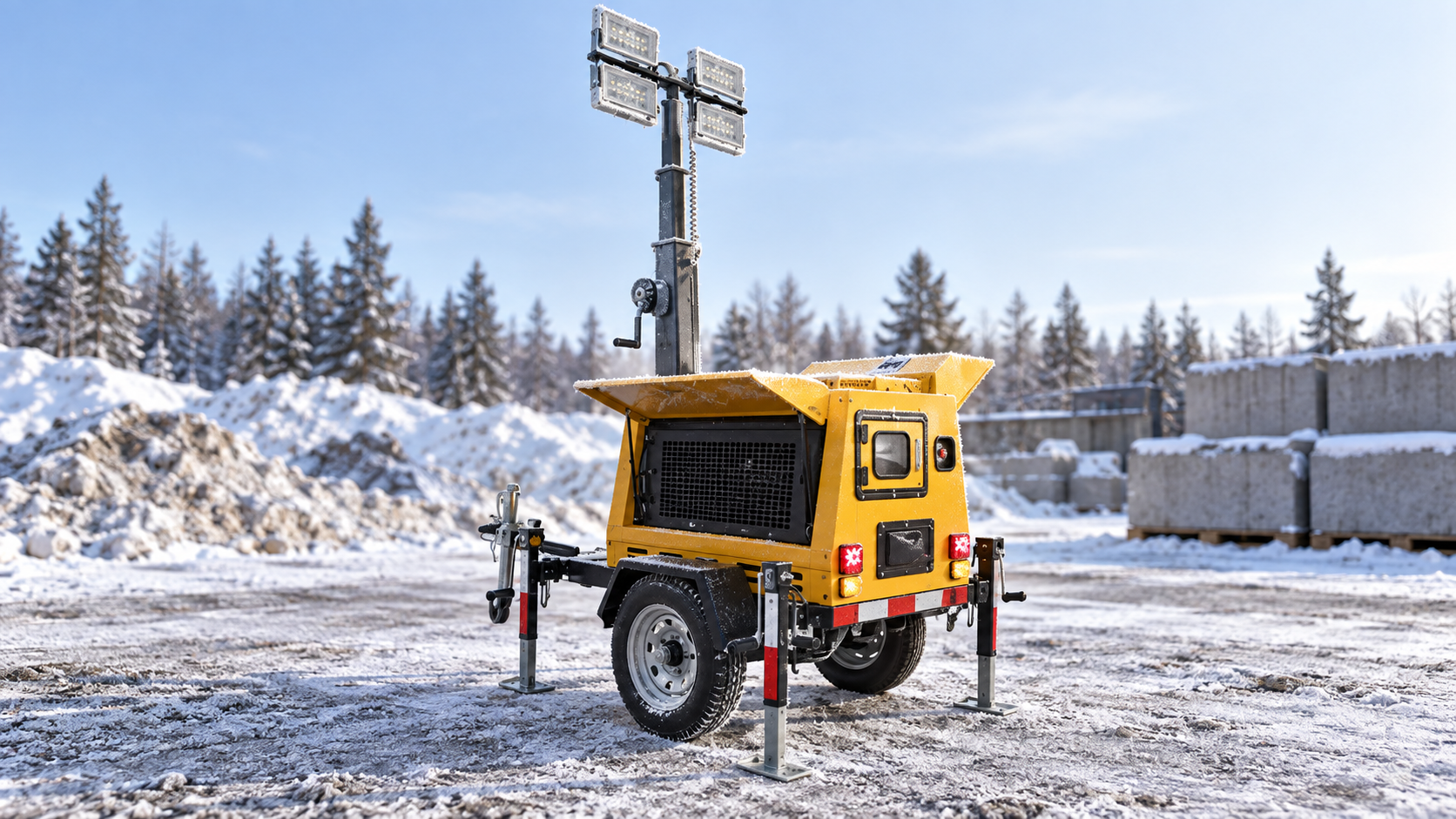
Das Keyyou hand-cranked trailer light tower provides the product reference for these images: compact yellow enclosure, dark grille, two wheels, stabilizer legs, manual mast crank and four rectangular lamps. Its product family may be configured with different power systems. A photograph cannot confirm the diesel engine, battery or heater option. Specify the minimum ambient start temperature and request an option-specific cold-start statement in the quotation.
RFQ checklist for a winter diesel tower
Request the exact engine and generator-set model, starting voltage, battery type and cold-cranking requirement, approved oil grade by ambient temperature, permitted fuel standards and the lowest specified starting temperature with and without aids. Ask which glow, intake, coolant or block-heater option is installed, its supply requirements and whether a battery maintainer is included. Confirm the maximum cranking time, rest interval, warm-up/loading procedure and alarm behavior. Also request storage-temperature limits, snow/ice clearance points and service access requirements.
Do not accept a generic “winter package” label without a bill of materials. Confirm that cords and connectors suit the destination market and that the supplied fuel system and emissions equipment match local requirements. The OSHA portable-generator safety sheet addresses carbon monoxide, electrical and refueling hazards; apply relevant workplace rules and the exact industrial equipment manual.
Safety video: generator exhaust in winter
The CDC video reinforces that a generator must remain safely outdoors and away from openings. Snow or cold weather never makes indoor or enclosed operation acceptable.
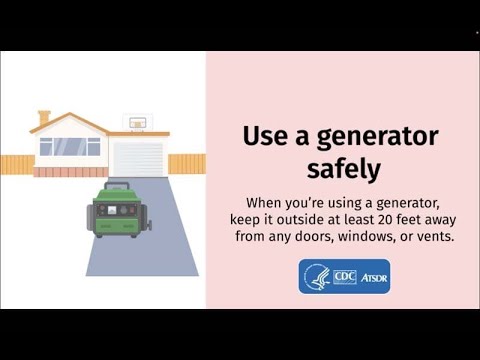
View the CDC generator safety page.
Häufig gestellte Fragen
Can I use starting fluid on a cold diesel light tower?
Only if the exact engine manufacturer explicitly permits it and provides a procedure. Intake heaters and ether can create severe hazards.
Does a fully charged battery guarantee a cold start?
No. Battery cold output, cable voltage drop, oil viscosity, fuel flow, compression and preheating all affect the result.
Should I idle the engine for a long time to warm it?
Follow the exact manual. Excessive no-load operation may be undesirable; apply load only in the approved sequence after stable indications.
What minimum temperature applies to the pictured tower?
No value is inferred from the image. Confirm the exact diesel engine, battery and winter package in the supplier’s written documentation.