
Diesel Light Tower Generator Derating at High Altitude
Size diesel light tower generator capacity at elevation. Check engine, alternator and cooling limits, site temperature, startup loads and model-specific derating curves.
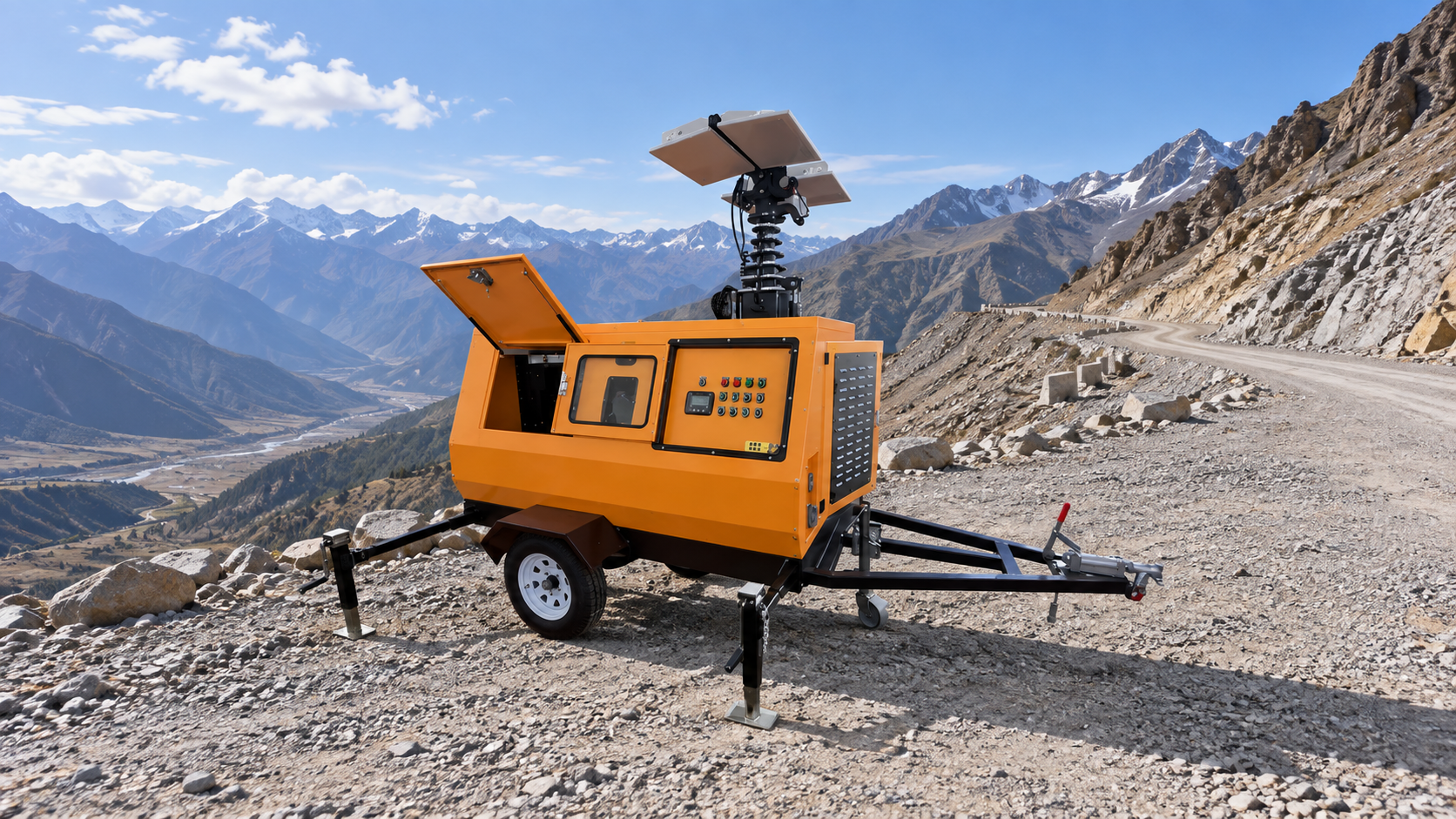
Light tower generator altitude derating means checking whether the exact engine, alternator and cooling package can supply the required electrical load at the jobsite’s elevation and temperature. A generator’s sea-level nameplate is not necessarily the available output on a mountain road or mine. Yet no single percentage-per-1,000-feet rule applies to every diesel engine and generator set. This guide shows how to build a defensible site-load comparison, which documents to request and why the pictured trailer’s optional diesel configuration must be verified rather than inferred from its enclosure.
Why elevation can reduce available generator capacity
Air density generally falls with increasing elevation, affecting combustion air and cooling. The generator set’s engine may have less available shaft power at a given site condition, while the alternator and cooling system each have their own thermal limits. Cummins’ generator-set application manual explicitly calls for altitude and ambient-temperature assessment of engine, alternator and cooling performance. Hot ambient air and obstructed ventilation can compound a high-elevation problem. A chilly mountain morning does not prove the same rating at a hot afternoon deployment, and a nominal site elevation alone is not the whole operating envelope.
Engine technology matters. A naturally aspirated unit, a turbocharged engine and a different factory calibration may have very different derating thresholds. Perkins documents a specific high-altitude application in which a particular engine family operated without derating up to 3,000 meters; that model-specific example is a strong reason not to copy a universal slope into a light-tower quotation. It is not evidence that Keyyou’s pictured trailer uses that engine or has the same performance.
Collect the site and equipment inputs first
| Input | Warum es wichtig ist | Anzufordernde Beweismittel |
|---|---|---|
| Site elevation and maximum ambient temperature | Defines the expected air and cooling conditions | Site survey and weather design range |
| Exact engine and calibration | Sets the manufacturer’s altitude/temperature curve | Engine model and serial-specific datasheet |
| Alternator and generator duty rating | Limits electrical kW and kVA under the duty cycle | Set-level nameplate and alternator curves |
| LED and auxiliary loads | Defines continuous and transient demand | Measured lighting modes and approved outlets |
| Cooling and enclosure ventilation | May be limiting in hot, dusty, confined placement | Airflow clearances and site-rated cooling data |
| Starting behavior and power factor | Determines temporary load beyond running kW | Driver and equipment startup specifications |
Record elevation in meters or feet consistently, and identify whether the manufacturer’s chart uses pressure altitude, physical elevation or another basis. Ask for the site temperature range during operation, not merely an annual average. The exact engine and alternator matter more than a generic tower-family photograph. A product can offer diesel or battery versions, and the generator rating for one option cannot be transferred to the other. If a quote says “up to” a certain output, request the duty category, ambient condition and rating basis behind the claim.
A worked comparison, not a universal derating rule
Assume a hypothetical diesel generator package is rated for 6.0 kW continuous electrical output at its published reference condition. Suppose the manufacturer’s specific site evaluation gives an illustrative 0.82 combined maximum usable-output multiplier at the jobsite’s altitude and temperature. Then site-available electrical output is 6.0 × 0.82 = 4.92 kW, subject to the same duty definition. If the lighting system draws 3.6 kW and approved auxiliaries draw 0.6 kW, running demand is 4.2 kW, leaving 0.72 kW of arithmetic headroom before other engineering checks. None of these numbers is a Keyyou product specification or an assumed derating coefficient for all generators.
The next question is whether the generator can tolerate startup and any changing load. Four LED drivers starting together may impose a transient different from their steady-state watts. A motor or tool attached to an approved receptacle can add a much larger surge; do not assume such a receptacle exists on the pictured unit. Check kVA and power factor as well as kW. A 4.2 kW load with a 0.8 aggregate power factor represents 5.25 kVA in a simple illustrative calculation, but actual driver behavior and harmonics need the relevant equipment data. Compare both running and transient requirements against the exact site-rated alternator and set.
If the supplier provides separate engine, alternator and cooling limits, use the most restrictive applicable set-level output after the manufacturer’s coordination rules, not the best-looking individual number. Avoid multiplying arbitrary derate factors together unless the manufacturer’s method says to do so; some published curves already account for interacting conditions. Cummins’ application material explains why the entire installed generator set needs an engineering review. A neat calculator cannot substitute for engine and alternator curves with the correct duty designation.
Do not confuse electrical demand, generator rating and light output
A tower’s lamp watts describe one part of the running electrical demand. Control electronics, mast actuation if applicable, battery charging on a hybrid version and approved auxiliary power can change total load. Generator “kVA” is not interchangeable with “kW” without a defined power factor. A standby rating may permit a different duty cycle from a continuous or prime rating. Do not use a larger emergency-only number for nightly repeated work unless the manufacturer approves that duty. Similarly, a lamp’s weather rating says nothing about the engine’s altitude capability.
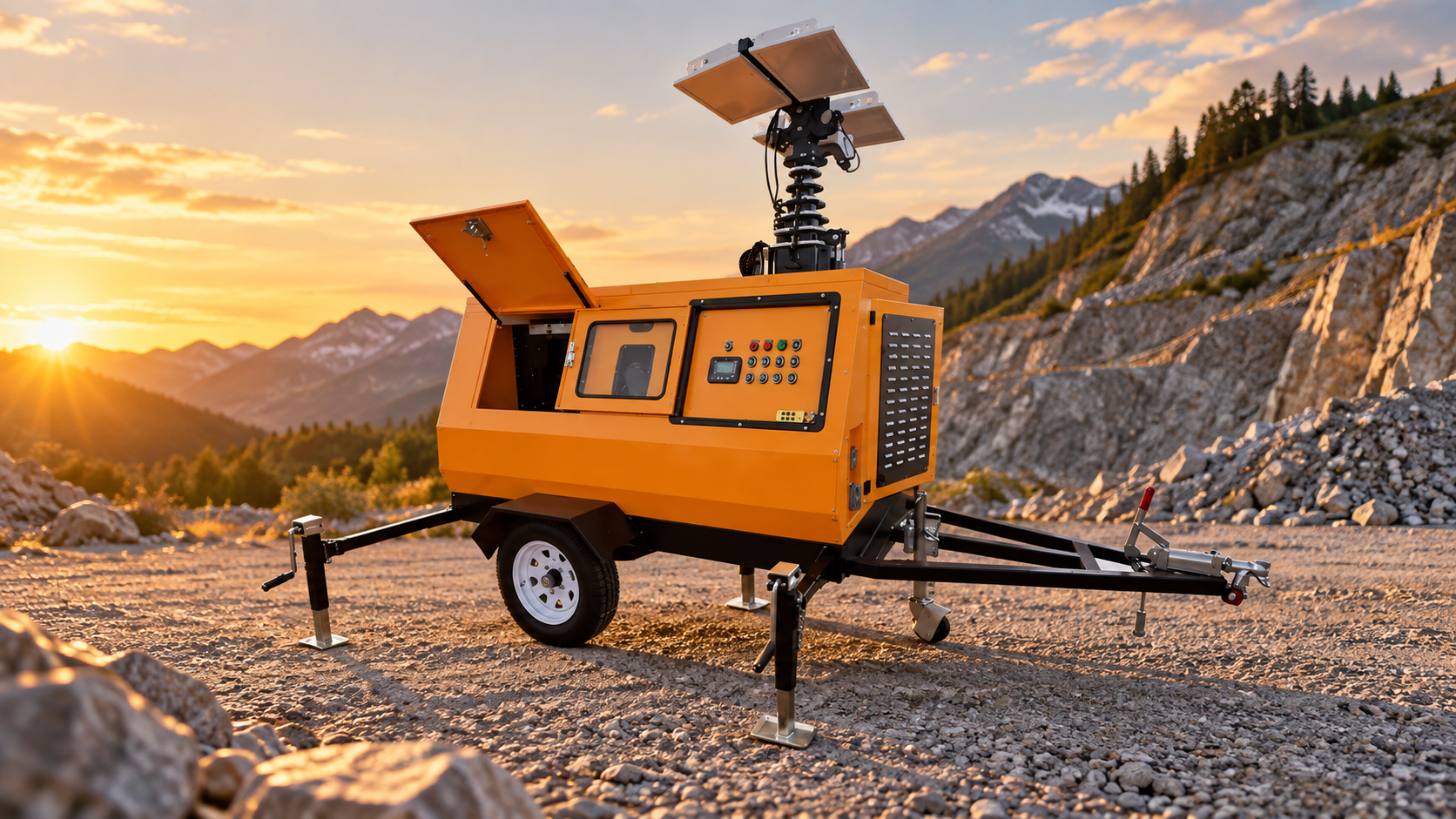
For the Keyyou hydraulic-pole trailer light tower, the product page describes variant power configurations, including a diesel generator and a battery-powered option. The accompanying images follow the orange enclosed chassis, single-axle wheel, black drawbar, stabilizer legs and folded rectangular light heads of the actual product reference. They are not proof of which generator engine, alternator or exact fuel system will be delivered. Ask the sales/engineering team to identify the chosen variant and provide its site-rated schedule before procurement.
Our fuel-tank sizing guide addresses a different part of the same job: a generator with sufficient power still needs enough usable fuel and safe refueling intervals. The diesel versus solar guide helps compare energy sources at a higher level, while the electric light tower runtime calculator covers battery energy and load. Do not import a diesel power curve into a solar battery specification or turn a battery-runtime calculation into engine derating.
Placement, ventilation and field verification
High elevations can be dusty and windy, but dust control must not block the engine’s intended air inlet or exhaust path. Follow the manufacturer’s minimum clearances and avoid placing exhaust near people, doors, windows or ventilation intakes. OSHA’s portable generator safety guidance emphasizes ventilation, carbon-monoxide hazards, appropriate electrical use and safe refueling. Its portable-generator guidance is a useful safety reference, not a certification for any light-tower configuration. Local rules, site-specific risk assessments and the supplied manual govern the installation.
At commissioning, document the temperature and approximate pressure/elevation condition, selected lamp mode, measured kW/kVA, steady voltage/frequency, controller alarms and generator coolant temperature where specified. Verify that the tower’s actual ventilation path is unobstructed when the doors are closed in the operating configuration. A short no-load start proves little about a full-shift mountain job. Test under representative sustained load and check the fuel rate separately; the generator may behave differently at a load that changes with dimming and auxiliary devices.
Do not defeat overload or temperature protection to keep lamps on. If the set trips or overheats, stop and have qualified personnel identify the cause. A smaller connected load may solve a genuine demand problem only if it still provides required illuminance and is permitted by the site plan. Otherwise, request an appropriate larger site-rated package or a different power strategy. Record the revised configuration so a later deployment does not unknowingly rely on the earlier, underpowered estimate.
RFQ checklist for a mountain deployment
- State the highest operating elevation and temperature. Include the worst credible combination and whether the tower moves between sites.
- Define duty hours and loads. Provide LED modes, planned simultaneous starts and any authorized auxiliary circuits.
- Request the exact option code. Engine, alternator, controller and cooling package should be traceable to datasheets.
- Ask for site-rated output. Require kW, kVA, duty class, altitude/temperature conditions and any restrictions in writing.
- Verify transients and ventilation. Ask about permissible startup sequence, exhaust location and required clearances.
- Test the delivered unit. Compare measured sustained load and temperatures with the accepted submittal before night operations.
A well-specified enquiry is more useful than asking “what percent do I derate a diesel tower?” without a model. If the supplier cannot provide the actual engine and generator-set data, mark the power claim unverified rather than inventing a standard multiplier. This approach also prevents unnecessary oversizing when a particular engineered package has a higher altitude threshold than a rule of thumb would imply.
Safety video: outdoor generator placement
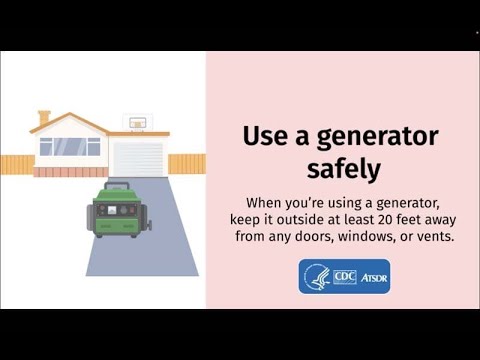
The CDC’s short educational video reinforces a basic generator-placement principle. It does not provide an altitude curve; use the manufacturer’s engine, alternator and cooling data for the electrical sizing above.
Read the CDC’s video page and transcript.
Häufig gestellte Fragen
Is there one standard altitude derating percentage for every diesel light tower?
No. Engine design, calibration, alternator, cooling and ambient temperature affect the site-rated set. Use the exact manufacturer’s curves and duty rating.
Can I use sea-level generator kW at a mountain site?
Only if the exact supplier documentation confirms that output for the site’s altitude and temperature. Otherwise request a site-rated value and test the delivered configuration.
Does a turbocharged engine eliminate all derating?
Not necessarily. Some models maintain output over a defined altitude range, but the threshold and other limits are model-specific. Do not transfer another engine’s curve.
What if running watts fit but the lights trip at startup?
Check transient kVA, driver behavior, starting sequence and generator voltage response. Have qualified personnel review the system rather than bypassing protection.