
How Should Teams Plan a Solar Light Tower Charging Window?
Solar light tower charging time depends on how much usable energy the battery still needs, the charging input available under stated conditions, path losses, and any daytime load that competes with recharge. Teams should record battery state, site solar resource, the permitted charging path, and operating load before treating a catalogue hour figure as a project plan.
This guide is for temporary job sites that need a condition-based planning method rather than a universal recharge promise. For the broader component context, see the site’s solar light-tower component overview.

Part 1. Why is there no single charging-time answer?
Search results and product pages often publish one recharge-hour number, but that number is almost always tied to a named model, a stated battery condition, and specific sunlight or input assumptions. A planning article cannot copy that figure and apply it to every tower, every season, and every job site.
The useful question is not “How many hours does every solar light tower take to charge?” It is “What energy must be replaced, through which charging path, under the conditions at this site?” Until those inputs are defined, any hour estimate is incomplete.
Manufacturer documentation illustrates the point. The Generac VT-Solar specification lists recharge information for a named configuration and distinguishes operating settings. That is valid evidence for that product under its stated conditions; it is not evidence for an unverified unit on another project.
Important: Do not replace an input checklist with a headline recharge hour from a brochure or search snippet. NREL PVWatts system-design documentation models photovoltaic output from physical system inputs; a charge-time estimate needs the same discipline.
Part 2. Which inputs determine how long charging takes?
Charging duration is an energy-balance question. The battery must receive enough usable energy to reach the intended state of charge, after losses, while any connected load continues to draw power.
At minimum, a credible estimate requires:
- Battery state and chemistry. Starting state of charge, usable capacity, temperature limits, and the charge stage currently in progress all change the apparent duration. Battery University’s depth-of-discharge guidance is useful for general battery-care framing only; the selected unit’s approved documentation remains authoritative.
- Energy to replace. This is not always “empty to full.” A tower deployed after partial overnight use may need less recharge time than one arriving deeply discharged.
- Charging input. Solar array rating, orientation, tilt, irradiance, and any alternate AC, grid, or generator input permitted for the selected configuration.
- Path efficiency and control settings. Charge-controller behavior, wiring losses, inverter idle draw, and the final absorption/float stage affect how quickly the state of charge appears to rise.
- Concurrent daytime load. Controllers, communications, auxiliary circuits, or operational loads that remain energized during daylight can consume energy that would otherwise charge the battery.
IEEE 1562-2021 applies to PV-only stand-alone sizing and reinforces that load and solar-resource assumptions belong at the start of the calculation. Hybrid or alternate-charging configurations need their own documented inputs rather than a borrowed formula.
Part 3. What should teams record before estimating charge time?
Start with a written record, not a guess. The same inputs support an internal operating plan, a supplier discussion, and an RFQ response review.
Record the recharge-planning inputs
- Location and planned deployment dates.
- Battery state at arrival or after the last operating shift.
- Intended nightly lighting hours and any acceptable dimming periods.
- Solar array orientation, tilt, and known obstructions at setup and later in the project.
- Permitted alternate charging methods and any site restrictions on grid or generator use.
- Daytime loads that remain connected while the unit should recharge.
- Required reserve after recharge, not only “full” as a label.
The DOE guidance on PV performance and longevity recommends documenting nominal conditions and using monitoring to identify deviations. For mobile lighting, preserve the recharge input record with the operating log.
Translate inputs into a planning boundary
A simple “battery capacity divided by panel wattage” shortcut ignores state of charge, losses, charge-stage behavior, and daytime load. Forum discussions frequently note that loads during the day slow recharging and that the final charge stage changes the apparent duration; those concerns belong in the planning record even though forum posts are not technical proof.
| Planning input | Why it changes the estimate | Typical owner |
|---|---|---|
| Starting battery state | Defines usable energy still required | Site operator |
| Site solar resource and shade | Defines energy available from the array | Deployment crew |
| Permitted charging path | Separates solar-only from grid or hybrid recovery | Procurement |
| Daytime connected load | Reduces net energy available for recharge | Operations |
| Required reserve after recharge | Prevents treating “full” as “ready for any schedule” | Site manager |
Part 4. How do solar, grid, and hybrid charging paths differ?
Solar recharge depends on available irradiance, array exposure, and the daily energy balance. Grid or AC recharge, where the selected configuration allows it, follows the input power and charger limits documented for that unit. Hybrid arrangements may combine paths, but the permitted sequence and priority must come from approved configuration documents—not from assumption.
Atlas Copco’s solar light-tower explainer describes orientation, tilt, and backup charging as significant operating inputs. Operators should follow the selected unit’s instructions for each path rather than force a generic rule across models.
| Charging path | What the plan must define | Common planning mistake |
|---|---|---|
| Solar only | Exposure window, seasonal resource, and recovery after low-sun days | Copying a clear-day hour claim from another model |
| Grid or AC input | Permitted connection, charger limit, and site power constraints | Assuming every tower accepts the same input |
| Hybrid or alternate source | Priority between paths and operating restrictions | Treating backup charging as unlimited runtime |
| Concurrent operation | Whether lights or auxiliaries draw power during recharge | Ignoring daytime controller or inverter load |
For panel-size context that affects solar input, see the site’s solar-panel sizing discussion.
Part 5. What conditions extend or shorten charging?
Several site and operating conditions change recharge duration without indicating a defective product. The selected manual remains the authority for safe movement, cleaning, and electrical work.
Conditions that commonly extend charging time
- Partial shade, dust, snow, or debris on the array surface.
- Overcast periods or low seasonal solar resource.
- A deeply discharged battery entering a longer bulk-to-absorption sequence.
- Cold or hot battery temperatures outside the efficient charging range.
- Daytime loads, inverter idle draw, or continued non-critical lighting.
- A required reserve target higher than the immediate operating need.
Conditions that can shorten apparent charging time
- Higher starting state of charge with less usable energy to replace.
- Improved array exposure after repositioning, within the manufacturer’s instructions.
- Use of an approved alternate charging input where permitted and documented.
- Reduced concurrent load during the recharge window.
Recovery after several low-production days is a distinct planning problem. Buyers often ask how storage is refilled after weather-related shortfall; the answer belongs in the energy-balance plan and fallback procedure, not in a single static hour claim. Seasonal context is covered in the site’s winter operation guidance for solar LED light towers.
| Symptom or condition | Likely cause category | First response |
|---|---|---|
| Charge indicator rises slowly on a clear day | Shade, soiling, or daytime load | Inspect exposure, clean only as instructed, review connected load |
| Runtime is short despite “full” indication | Prior deficit, higher load, or reserve already consumed | Compare operating log with planned lighting schedule |
| Recovery takes multiple days | Low solar resource plus consecutive night demand | Activate documented fallback or alternate charging if permitted |
| Apparent full charge but weak night performance | State-of-charge indication not aligned with usable energy | Request configuration review against approved documentation |
Part 6. Which configuration questions belong in the RFQ?
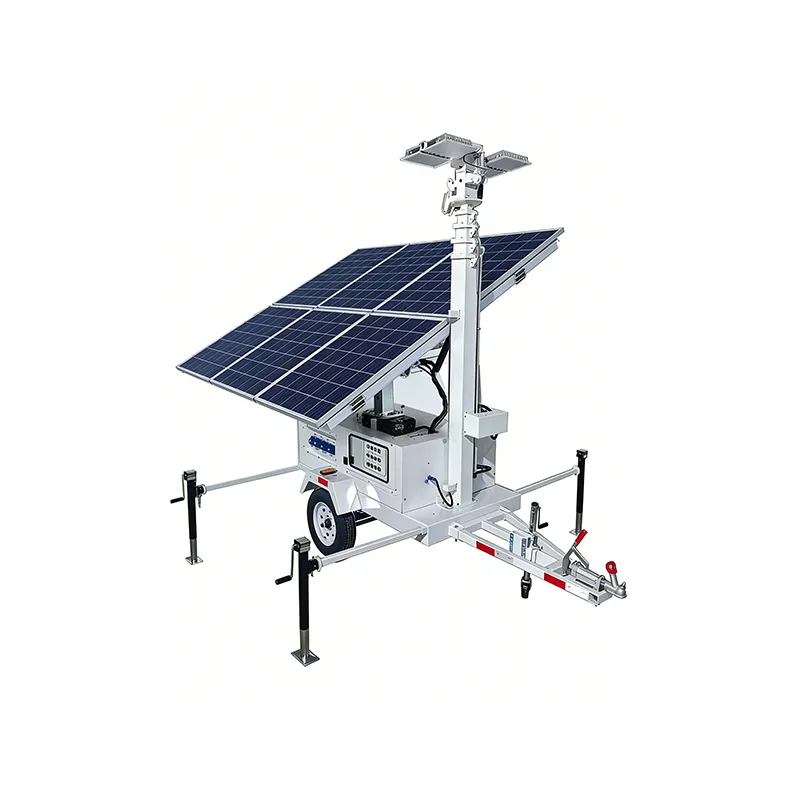
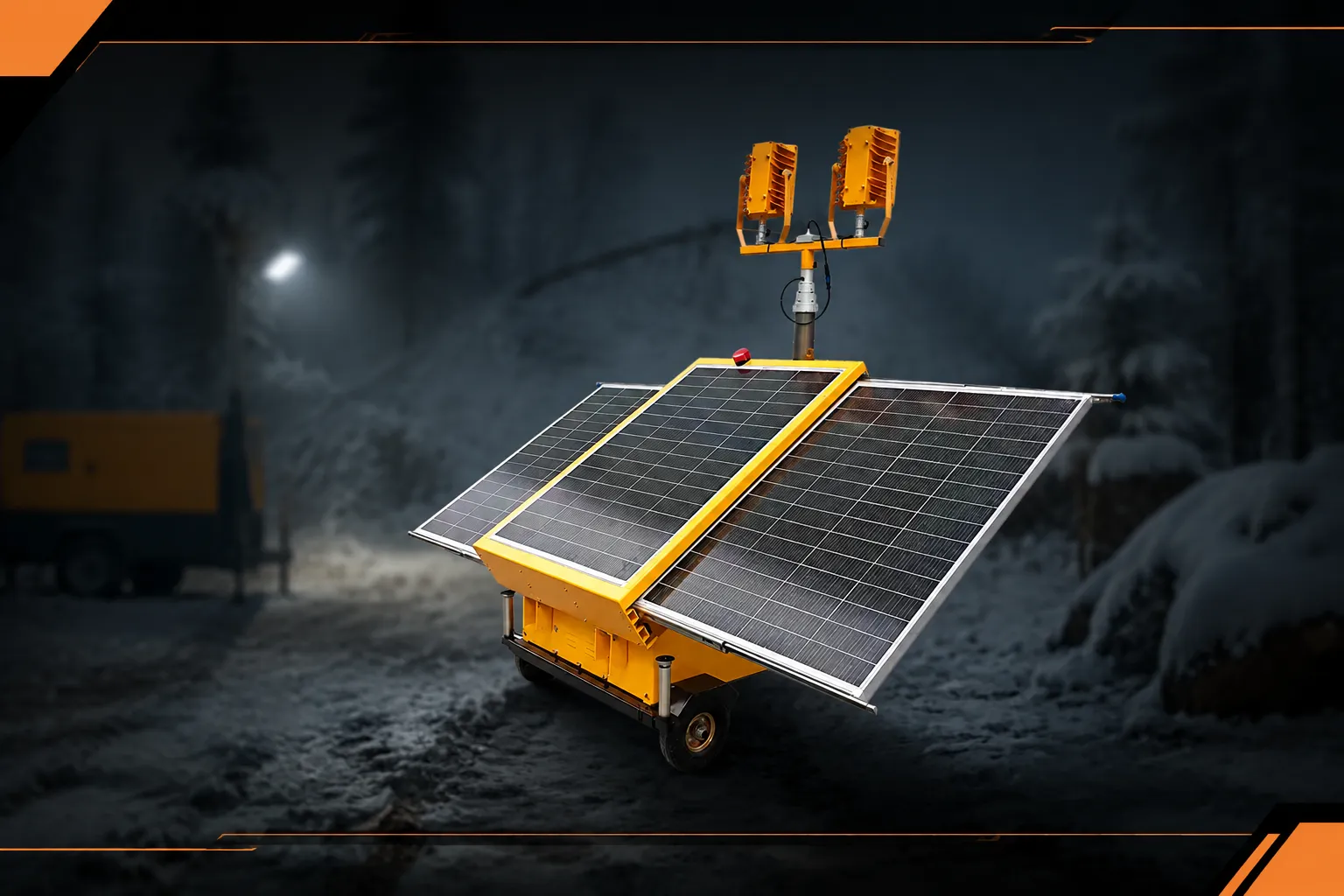
For projects where recharge planning matters, an RFQ should request configuration evidence rather than only a headline product description. The listed Trailer Model Solar-Powered Mobile Lifting Light Tower describes solar panels, lithium battery storage, smart control, and optional wind input; confirm the exact supplied configuration and its documents before treating any of those features as a project solution.
Buyer should provide
| Buyer input | Why it matters | Common mistake |
|---|---|---|
| Location and project dates | Solar resource and daylight vary by place and season | Naming only the country or saying “summer.” |
| Starting battery state or recent runtime | Defines energy to replace | Asking for “charge time” without stating current condition |
| Required nightly lighting schedule | Sets the post-recharge demand | Assuming recharge always means empty-to-full |
| Site shade, dust, and access notes | Identifies avoidable collection losses | Evaluating only the first-day layout |
| Permitted alternate charging methods | Tests whether fallback is practical | Leaving grid or generator constraints unstated |
| Daytime load on the unit | Affects net recharge energy | Ignoring controller or auxiliary draw |
Product recommendation: begin the discussion with the listed trailer solar light-tower configuration only if the supplier can match its approved documents to the recorded site inputs. It is less suitable when the project needs a guaranteed recharge duration or runtime that the available model evidence does not support.
Fit Boundary
This planning method is suitable for teams that can record battery state, site exposure, the permitted charging path, and operating load, then accept a documented reserve or fallback process. It is not sufficient for a project that requires an unverified universal recharge hour, cannot inspect or reposition the unit safely, or cannot tolerate an energy shortfall without a separately verified contingency.
Part 7. What should operators monitor during and after charging?
After deployment, compare actual recharge behavior with the plan rather than waiting for a complete loss of light. Useful monitoring items include:
- Visible array condition and new shade paths.
- Charge-related alerts or state indicators available on the selected unit.
- Operating hours and any alternate-charging use.
- Whether daytime load was disconnected or reduced during the recharge window, when the manual allows that practice.
Keep a concise log so the team can separate a temporary weather event from a recurring layout, cleaning, wiring, or configuration problem. When the recharge record must be carried into the next night shift, use the night-shift operating plan to document normal, reserve, and fallback actions. Escalate damaged equipment, exposed or loose electrical wiring, repeated unexplained low-charge warnings, or any condition the manual identifies as unsafe to qualified service personnel.
To discuss a configuration against a real project, send the site and charging-path data for configuration review: location, dates, battery state or recent runtime, nightly operating hours, exposure notes, permitted alternate charging, and daytime load. You can also review solar and hybrid mobile-lighting options after those inputs are defined.
FAQs
How do I know when a solar light tower battery is fully charged?
Use the charge indicator, controller display, or monitoring method described in the selected unit’s approved documentation. “Full” is a configuration-specific state; it should be interpreted together with the planned lighting schedule and reserve requirement, not as a universal guarantee of runtime.
Why does a solar light tower sometimes run for only a short time after charging?
The usable stored energy may be lower than the required lighting demand because the site received less recharge energy than planned, the load was higher than expected, or both. Review exposure, panel condition, operating hours, starting battery state, and unit alerts before assuming a component failure.
How long does it take for a solar light tower to charge?
There is no single answer for every model and site. Charging time depends on battery state, energy to replace, available solar or alternate input under stated conditions, path losses, and concurrent daytime load. Request a condition-based estimate tied to the selected configuration’s approved documents.
Do solar lights need to be switched on to charge?
Follow the selected unit’s manual. Mobile solar light towers are not generic garden lights; charging behavior, load paths, and indicator logic are model-specific and must not be inferred from consumer solar-lamp advice.
How do you calculate solar light tower charging time?
Start by defining usable energy to replace, the permitted charging input under site conditions, expected losses, and any daytime load that remains connected. Compare that net input with the documented battery and charger limits for the selected configuration. Do not treat a generic capacity ÷ wattage shortcut as a project commitment.
Does grid or generator charging replace the need for a site plan?
No. Alternate charging may shorten recovery when permitted, but the project still needs documented input limits, operating restrictions, and a fallback if the alternate source is unavailable or restricted on site.
What should the site team log after charging?
Log starting and ending charge status, visible shade or soiling, operating hours, alternate-charging use, and any alerts. Those records support an evidence-based escalation if recharge performance differs from the plan.
References
- NREL PVWatts system-design documentation
- IEEE 1562-2021 — Recommended practice for sizing stand-alone PV systems
- IEC 61427-1 preview — Secondary cells and batteries for PV energy systems
- Battery University — How to prolong lithium-based batteries
- Generac VT-Solar specification
- Atlas Copco — How does a solar powered light tower work?
- DOE — Optimizing solar photovoltaic performance and longevity