
How Should a Team Run a Solar Light Tower Through a Night Shift?
Solar light tower runtime planning for night work is an operating decision, not a single promised number. A site team needs a written lighting window, a record of the load and reserve assumptions approved for the selected configuration, and a response before a low-energy condition turns into a loss of required light.
This guide is a shift-by-shift operating method. It does not replace the fixture-level lighting load estimate, battery-capacity estimation, or charging-path planning. Those inputs must be defined before a supervisor can use the plan below.
Part 1. What does a night-shift operating plan actually decide?
The plan decides whether the next lighting shift can proceed under the site’s agreed operating boundary. It does not convert a generic product label into a guaranteed runtime. A practical record combines the required lighting window, the previous shift’s operating result, visible site conditions, and the selected configuration’s approved warning or charge information.
PV-plus-storage planning uses time-dependent load and generation inputs rather than one average number. NREL’s battery modelling guidance describes dispatch and resilience analysis in terms of generation, critical load, and state-of-charge conditions. For a mobile lighting team, the equivalent is a concise operating ledger that makes the next shift’s decision visible.
| Decision | What the team needs | What this guide does not decide |
|---|---|---|
| Can all planned zones run tonight? | Approved configuration data, planned lighting window, reserve rule | The unit’s rated runtime |
| Which zones are critical? | Site lighting priorities and work plan | Required lux levels or code compliance |
| Is a recovery action needed? | Charge or warning observation and next-shift requirement | Whether a particular alternate source is permitted |
| Should the supplier review the configuration? | Ledger, site context, and equipment documentation | A replacement for approved model documents |
The useful output is a short instruction: operate as planned, operate with an agreed priority schedule, or use the site’s documented fallback. That instruction should be set before the shift begins, not after work areas become dark.
Part 2. Which entries belong in the nightly operating ledger?
An operating ledger should preserve the few inputs that change a practical decision. Start with the lighting hours and the zones that cannot be reduced. Then add the selected equipment’s available observation points, such as a documented controller indication or warning, without assuming that every tower exposes the same data.
Record before the shift
| Ledger field | Why it matters | Source or owner |
|---|---|---|
| Planned light-on and light-off time | Turns the shift plan into an operating window | Site supervisor |
| Priority zones and reducible zones | Makes a reserve response actionable | Work plan / safety lead |
| Previous night’s actual operating window | Shows whether the planned profile matched reality | Previous shift log |
| Available charge or warning indication | Provides a condition check within the selected unit’s documented interface | Operator following unit instructions |
| Visible shade, dust, weather, or obstruction note | Explains a change in available solar input without guessing at output | Deployment crew |
| Next-day access or charging constraint | Identifies whether a recovery action is practical | Site operations |
Keep the record specific enough to compare one shift with the next, but do not invent a battery percentage or energy number that the selected unit does not publish. The IEA PVPS O&M guidance treats monitoring and site-specific maintenance as part of performance management; a simple log gives a temporary site the same discipline at an appropriate scale.
Important: A single successful night is not evidence that the same schedule will remain suitable after lower solar input, a longer shift, new shade, or a changed lighting priority. Record the condition that existed when the result was observed. This follows the monitoring and climate-specific O&M approach in the IEA PVPS guidance.
Part 3. How should teams set normal, reserve, and fallback states?
The state definitions belong to the project, not to a generic article. Before mobilization, agree what indication, operating result, or reserve condition means the site can continue normally; what triggers a reduced but controlled plan; and what requires the fallback process. Confirm these rules against the selected configuration’s documentation.
| State | Operating approach | Decision before the shift | Escalation trigger |
|---|---|---|---|
| Normal | Run the agreed lighting schedule | Required zones and operating window are available under the agreed boundary | New alert, unexpected short operation, or material site-condition change |
| Reserve | Protect essential zones and use the approved priority schedule | Supervisor confirms which non-critical period or zone may be reduced | Reserve condition persists or the next shift cannot meet critical demand |
| Fallback | Use the documented contingency or pause non-essential work | Confirm permitted alternate charging, alternative equipment, or a revised work sequence | No approved contingency, damage, or unsafe condition |
The Lighting Global guidance for off-grid systems explains that autonomy and O&M choices depend on load criticality and project conditions. That is why a reserve boundary should not be copied from another site or treated as a default feature of a tower.
Make the reserve action operational
- Name the person who can change the lighting priority.
- State which areas are critical and which may be reduced only when the work plan permits.
- Record the condition that moves the site into reserve.
- Record who must approve the fallback and what equipment or charging path is actually allowed.
This approach prevents a common failure: the crew notices a low-energy condition but has no agreed authority to reduce a non-critical load or arrange a recovery action.
Part 4. How does a multi-night deficit change the next shift?
A multi-night deficit happens when the system does not recover the energy used in the prior shift before the next demand period. The first night may still appear normal because storage covers the gap. The operational risk grows when the shortfall is repeated and the remaining reserve becomes smaller.
The user discussion in this battery-runtime thread captures the planning issue well: after a low-generation day, later energy input must serve the current load and recover prior storage. Treat that as a question for the daily ledger, not as a Keyyou performance claim.
| Consecutive-shift pattern | What to compare | Practical response |
|---|---|---|
| A normal night follows normal recovery | Actual operating window against the plan | Continue and log the result |
| A normal night follows lower recovery | Charge or warning observation, next shift, and priority zones | Check the reserve rule before committing to the full schedule |
| A shortened night or warning repeats | Trend across shifts and visible site condition | Escalate for configuration or site-condition review |
| Critical lighting cannot be supported within the boundary | Fallback availability and work requirement | Activate the approved contingency rather than improvised electrical changes |
Do not correct an energy deficit by changing wiring, controller settings, or battery components outside the unit documentation. The appropriate supplier or qualified-service discussion should begin with the ledger, the actual site condition, and the approved configuration details.
Part 5. Which observations should operators record after each shift?
After the lights are switched off, record the outcome while the shift is still clear. The goal is to distinguish a planned reduction from an unexpected shortage and to preserve evidence for the next supervisor or supplier review.
The IEA PVPS program notes that PV-plus-storage reliability is use-case dependent and benefits from performance data and an O&M strategy. The following compact record is sufficient for a temporary operation:
| Observation | Record it as | Why it helps |
|---|---|---|
| Actual light-on and light-off times | Start/end time and any planned reduction | Tests the operating schedule |
| Priority-zone changes | Zone and reason | Separates deliberate control from equipment symptoms |
| Available warning or status indication | Exact message or observed indicator | Gives service support a traceable condition |
| Panel and surrounding site condition | Shade, debris, dust, damage, access issue, or none observed | Supports site-condition review |
| Recovery constraint | Weather note, obstruction, access limit, or alternate-path restriction | Explains why the next shift may need a different plan |
| Escalation action | Person notified and next review time | Keeps reserve and fallback responsibility clear |
Use the manufacturer’s instructions as the authority for any inspection, cleaning, movement, or electrical action. Contact qualified service support for damaged equipment, exposed wiring, repeated unexplained warnings, or any unsafe condition.
Part 6. Which configuration questions belong in the RFQ?
An RFQ should make the night-shift operating requirement visible. A supplier cannot responsibly compare configurations from a product name alone when the lighting window, priority zones, reserve expectation, and site recovery conditions are unknown.
| Buyer input | Why the supplier needs it | Avoid this shortcut |
|---|---|---|
| Planned lighting window and shift pattern | Defines the demand period to be reviewed | “It needs to run all night” |
| Critical and non-critical zones | Allows an operating-priority discussion | Treating every lamp as equally critical |
| Consecutive-night and poor-weather tolerance | Defines the required reserve/fallback process | Assuming a clear-day result represents every day |
| Site obstruction and access notes | Connects the plan to the actual deployment conditions | Sharing only a location name |
| Permitted recovery or alternate-charging constraints | Tests whether the fallback is usable | Asking about contingencies after delivery |
| Required documents | Keeps proposed configuration claims auditable | Relying on a generic product image or headline |
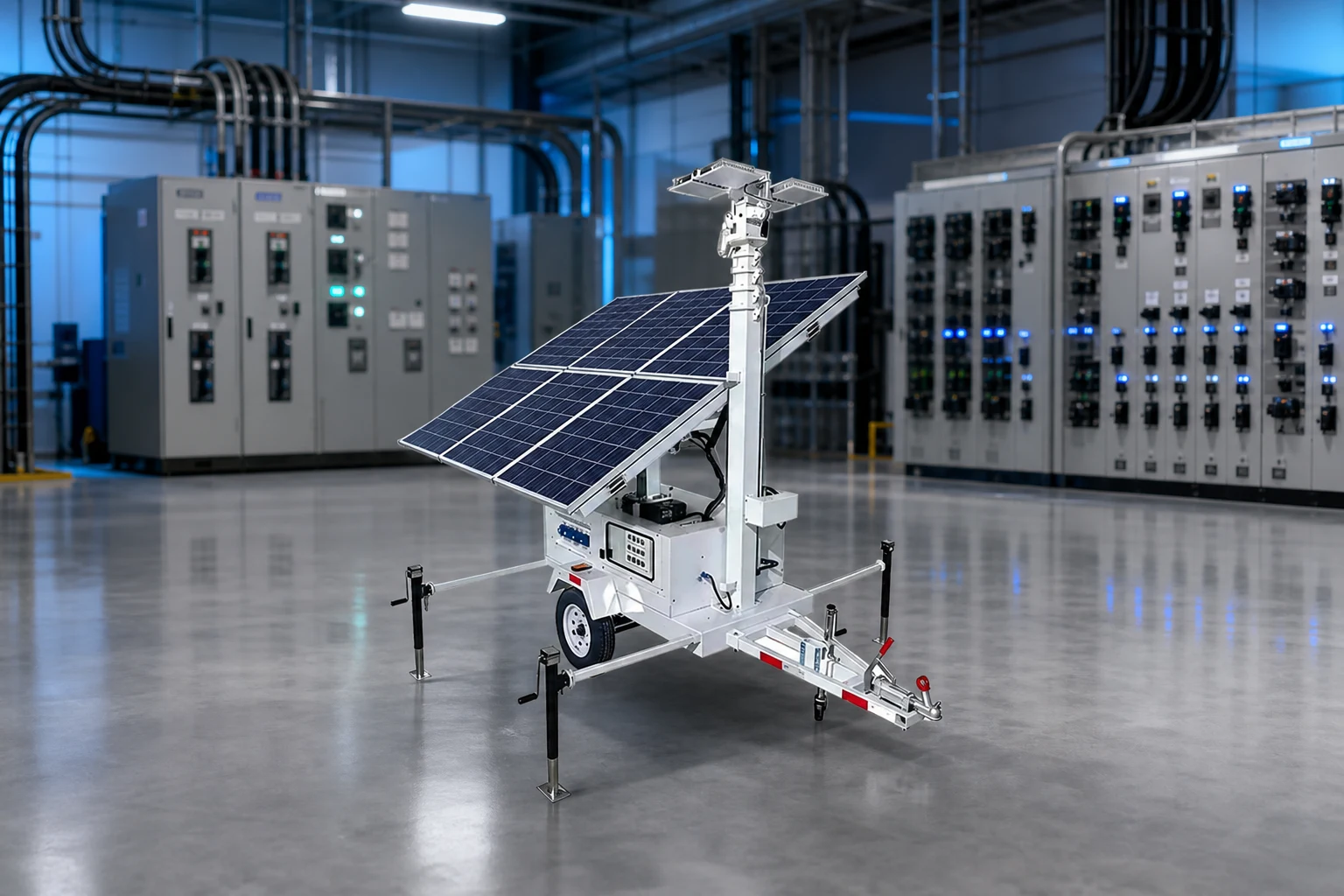
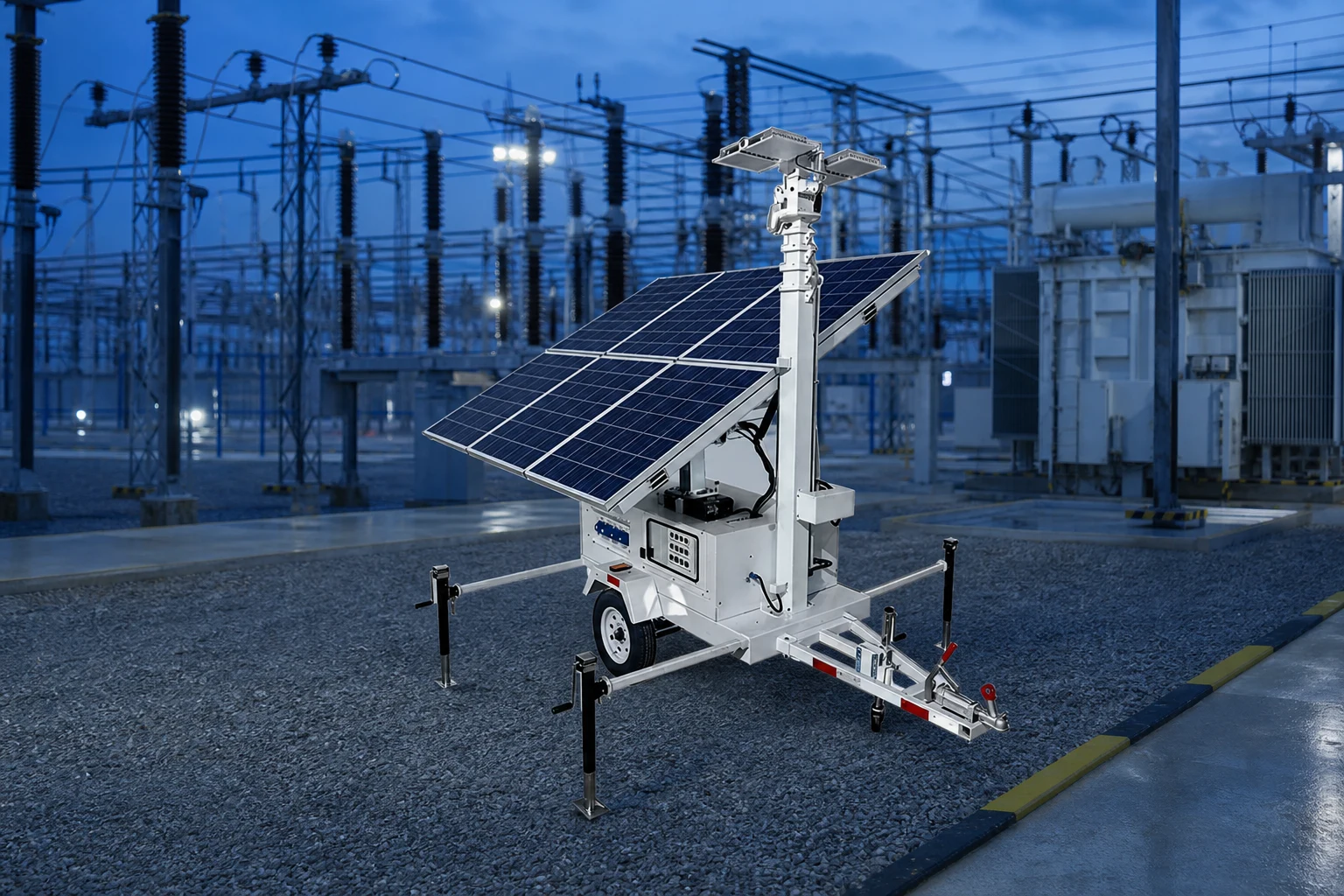
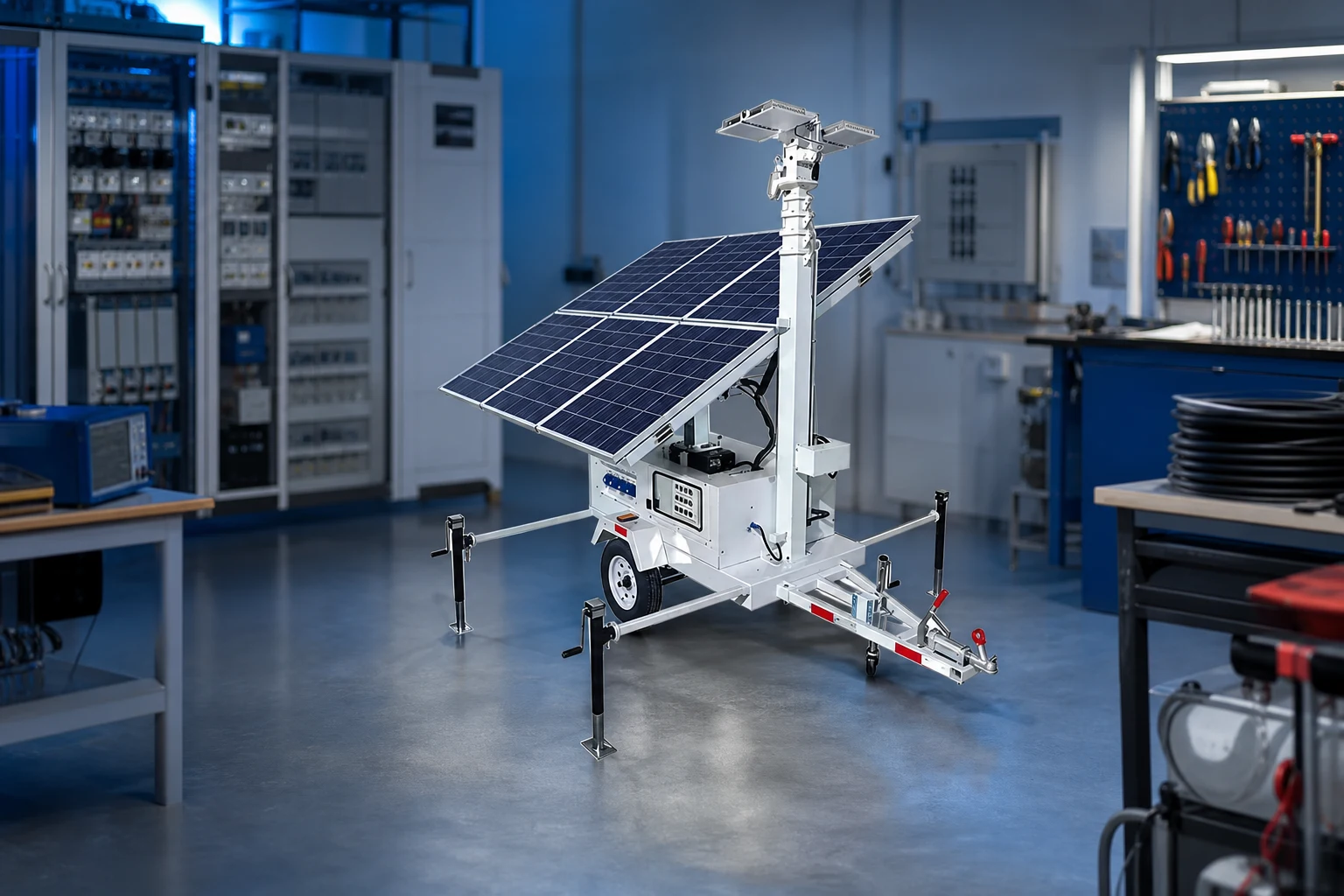
The listed Trailer Model Solar-Powered Mobile Lifting Light Tower describes solar panels, lithium battery storage, smart control, and optional wind input. Use it as a starting point for a configuration review, then request documents that match the actual operating profile. It is not suitable as proof of a specific runtime, charge path, or project outcome.
To begin that discussion, send a night-shift operating profile for configuration review: lighting window, priority zones, consecutive operating nights, observed site conditions, reserve rule, and available contingency.
Part 7. When is this operating plan not enough?
This method is suitable when a team can define its required lighting window, keep a basic shift record, follow the selected equipment documentation, and accept a documented reserve/fallback process. It is not enough when the project needs an unverified all-weather runtime, cannot tolerate a reduction in critical light, has no approved contingency, or has an unsafe equipment condition.
In those cases, pause the generic planning exercise and request a configuration review supported by model-specific documentation. For the upstream site and low-sunlight inputs, use the related low-sunlight planning guide. You can also review solar and hybrid mobile-lighting options after the operating requirements are defined.
FAQs
Is a solar light tower runtime the same every night?
No. The operating result depends on the lighting schedule, approved usable reserve, available recovery, and actual site conditions. A shift ledger makes those conditions visible instead of treating one prior result as a permanent promise.
What should be logged before a night shift?
Record the planned light-on window, priority zones, prior shift outcome, available status indication, visible site condition, and any recovery constraint. Use only observations and indicators that the selected unit’s documentation supports.
Why can a second cloudy day matter more than the first?
Storage may cover an initial shortfall, but a later shift can begin with less reserve if earlier energy use was not recovered. Compare the daily operating result and recovery condition before committing to the next full schedule.
Can dimming or priorities extend the operating window?
They can be part of an agreed operating response when the selected configuration and work plan allow it. Define critical zones and any acceptable reduction before the shift, rather than improvising after a warning appears.
Does a full battery prove the next night will be covered?
No. A full indication alone does not define the next shift’s load, the allowed operating window, future solar input, or the project’s reserve requirement. Use it as one recorded input in the operating plan.
When should the team ask about alternate charging or hybrid options?
Ask when the recorded site conditions and required lighting window cannot be supported within the agreed reserve boundary, or when a repeated deficit needs a documented contingency. Confirm the exact permitted path with the supplier and the selected configuration documents.
What should an RFQ include for night-shift operation?
Include the lighting window, priority zones, consecutive-night requirement, site-condition notes, reserve/fallback rule, and constraints on any alternate recovery path. These inputs let the supplier review a configuration against the actual operating need.