
Utility Substation Maintenance Lighting Plan
Plan substation maintenance lighting with utility-approved equipment positions, electrical clearances, task visibility, cable routes, grounding review, and outage backup.
Substation maintenance lighting must be planned within the utility’s work authorization, electrical controls, and approved equipment locations. Identify the maintenance task and observer’s position first; then determine which temporary lighting arrangement can provide the required view without introducing unreviewed mast, cable, power, or access hazards. A portable tower’s battery, generator, or tracked base does not establish permission to deploy it near energized equipment. This guide explains the questions a buyer and site coordinator should resolve with qualified utility personnel. It supplies no universal approach distance, grounding design, or authorization for electrical work.
Start with the utility’s work package
Obtain the current approved work scope, station layout, equipment locations, task sequence, and outage boundaries. Distinguish the area released for maintenance from adjacent equipment that remains subject to the utility’s controls. The temporary lighting proposal should fit this work package rather than being planned as an ordinary construction yard. Ask the work authority to identify which positions and routes can be assessed and who can approve the final installation.
List the views required during isolation, inspection, servicing, testing, and restoration. These stages may involve different work faces or temporary obstructions. A tower illuminating the yard can leave a label, control, stair, or connection behind equipment in shadow. Define which functions need area lighting and which need an appropriate task fixture. Do not assume that bringing a mobile mast closer to the work face is an acceptable solution.
Identify the complete mast and movement envelope
Review transport into the station, the deployed footprint, mast extension, aiming access, supports, and the route used for removal. The utility’s qualified personnel must determine applicable clearances and controls for the actual installation. Include the equipment’s possible movement and the operation required to set it up, rather than assessing only the final upright position. The responsible team should approve the permitted location before delivery.
Use the exact model’s mast, support, wind, ground, and travel instructions. A tracked chassis does not establish safe use on every surface or permission to cross a service cover. A battery-powered tower still has physical components and a mast; choosing its power source does not remove the placement review. Where the proposed envelope conflicts with electrical or structural constraints, obtain an approved alternative lighting arrangement instead of changing the location informally.
A utility review checklist
The following table organizes evidence for the temporary lighting proposal. It deliberately contains no fixed approach distances or grounding instructions because those decisions require the qualified site assessment and applicable rules.
| Planning item | Evidence to review |
|---|---|
| Utility authorization | Identify the approved work scope, locations, routes, and responsible authority. |
| Mast envelope | Review transport, supports, extension, aiming, servicing, and removal. |
| Electrical arrangement | Have the qualified team approve supply, protection, cable route, and relevant site-potential controls. |
| Task visibility | Identify labels, controls, access points, and close inspection requirements. |
| Continuity | Approve the outage response, backup arrangement, and replacement-unit review. |
Resolve the supply and electrical arrangement
Ask the utility electrical team to approve the source, connections, protective devices, cable route, and switching or isolation procedure. Confirm which supply remains available through the maintenance and testing sequence. A convenient station outlet should not be assumed to remain energized or independent of the work being isolated. The temporary lighting record should identify the actual source and the person responsible for changes.
The utility must also review any grounding, bonding, and site-potential issues applicable to the complete arrangement. Do not create a generic connection instruction from a light tower photograph or another site’s practice. Engine, battery, external-power, and hybrid configurations each need their own assessment. A change of rental unit or power package can alter the reviewed arrangement, so preserve the configuration record and require approval for substitutions before use.
Separate general access from inspection tasks
Area lighting supports permitted movement and orientation. Maintenance tasks may need a particular view of labels, instruments, controls, connections, or surfaces. Review those views from the approved working positions with the responsible crew. A ground-level lighting reading cannot by itself establish the visibility of an elevated or obstructed task. Identify where an appropriately approved task fixture is needed rather than assuming the mast tower can perform every function.
Check reflections from signs, enclosures, and equipment surfaces. A bright lamp directed along one approach may hinder someone reading a control or walking from another direction. Aiming changes need review for all affected observers. Keep the accepted directions and output mode with the work package. Do not alter the installation to improve one task without rechecking the other views and the constraints that governed the permitted equipment position.
Keep access and emergency routes usable
Mark the tower’s supports, controls, service space, and cables on the station drawing. Preserve the work authority’s approved access, gates, emergency routes, and equipment operating spaces. Coordinate deliveries and maintenance visits so that lighting service does not obstruct another crew’s activity. The full footprint can be much larger than the chassis shown in a quotation photograph.
Review the path used to remove or replace the unit if it becomes defective. The site authority should determine how that movement occurs within the station’s work and electrical controls. Avoid assuming a failed tower can be exchanged immediately in the same position. The replacement’s dimensions, mast sequence, power arrangement, and instructions require review against the approved location and work sequence. Retain a record of the changed configuration before the work relies on it.
Plan continuity through the maintenance window
The lighting duration should cover preparation, the task itself, inspection, testing, restoration, and an orderly handover. Ask for runtime evidence at the proposed operating mode and conditions for the exact configuration. A reduced-output figure is not a substitute for a full-output maintenance window. If charging or refueling is required, schedule it in the utility’s work plan and identify which lighting remains available.
Define the failure response before starting. The work authority should specify which task stops, who is notified, which approved route can be used, and how restoration is authorized. Handheld or personal lighting should not automatically be treated as a replacement for every area-lighting function. Any backup arrangement must occupy an approved location and satisfy its own equipment, supply, deployment, and visibility review.
Check the installed result with the work authority
Agree on acceptance criteria before procuring the unit. Request a proposed layout using the exact luminaires, optics, output mode, positions, aiming, and relevant obstructions. After installation, inspect the required views from approved positions at the relevant time. Where measurements are specified, record the working plane, instrument, locations, operating mode, background lighting, and conditions so later checks can be compared meaningfully.
Record individual deficient points rather than allowing a yard average to hide them. A well-lit open area can coexist with a shadowed access point, unreadable label, or glare at another crew’s position. Obtain an approved correction and repeat the affected checks. Review changes to equipment positions, temporary barriers, the work face, power availability, or lamp aiming through the same work authority. Keep the installed arrangement with the maintenance record.
Use regulations within their actual scope
OSHA 1910.269 addresses covered electric-power work and identifies training and work-practice requirements. Its scope must be checked for the actual activity; construction and other work can fall under different provisions. The utility’s qualified personnel should determine the applicable rules and site controls. This article does not select a safe distance or interpret a station’s electrical arrangement from a nominal voltage or a photograph.
Lighting is one part of the approved work plan. It does not authorize energized work, establish isolation, provide arc-related protection, or replace the utility’s training and permit arrangements. Keep each decision with the people responsible for it. When a supplier presents a generic light tower as suitable for substations, request the exact evidence relevant to the proposed position and task rather than treating the marketing phrase as an operating approval.
Prepare a configuration-specific quotation request
Send the supplier the utility-approved equipment locations, task descriptions, maintenance duration, supply constraints, deployment envelope, service arrangement, and acceptance requirements. Request the exact model, dimensions, support and mast instructions, complete-luminaire photometric information, power data, service documentation, and spare-parts plan. Ask for exceptions and substitutions to be documented so the utility can review the final supplied assembly.
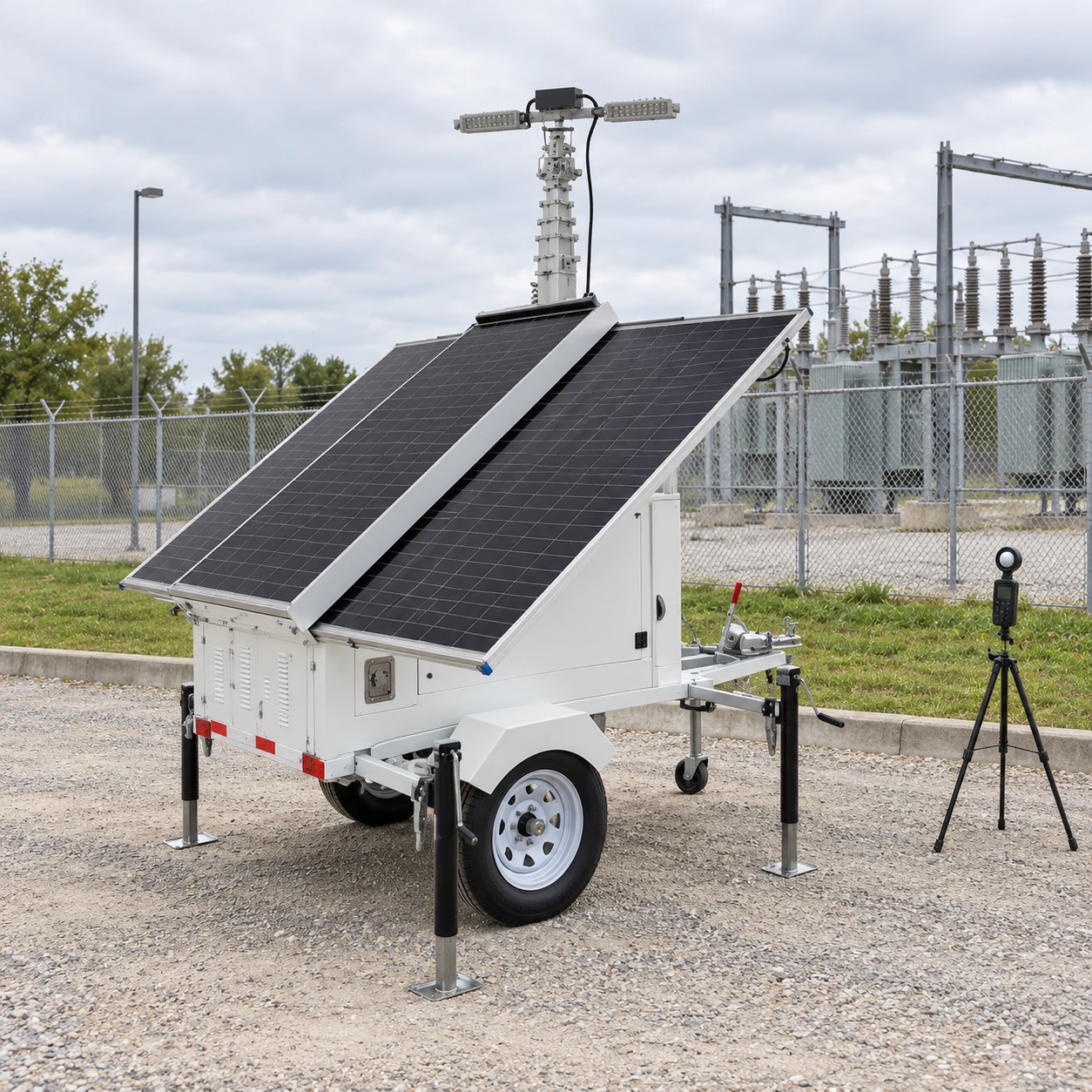
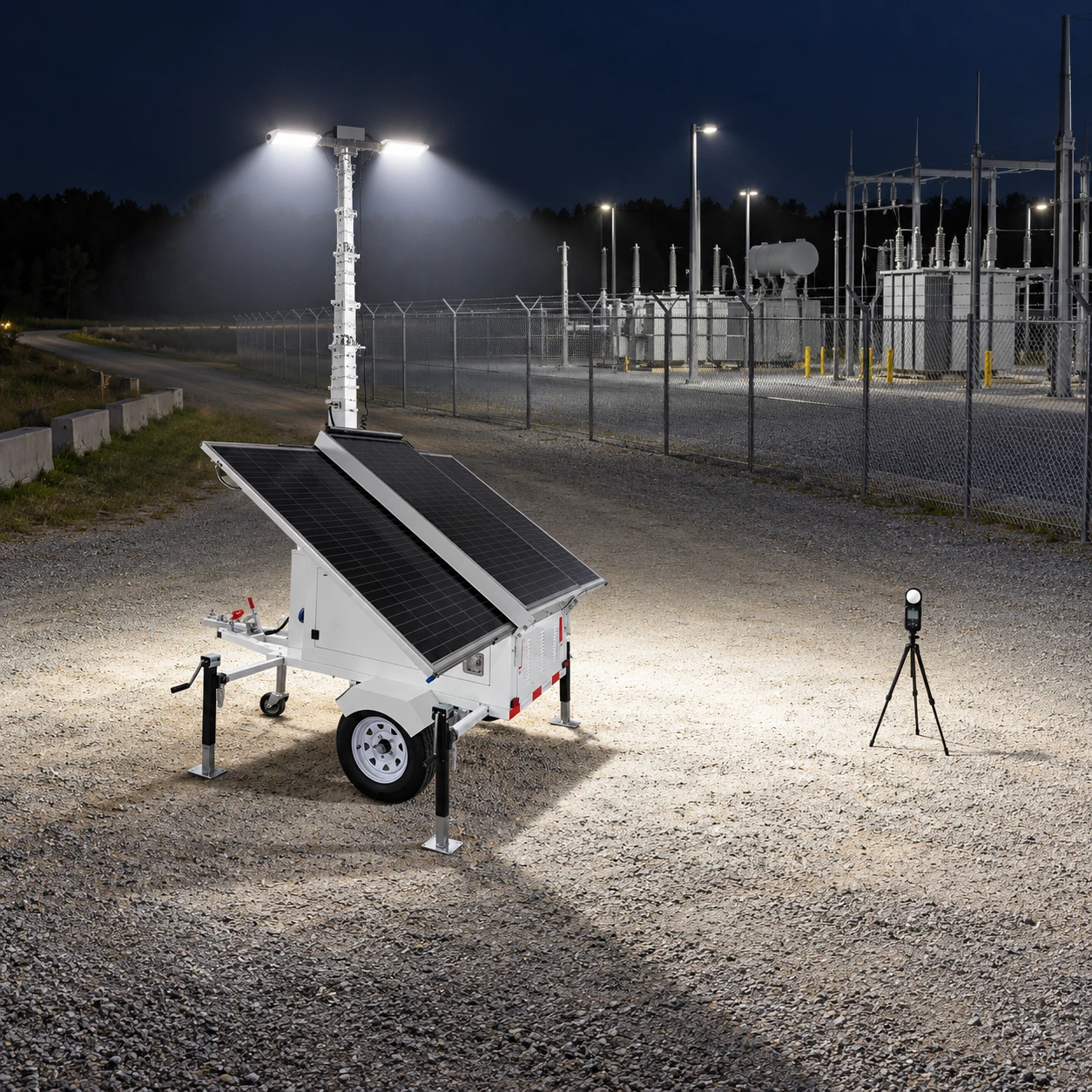
The Solar-powered mobile lifting lighting tower (trailer version) identifies the product family illustrated here. Its appearance establishes no substation electrical clearance, grounding design, protection rating, or operating approval. Use the mobile light tower overview, selection guide, equipment specifications, and safety guide for complementary procurement questions. The utility’s work authority and qualified electrical team must review the actual configuration before its deployment in the station.
Generator education is a separate consideration
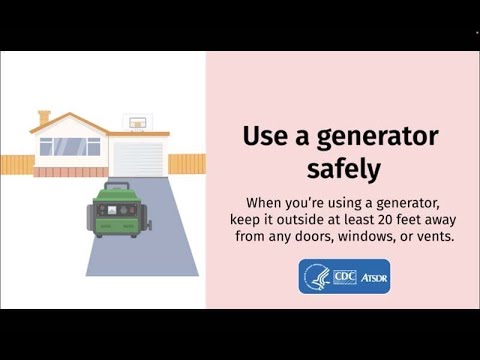
Where the reviewed arrangement uses an engine-powered unit, include exhaust placement and servicing in the site assessment. CDC’s generator safety education introduces the carbon-monoxide hazard around enclosed and occupied spaces. It does not address the station’s electrical clearances, grounding, or authorization requirements. Keep those reviews separate rather than using an exhaust-safe location as proof that the whole installation is approved.
The CDC video below supplements the engine-power discussion. The current equipment manual and utility-approved work arrangement remain necessary for installation, operation, maintenance, and shutdown. A battery or external-supply proposal needs its own approved charging or connection arrangement and should not be accepted merely because it avoids engine exhaust during the shift.
Watch Use a Generator Safely by CDC
Frequently asked questions
Can a light tower be placed near energized substation equipment?
Only within a location and deployment arrangement approved by the utility’s qualified personnel under the applicable controls. This guide provides no universal clearance.
Does battery power remove the mast-placement review?
No. The physical equipment, conductive parts, mast movement, ground position, and access still require the site’s approved assessment.
Can the maintenance lighting use a normal station outlet?
The electrical team must confirm its availability, compatibility, protection, connection, and independence from the isolation or outage sequence.
What needs checking after a unit is exchanged?
Review the replacement’s footprint, mast procedure, power arrangement, documentation, approved location, and installed visibility before the work relies on it.