
What should a buyer decide before choosing a wind-solar hybrid light tower?
Choosing a wind-solar hybrid light tower starts with verified lighting load, usable solar and wind resource evidence, and a clear storage-and-control plan—not with a product label. Wind can complement solar when the site’s wind profile adds energy during PV shortfalls, but only after the buyer confirms that the added complexity is justified for that location.
This guide is for temporary job sites and procurement teams that need a configuration process rather than a catalogue promise. For backup-strategy context, see the site’s solar-versus-diesel comparison.
Part 1. What should a buyer decide before choosing a wind-solar hybrid light tower?
A wind-solar hybrid light tower combines variable renewable inputs, battery storage, and a supervisory controller around the lighting load. The U.S. Department of Energy FEMP wind-technology focus describes hybrid systems that may include wind, PV, diesel backup, battery storage, and a controller. That architecture is useful context, but it does not replace a site-specific procurement review.
Before RFQ, separate four decisions:
- Load: how much power the fixtures need and for how many hours each night.
- Resources: whether the site has credible solar exposure and wind data at a usable height.
- Architecture: how PV, optional wind, storage, and controls will be coordinated.
- Backup boundary: whether a generator, alternate charging, reduced output, or redeployment is acceptable when renewables fall short.
Search results for this topic are dominated by commercial product pages. That pattern confirms buyer intent: readers want to know what to compare before they shortlist equipment. A selection article must therefore teach the comparison process and link to verified product options without inventing model performance.
Important: Do not treat a hybrid label as proof that wind will improve every solar-lighting project. The DOE Small Wind Electric Systems guide treats wind and PV as potentially complementary resources, but only where each resource is actually available at the project location.
Part 2. Is the site windy enough for wind to add useful energy?
Wind value depends on measured or otherwise credible wind-resource evidence, not on a visually windy day at ground level. Forum users frequently warn that wind expectations must be researched carefully before pursuing a hybrid design. That language matches the engineering reality: turbulence, obstructions, and seasonal variability can make a small turbine contribute little even when the site feels exposed.
For mobile lighting, ask whether wind adds energy when PV output is lower—not whether a turbine can be mounted at all. The DOE Small Wind guide explains that wind and PV can contribute at different times, which is the main reason to consider combining them. If night-time wind is weak, seasonal wind is inconsistent, or the mast location sits in turbulent airflow from structures or terrain, wind may not justify the added hardware, service, and deployment constraints.
Wind-resource checklist
| Evidence item | Why it matters | Red flag |
|---|---|---|
| Wind data at or near hub/mast height | Ground-level gusts do not prove turbine output | Only anecdotal “it’s windy here” notes |
| Seasonal and diurnal pattern | Wind must align with the project calendar | Data from a different region copied into RFQ |
| Obstructions and turbulence | Structures change local wind quality | Tower planned beside tall stockpiles or cranes |
| Maintenance and access | Turbines add inspection and service scope | No safe access plan for blades or mounts |
If the wind case is weak, a solar-focused configuration with verified storage and a defined backup strategy may be the more defensible choice. That is a project decision, not a failure of hybrid technology in general.
Part 3. How should the lighting load and operating schedule be defined?
Hybrid selection fails when the lighting schedule is vague. Procurement teams should define the electrical load in terms the supplier can review: fixture type, quantity, expected wattage or lumen requirement, start-up behavior, dimming acceptance, and the number of consecutive operating nights.
Use a written operating profile rather than a generic “all night” request:
- required illuminated area and any security-critical zones;
- daily on/off window and total energized hours;
- acceptable reduced output periods, if any;
- consecutive-night requirement without external recharge;
- any additional loads sharing the same power system.
The DOE planning principle applies here: design around the actual load and operating conditions, not around an assumed catalogue runtime. For component context, see the site’s solar light-tower component guide.
| Load input | Example record | RFQ use |
|---|---|---|
| Fixture count and type | 4 × LED heads, defined model if known | Lets the supplier review demand |
| Nightly energized hours | 10 p.m.–6 a.m., seven nights/week | Defines energy requirement |
| Consecutive nights | 5 nights before planned recharge window | Tests storage and backup need |
| Surge or startup notes | Inrush on cold start, if documented | Prevents undersized control assumptions |
| Acceptable fallback | Relocate unit, reduce output, or alternate charging | Sets the backup conversation early |
Part 4. What should buyers compare in PV, wind, storage, and control architecture?
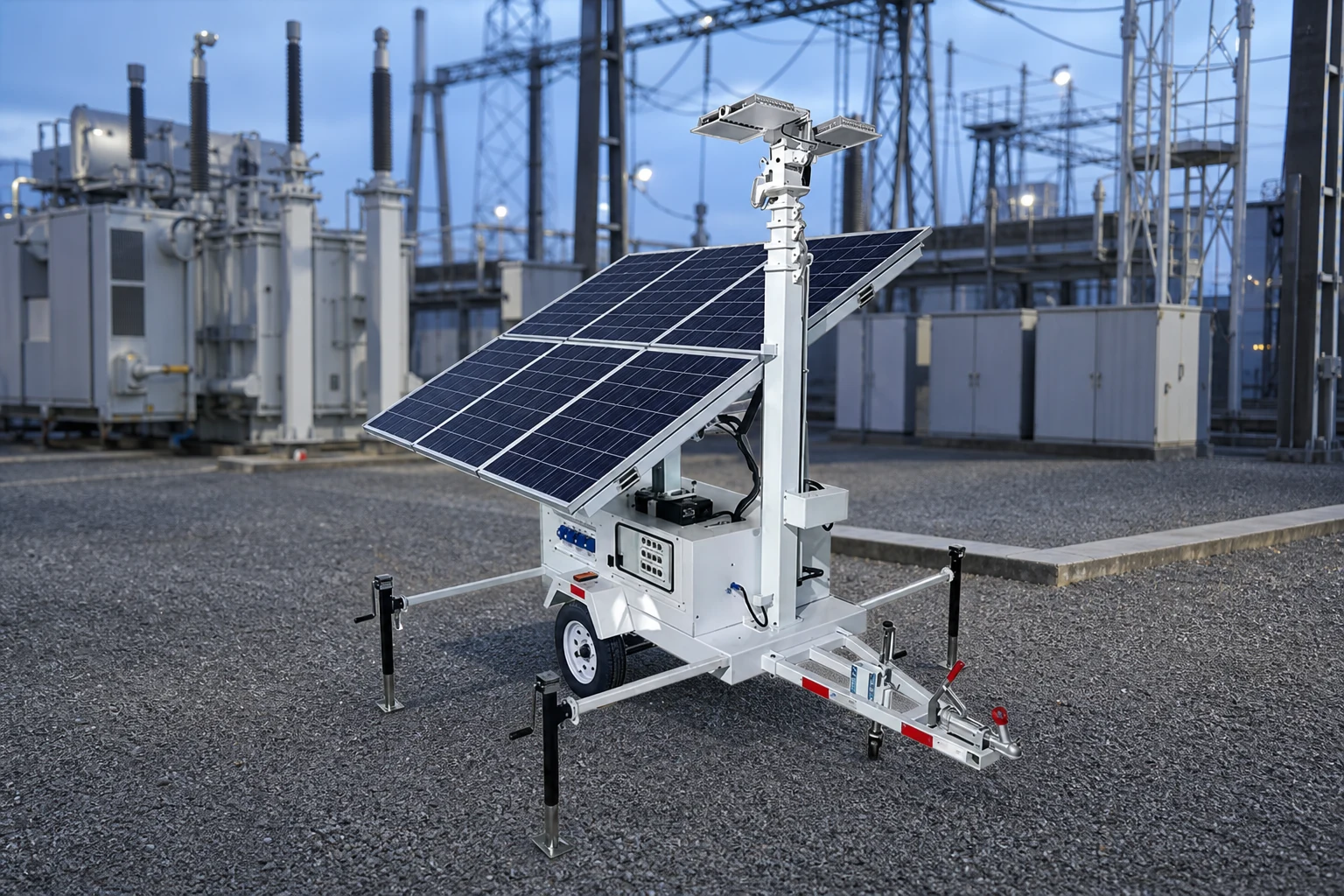
A hybrid light tower is not simply “solar plus a turbine.” Buyers should compare how generation, storage, and control work together under variable conditions. Peer-reviewed work on hybrid power management describes a supervisory controller coordinating variable sources, storage, the load, and any backup source. That is the architecture question PAA-style buyers ask when they want to know how wind and solar work together in a hybrid light tower.
Architecture comparison points
| Subsystem | Compare | Do not assume |
|---|---|---|
| PV array | Orientation, tilt, shading risk, service access | That any panel area is interchangeable |
| Wind input | Whether wind is included, mounting height, service scope | A rated turbine output without supplier evidence |
| Storage | Usable capacity, chemistry class, operating limits | That nameplate capacity equals nightly reserve |
| Controller | Charge control, load management, alarms, data access | Automatic generator logic on every hybrid unit |
| Enclosure and wiring | Service access, environmental protection, labeling | That hybrid wiring is identical to solar-only units |
The Scientific Reports hybrid power-management study supports the general principle that dispatch logic matters as much as hardware labels. For procurement, that means asking for a block diagram, operating modes, alarm behavior, and the documentation that governs battery protection—not only a photo of panels and a turbine.
When wind is optional on a published solar tower page, treat it as a configuration question. Confirm whether the wind interface, mounting hardware, controller settings, and service instructions are included for the exact version under review.
Part 5. When is a diesel backup or another operating strategy needed?
Diesel backup is a conditional project decision, not a universal requirement for every wind-solar tower. DOE and NREL sources describe storage and engine-generators as means to cover periods when renewable generation is insufficient, but the acceptable backup depends on load criticality, fuel logistics, noise and emission limits, and the project’s tolerance for downtime.
Use a condition-led backup review:
- Define the longest period of low renewable input the project must survive.
- Decide whether redeployment, reduced output, or external charging is acceptable.
- Only then evaluate whether a generator belongs in the architecture.
The NREL hybrid power plants for energy resilience report emphasizes that weather timing, battery duration, dispatch strategy, and critical loads influence reliance on diesel. Those variables are site-specific; they cannot be imported from a case study or a competitor brochure.
For buyers comparing fundamental platform choices, the site’s solar-versus-diesel comparison provides adjacent decision context. This article does not claim that Keyyou supplies a diesel-enabled wind-solar model; it only helps the reader decide when backup strategy must appear in the RFQ.
| Scenario signal | Possible operating response | Procurement note |
|---|---|---|
| Critical uninterrupted night lighting | Higher reserve or verified backup path | Document the non-negotiable hours |
| Restricted fuel, noise, or emissions | Favor renewables plus storage and redeployment | Backup type may be constrained by site rules |
| Repeated low-resource weather pattern | Alternate charging or hybrid dispatch review | Ask for operating-mode documentation |
| Short mobilization with known good solar | Solar-led design may suffice | Do not add wind solely for marketing reasons |
Part 6. What site, safety, transport, and service constraints can rule out a design?
Mobile hybrid lighting adds mechanical and safety constraints beyond the electrical architecture. A design that is valid on paper may be unsuitable if the trailer cannot be positioned safely, if mast or turbine loads exceed local limits, or if service access is blocked for the project duration.
Review these site constraints before final selection:
- Transport and setup: road access, tow limits, setup area, and stabilization/anchoring requirements.
- Mast and fixture loading: wind exposure on the raised mast, cable management, and manufacturer limits for deployment angles or gust conditions.
- Turbulence and clearance: setback from structures, blade sweep, and safe maintenance space.
- Local approvals: temporary equipment permits, noise limits, and any aviation or obstruction rules applicable to the jurisdiction.
- Service access: whether the site team can inspect PV, battery enclosures, and any wind components according to the supplied manual.
Forum discussions about hybrid light towers often surface controller and battery-protection concerns long before the first night of operation. Those concerns belong in procurement as documentation requirements, not as assumed factory features.
Disqualifying conditions to record explicitly
| Constraint | Why it matters |
|---|---|
| No credible wind resource | Wind hardware adds cost without energy benefit |
| Persistent shade or restricted repositioning | PV-led design may fail even with hybrid labeling |
| Prohibited generator use on site | Backup strategy must exclude diesel |
| Unsafe maintenance access | Hybrid components cannot be supported in service |
| Transport or ground-bearing limits | Selected trailer or mast class may not deploy |
Part 7. Which Keyyou configuration should a buyer discuss?
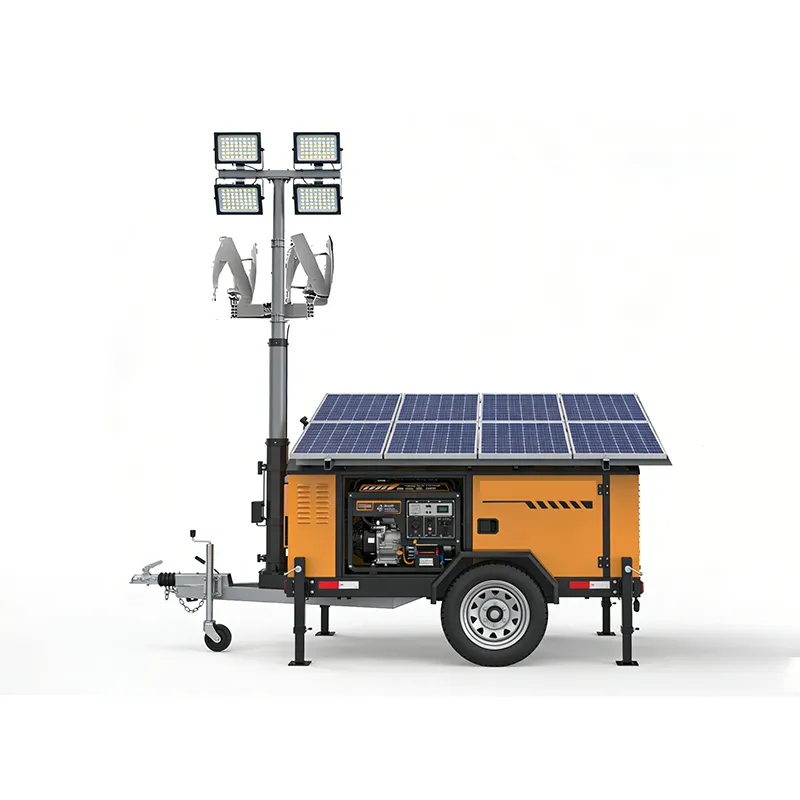
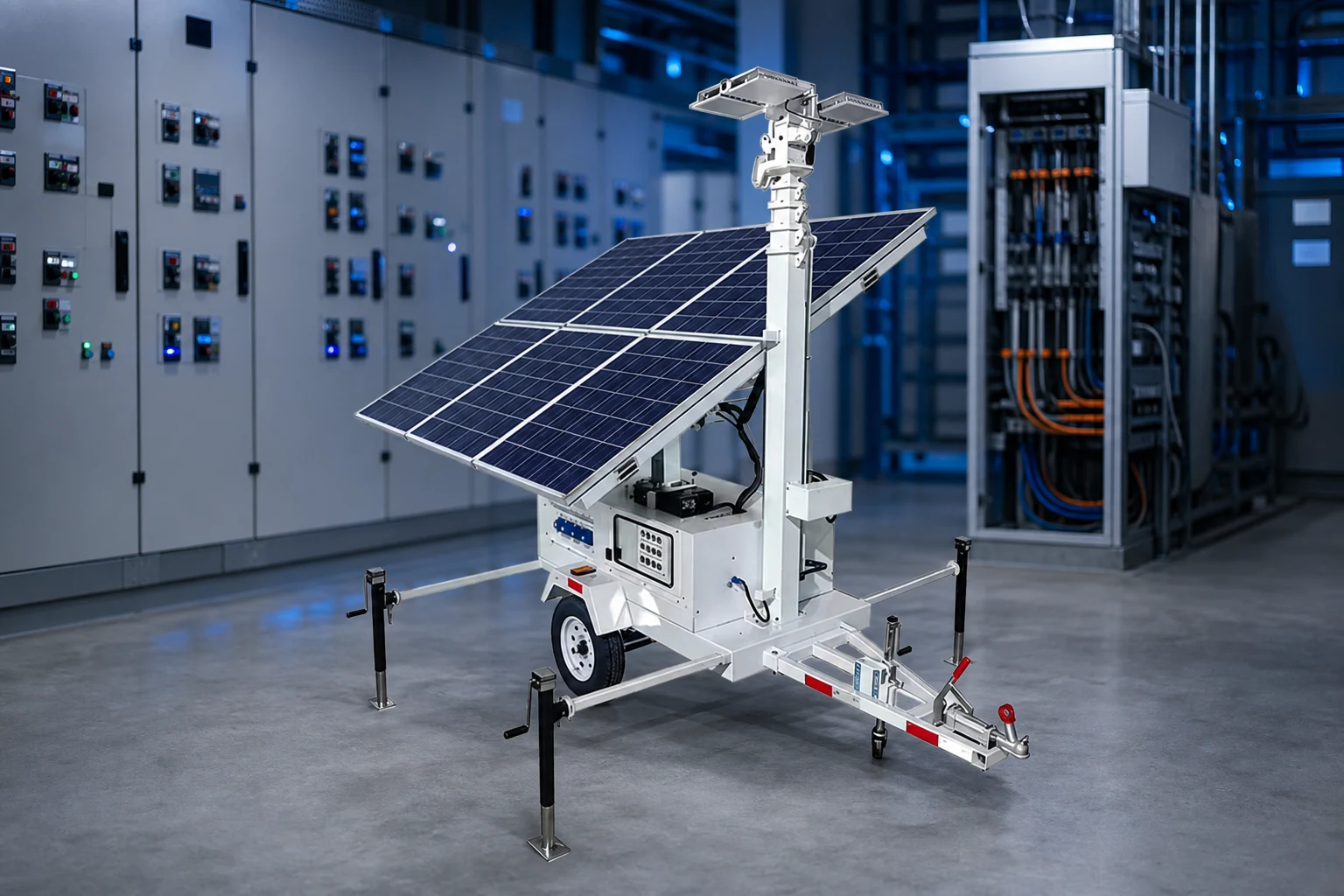
Keyyou’s published listed trailer solar light-tower configuration describes solar panels, lithium battery storage, smart control, trailer construction, and wind power as an optional input. That page is a valid starting point for a configuration conversation, but it does not verify a diesel backup, a specific wind-turbine rating, automatic generator behavior, or project-specific runtime.
Use the following RFQ inputs when contacting the supplier:
- site location and planned deployment dates;
- nightly lighting hours and consecutive-night requirement;
- fixture count and known load details;
- solar exposure notes and any wind-resource evidence;
- backup constraints, including whether diesel is allowed;
- required documentation: manual, wiring diagram, alarm list, and included optional modules.
Product recommendation: discuss the listed trailer solar light-tower configuration when its published component categories match the site’s application and the buyer can confirm the exact supplied version, optional wind input, and service documentation. It is not a default recommendation for every hybrid requirement.
Browse broader options at solar and hybrid mobile-lighting options if the project scope extends beyond one trailer model.
Fit Boundary
This guide supports procurement planning and RFQ preparation. It is not a performance guarantee, a generator-sizing tool, a structural sign-off, or evidence of a diesel-capable Keyyou model. For a configuration review, send the site and load context.
FAQs
What is a wind-solar hybrid light tower?
It is a mobile lighting unit that combines photovoltaic generation, optional wind generation, battery storage, and control equipment to serve a defined lighting load. The exact components and operating modes depend on the selected configuration.
Does a wind turbine make sense at every solar-lighting site?
No. Wind should be evaluated only where credible resource data and site layout suggest it will add useful energy when PV output is lower. A windy appearance at ground level is not enough evidence.
What load information should be included in an RFQ?
Include fixture count and type, nightly energized hours, consecutive operating nights, any startup or surge notes, required illuminated areas, and acceptable fallback actions such as reduced output or redeployment.
How do solar, wind, batteries, and controls work together?
Solar and wind feed the storage and control system, which manages charging, load supply, and alarms. A supervisory controller coordinates these sources around the lighting demand and any approved backup path documented for the selected unit.
When should a project include diesel backup?
Include diesel backup only when the project’s critical hours, resource variability, fuel logistics, and site rules require a verified generator path. It is not a default requirement for every hybrid lighting tower.
Can a published solar tower be assumed to include a wind turbine or diesel generator?
No. Published pages may describe optional wind input without confirming that wind hardware, diesel integration, or automatic dispatch is included in the quoted version. Confirm the exact bill of materials before award.
What site constraints can disqualify a wind-solar hybrid design?
No usable wind resource, persistent shade with no repositioning option, prohibited generator use, unsafe service access, or transport and stabilization limits can all disqualify a design even when hybrid equipment is available in the market.