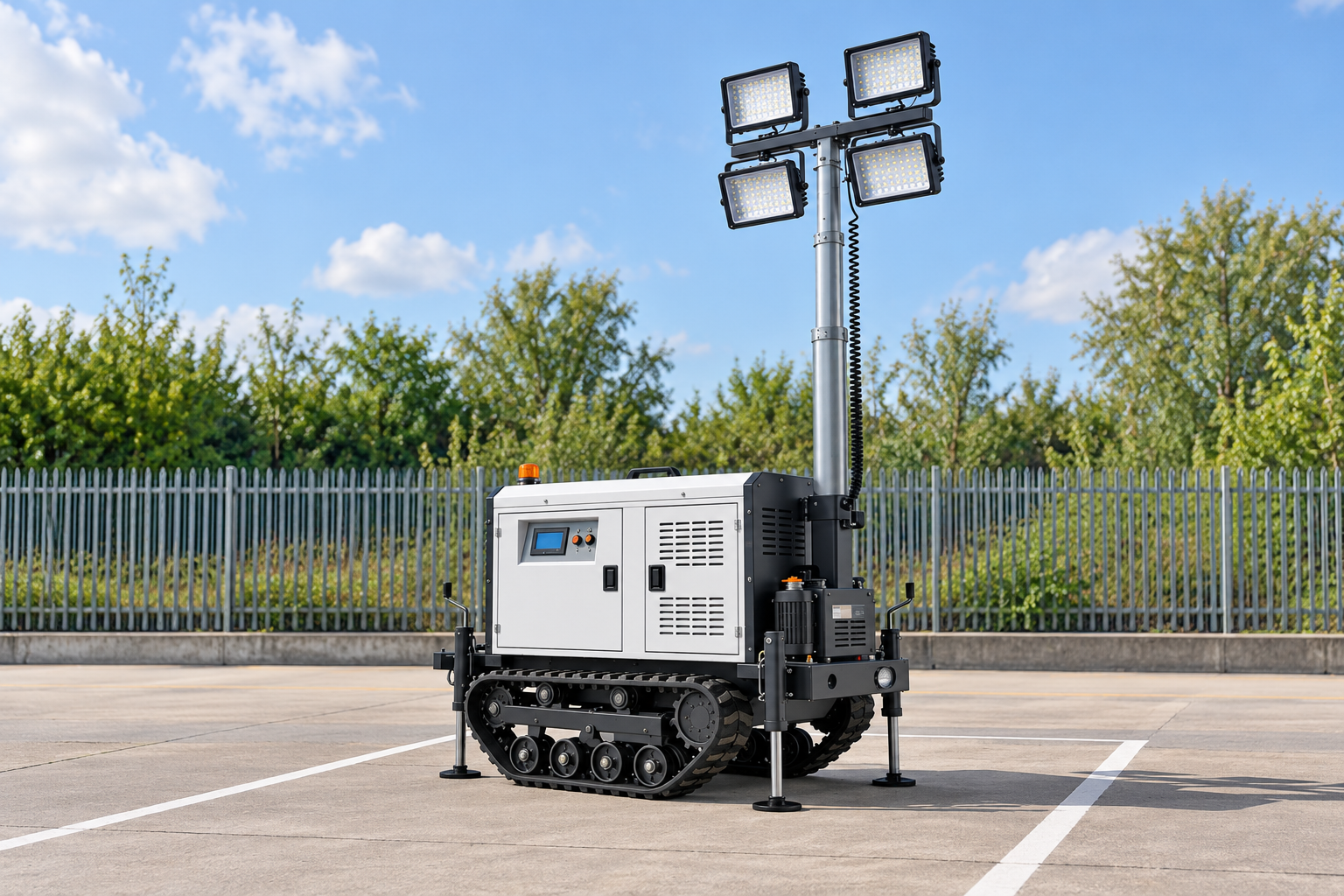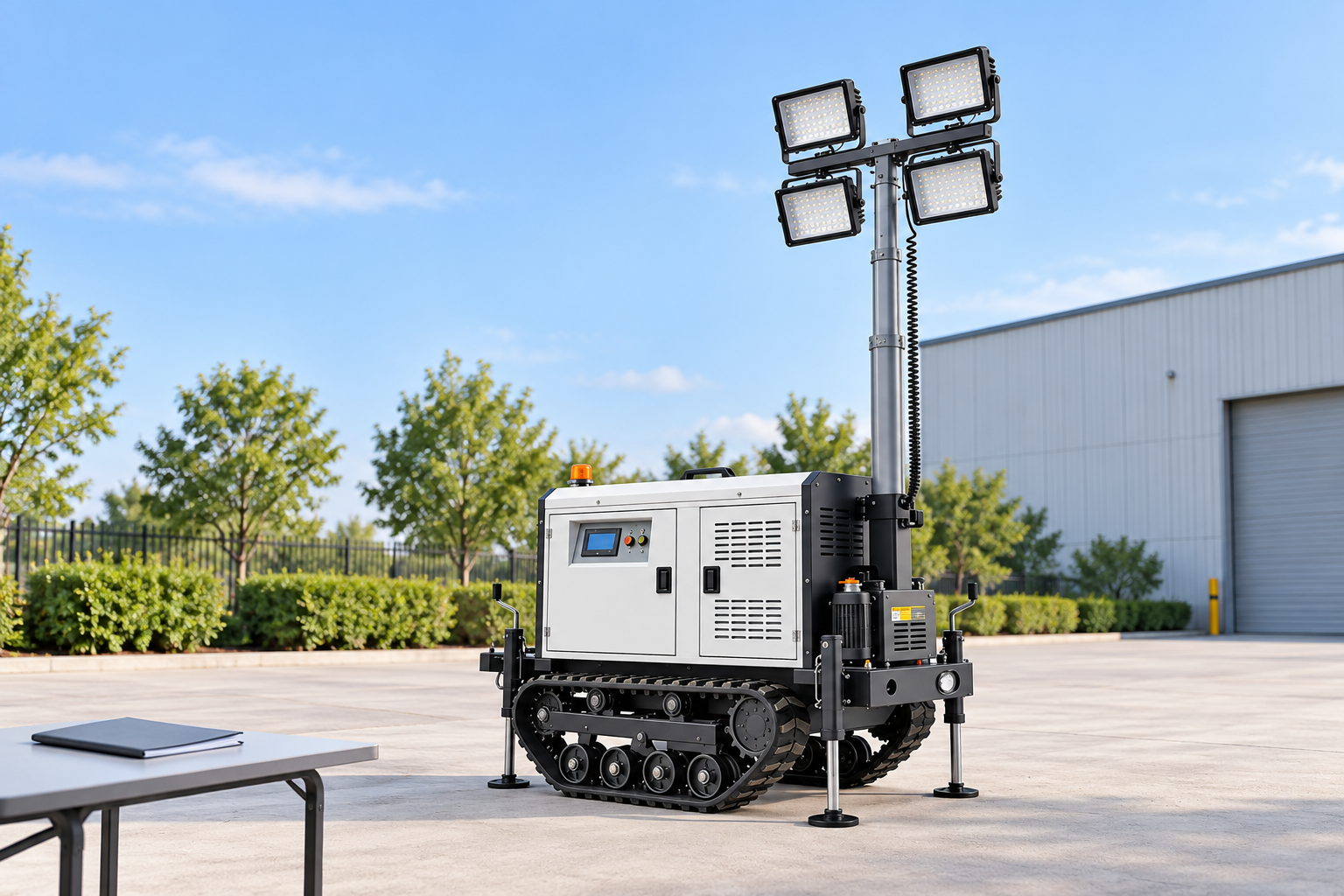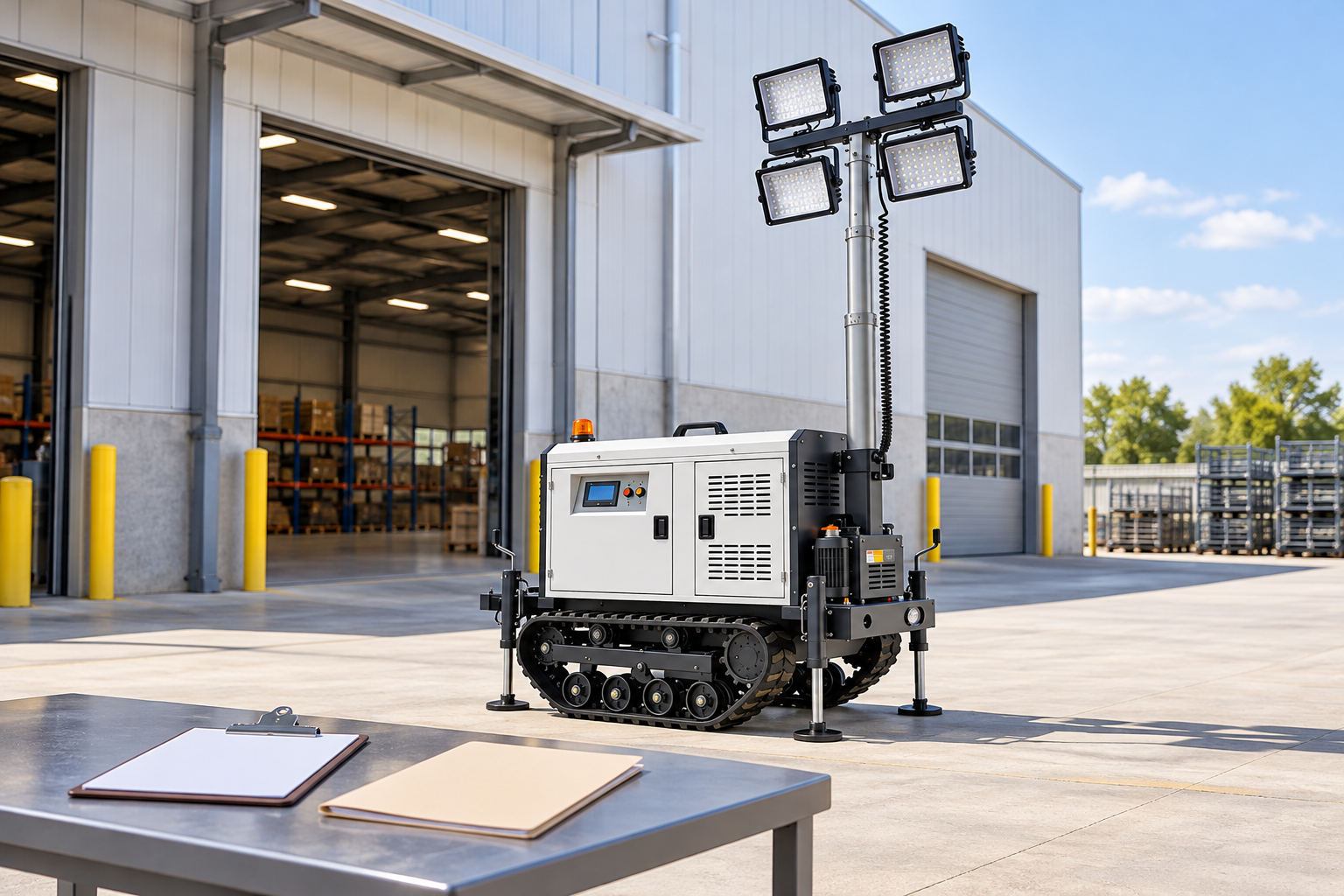

Light Tower Operating Temperature: Check the Complete Configuration
Compare light tower temperature requirements by complete configuration, charging and operation activity, usable energy, installation conditions, and documented limits.
A light tower operating temperature range must describe the complete offered configuration and the activity being performed. Check operation, charging, storage, and starting requirements separately, then identify the component or condition that limits the intended service. A battery's temperature label, an engine statement, or a lamp rating alone does not establish the range for the entire tower. For procurement, give the supplier the actual site conditions and lighting duty, and request a configuration-specific operating envelope with any required limits or controls. This guide explains how to compare those documents without inventing a universal temperature range for every mobile light tower.
Describe the service and environment being requested
Record where the tower will operate, its intended hours, the season, expected surroundings, and the power configuration. Distinguish a solar trailer charging in daylight from a combustion-powered tower starting before an overnight shift. Include any separately supplied accessories that are part of the required service. The same site description can contain several different activities with different equipment requirements.
Provide the conditions using clear units and an identified source. A regional forecast, a historical seasonal record, and a measurement at the equipment are different evidence. Describe which one is available and why it is appropriate for the decision. Do not treat an outdoor air value as the known temperature inside every enclosure or component. If the project requires additional site assessment, identify that work before accepting a quotation.
Request a complete operating envelope
Ask the supplier to state the applicable conditions for the actual tower and its supplied components. Record the relevant document revisions and any qualifications, such as a permitted load, starting arrangement, charging condition, or required environmental protection. A broad product-page range can be incomplete if it does not explain which configuration or activity it describes.
Separate minimum and maximum conditions from any performance claim. A stated permissible condition does not automatically mean the full advertised lighting duration or electrical output is available throughout that range. Request the required energy or performance assessment at the project's conditions, together with the assumptions. Keep an unanswered question as an open item rather than choosing the most favorable figure from several unrelated components.
Distinguish charging, discharging, and storage
Battery documentation can define different conditions for charging, supplying a load, and storage. Obtain the requirements for the exact battery and control arrangement. Do not infer that permission to discharge at a condition also grants permission to charge there. Likewise, a storage limit is not evidence that the complete tower may operate at that limit.
The Department of Energy energy-storage safety material discusses the need to understand the system and its hazards. It does not certify a particular trailer battery or authorize improvised thermal treatment. Follow the supplied battery and system instructions, including protective controls. Do not bypass a temperature restriction, use an unapproved charger, or add a heater to obtain a desired runtime without approval for the complete arrangement.
Check the component that limits the required service
List the supplied lamps, power electronics, controls, battery system or engine, mast mechanism, cables, and accessories relevant to the offer. Ask which documents govern their intended activity. The decision must resolve compatibility across the complete configuration rather than use the widest range printed on any one component.
Where limits do not align, obtain a system-level explanation from the supplier and the responsible technical team. This guide does not calculate an operating envelope from assumptions about individual parts. Document any required reduced output, changed schedule, or alternate arrangement explicitly. A buyer should be able to identify what lighting service remains available under the stated conditions and what must happen when those conditions are exceeded.
Assess the enclosure and installation context
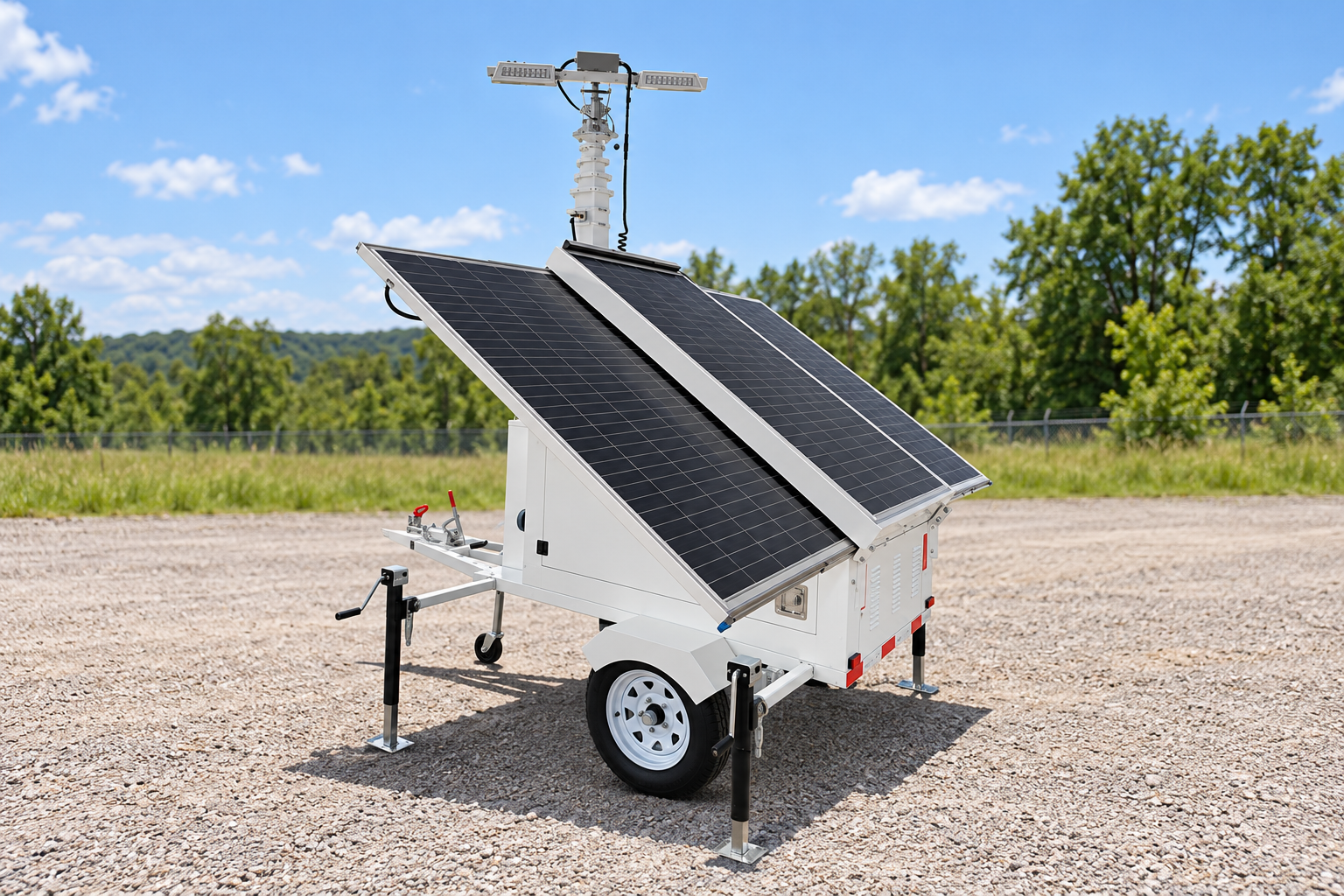
Sun exposure, surrounding structures, required ventilation, and the equipment position can affect the conditions experienced by a system. Check the supplied installation and clearance instructions rather than assuming that an outdoor cabinet automatically resolves every temperature concern. Do not block vents, surround equipment with material, or add covers based on a desire to keep it warmer or cooler.
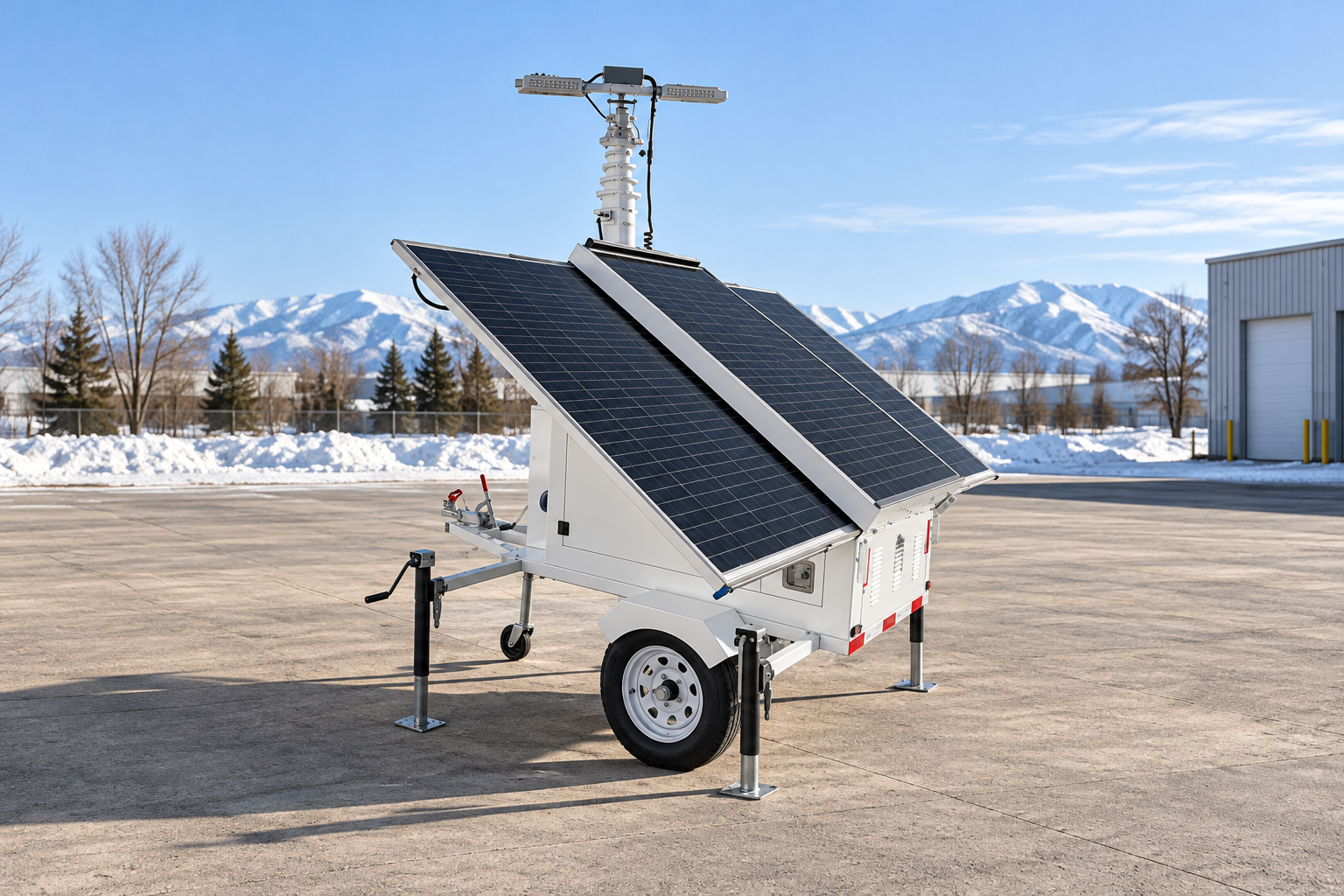
The illustrations show the current Keyyou solar trailer in clear seasonal assessment settings. They retain the real product's white enclosure, wheeled chassis, sloped solar panels, support jacks, and two visible rectangular lamp heads. The scenery illustrates the procurement question; it is not a measured temperature, environmental test, or guarantee that the pictured configuration meets a particular winter or summer requirement.
Keep required lighting energy visible
Calculate the defined electrical demand and ask how the offered system supports it under the accepted conditions. Use actual load settings and hours, including approved auxiliary consumption. If a supplied thermal-control system consumes energy, include its documented demand where relevant. Do not assume such equipment is fitted because a battery option appears on a product page.
The Department of Energy storage explanation distinguishes usable energy from power functions and notes conversion losses. Apply those principles using the exact system documents. A nominal capacity alone does not establish the usable energy at every required condition. Request the supplier's assumptions about starting state, load, ambient conditions, protection limits, and recovery so a runtime figure can be assessed against the actual project duty.
Temperature-envelope evidence table
| Decision | Evidence required | Unsupported shortcut to avoid |
|---|---|---|
| Site conditions | Identified data, units, location, and service periods | Treating one forecast as a measured enclosure condition |
| Complete tower | Configuration-specific operating documents | Choosing the widest individual component range |
| Battery activity | Separate charging, load-supply, and storage requirements | Applying a storage limit to charging permission |
| Required performance | Lighting duty and supplied assessment at stated conditions | Assuming full runtime at every permissible condition |
| Installation | Approved exposure, ventilation, and clearance requirements | Improvised blankets, covers, heaters, or blocked vents |
| Protective response | Actual control behavior and interruption responsibility | Bypassing a restriction to extend service |
| Acceptance | Documented checks, limitations, and responsible approval | Calling seasonal scenery an environmental test |
This original table structures procurement and acceptance evidence. It supplies no universal numerical range, correction factor, or charging threshold. The cited Department of Energy sources explain system and energy principles; the supplied tower and component documents establish the limits of the actual offer.
Plan a response to unavailable operation
Identify how the site knows that the required service is unavailable and who acts on the information. A tower may have a documented protection response or a permitted monitoring function, but those features must be confirmed for the offer. State which warning information is available and which checks remain the operator's responsibility. Avoid assuming every intelligent controller provides remote temperature monitoring.
Define the alternate lighting arrangement, notification process, and conditions for authorized recovery. Do not tell staff to override a protective function or repeatedly restart equipment to make a warning disappear. Record the event and obtain the appropriate assessment. A controlled interruption plan can be a necessary part of a critical-site lighting service even when the equipment is selected using reasonable environmental evidence.
Specify verification without claiming unperformed testing
Agree what the supplier or responsible project team must demonstrate and what evidence is required. Identify the configuration, condition, operating activity, load, duration, and measuring method. If the available evidence is a component document rather than a complete-tower test, state that boundary. A brief outdoor demonstration is not independently proof of performance at every expected seasonal extreme.
Retain actual test reports and their scope. Review whether the tested configuration matches the offered one, including batteries, lamps, controls, and accessories. Where the requirement cannot yet be verified, keep the item pending instead of describing it as certified. The acceptance record should clearly separate supplied claims, documentary review, measurements actually performed, and remaining site responsibilities.
Keep authorized adjustments and accessories traceable
An approved accessory, revised battery, or changed control arrangement can alter the relevant requirements. Request updated documents and review the affected energy, installation, and operating assumptions. A replacement that has the same nominal voltage or visible size does not establish equivalent environmental behavior. Keep the actual supplied configuration linked to the acceptance record.
Do not infer permission for an adjustment from a different model's instructions. Manufacturer-approved changes still need appropriate site review where relevant. Record who made the change, the documents used, and any required follow-up verification. That makes a fleet's environmental suitability traceable after service work, rather than dependent on an original product brochure that no longer describes the machine.
Prepare a useful temperature requirement for the supplier
Provide the operating window, lighting duty, location evidence, required activities, and interruption consequences. Ask for the complete configuration and any necessary controls, restrictions, maintenance, or alternate arrangements. Request separate answers for operation, battery charging where fitted, storage, and starting where relevant. Keep those answers attached to the quotation and commissioning record.
The result should be a bounded service requirement that the supplier and site team can assess. This is more useful than requesting the lowest possible minimum temperature on a comparison sheet. When the exact configuration, conditions, and required performance are documented together, a buyer can identify what is supported, what requires further evidence, and how lighting continuity will be managed through the project.
Equipment and complementary planning
Confirm the offered configuration on the Keyyou solar lighting tower product page and use the mobile light tower planning guide for the wider selection context. Review complementary subjects in light tower battery thermal management and solar light tower energy balance.
Why battery behavior depends on conditions
SciShow explains why cold weather affects a phone battery. This neutral science explanation supports distinguishing battery behavior from nominal capacity. A phone example is not a lighting-tower temperature rating, battery limit, thermal-control approval, or charging instruction.

Watch Why Does Cold Weather Kill Your Phone?.
Frequently asked questions
Does a lamp temperature rating define the whole tower range?
No. Review the complete supplied configuration, operating activity, component requirements, and any limiting condition. A single lamp, engine, or battery statement does not establish complete-system performance.
Are charging and storage temperature requirements interchangeable?
No. Obtain the exact battery and system instructions for charging, supplying loads, and storage separately. Permission for one activity is not permission for another, and protective functions must not be bypassed.
Does a permissible temperature guarantee full runtime?
Not by itself. Ask for the required lighting-duty assessment at the specified conditions, including usable energy, load, protective behavior, and recovery assumptions. Retain the difference between a permissible condition and a verified performance claim.
Sources and scope
The cited primary material supports the specific planning and safety principles discussed. Annual CFR links are explicitly the 2025 edition; the responsible team must verify current applicable requirements. The decision table is original and contains no invented equipment limits. The exact offered configuration and supplied instructions govern equipment actions.