
Remote Camp Lighting: Power, Noise, and Maintenance
Plan remote camp lighting for walkways, shared facilities, deliveries, emergency routes, sleeping areas, power availability, noise control, and maintenance access.
Remote camp lighting should make everyday routes, shared facilities, deliveries, and the camp's approved emergency arrangements usable after dark without flooding sleeping areas with glare. Begin with the layout and operating schedule of the work camp, including accommodation, wash facilities, dining, parking, stores, and pedestrian access. Then decide which functions need mobile area lighting and which belong to building or emergency systems. This article concerns industrial and workforce camps, not recreational lanterns. A portable tower can support selected outdoor areas, but its photograph does not demonstrate adequate runtime, quiet operation, or approval for every occupied-space lighting requirement.
Divide the camp into lighting functions
Draw the routes people actually use between accommodation and shared facilities. Include steps, turns, door approaches, uneven surfaces, and places where pedestrian and vehicle movements meet. A tower positioned to light an open yard may leave the entrance behind a building in shadow. Review the nighttime route from the pedestrian's view rather than deciding that the whole camp is covered because the central area looks bright.
Separate the delivery yard, parking access, and service spaces from accommodation routes. These functions have different operating hours and observers. A driver needs a clear approach and instructions; a pedestrian needs to distinguish changes in level and the route ahead. The camp operator should identify the applicable requirements and approve the arrangement for each function. Record any area that needs a separate fixture or building-system change instead of assuming a taller mobile mast can address every obstruction.
Keep sleeping areas part of the layout review
Lamp direction matters when people are sleeping nearby. Check views from accommodation entrances and windows as well as from the outdoor route. A tower can provide useful walkway illumination while pointing direct light into rooms or towards someone leaving a doorway. Adjust the permitted aiming and position, and repeat the route check after each change. Do not trade a dark access point for excessive light towards a sleeping area.
Use the camp's actual occupancy and shift pattern. Crews may sleep during daylight or use shared facilities throughout the night, so a general schedule copied from another camp may be inappropriate. The operator should decide which lighting stays available and which can be reduced when a task ends. Any reduced-output or timed arrangement needs an approved plan that preserves the relevant access and safety functions. Keep the accepted settings and operating hours available for handover.
An outdoor lighting decision table
The table below describes evidence to request for the current camp. It is a planning checklist rather than a universal lighting standard, equipment rating, or promise of a particular tower's performance.
| Planning item | Evidence to review |
|---|---|
| Pedestrian routes | Map door approaches, steps, turns, shared facilities, and vehicle transitions. |
| Accommodation | Check lamp direction from windows and entrances under the actual shift pattern. |
| Power and service | Document runtime mode, charging or fuel access, and the permitted engine location. |
| Deployment | Approve the full support and mast footprint, ground, clearances, and access. |
| Continuity | Assign service windows, outage response, backup provisions, and handover records. |
Compare the whole power and service arrangement
An engine-powered tower, battery unit, externally supplied light, or hybrid can have very different implications for a remote camp. Compare the power arrangement over the actual operating window, including delayed arrivals, cleanup, and shift changes. Ask the supplier for runtime information at the proposed lamp mode and conditions. Do not apply a reduced-output test to a full-output night or assume a different engine and battery package will perform identically.
For batteries, identify a realistic charging location, supply, schedule, and responsible person. For external power, obtain review of the source, protective devices, connection, cable route, and operation during an outage. For an engine, establish a permitted location for exhaust, fuel handling, and maintenance. A hybrid needs a clear account of its engine-start conditions. Service capability matters: a theoretically suitable unit is less useful if its charging or spare-parts needs cannot be supported at the camp.
Review exhaust near occupied buildings
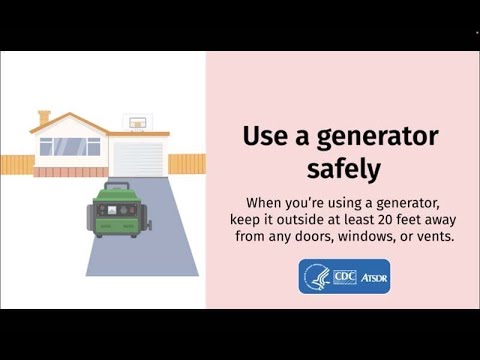
Combustion equipment introduces a separate issue around rooms, shared facilities, tents, and other occupied spaces. CDC's carbon-monoxide guidance explains the hazard from generator exhaust reaching enclosed areas. The camp's responsible authority should review the proposed engine location, building openings, operating conditions, and current equipment instructions. Avoid treating an outdoor parking position as automatic proof that exhaust cannot reach occupied accommodation.
The generator safety video later in this article provides introductory education, not a camp installation approval. Document the approved location and ensure that a replacement unit is reviewed before use. Quiet operation, lighting coverage, and exhaust safety are separate questions. A unit may appear suitable for the walkway while being unsuitable beside an occupied building. Keep those decisions distinct in the quotation and handover rather than summarizing them with one general description such as suitable for camps.
Ask for noise evidence tied to the operating mode
If noise is a selection issue, ask for model-specific information that identifies the measurement condition and operating mode. A headline sound figure without a stated distance, load, configuration, and method is difficult to compare. Do not infer a numerical noise level from the enclosure shown in a product picture. Battery operation can avoid an engine during the lighting period, but charging and other camp equipment remain part of the actual sound environment.
Review the proposed arrangement with the camp operator and the people responsible for accommodation. Moving an engine farther from a room may improve one concern while creating an unapproved cable route or maintenance problem. Agree on the permitted equipment position and service window, and identify which changes need another review. Record complaints and the corrective action taken so the next crew can distinguish a changed operating condition from the accepted setup.
Keep the deployment footprint out of camp routes
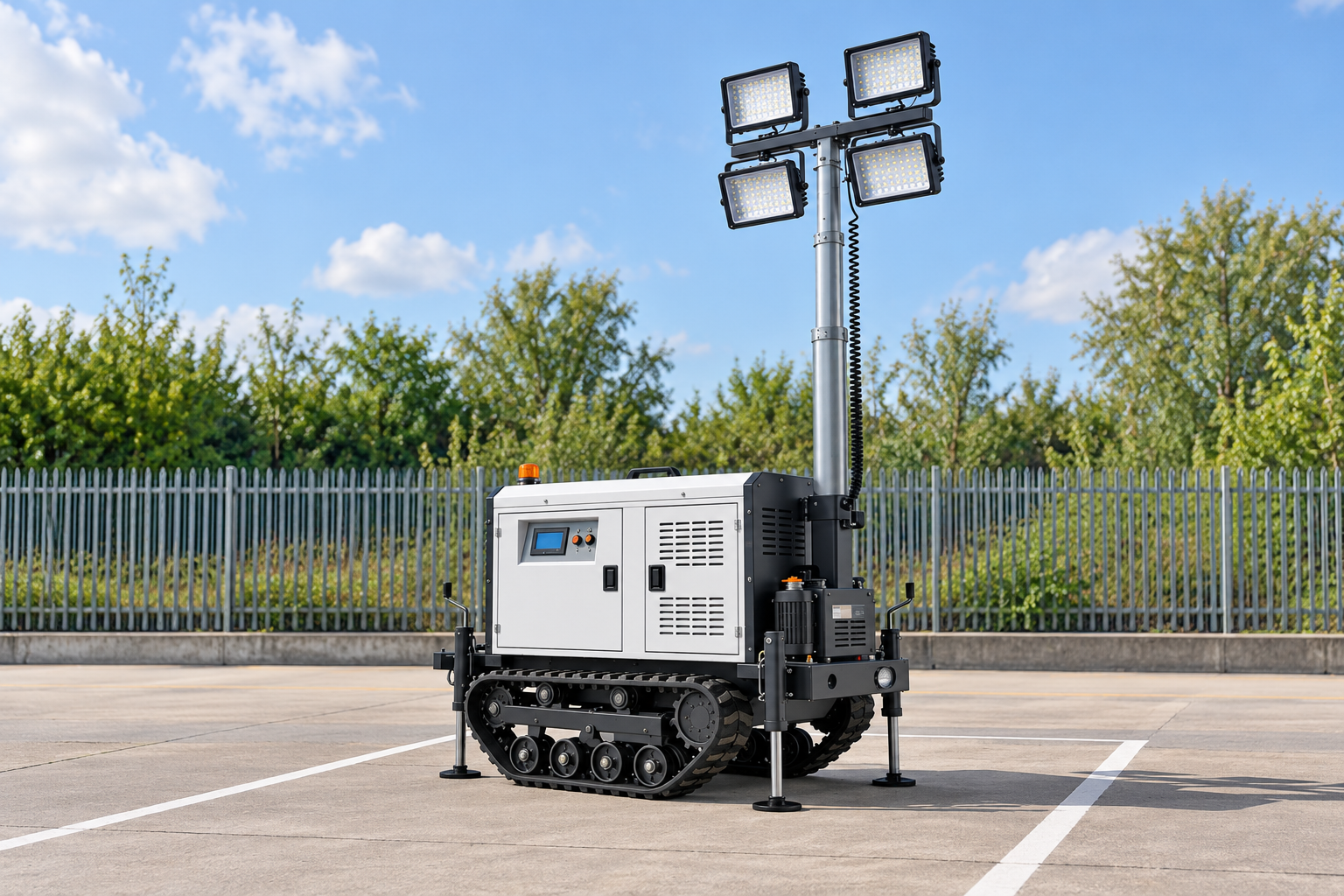
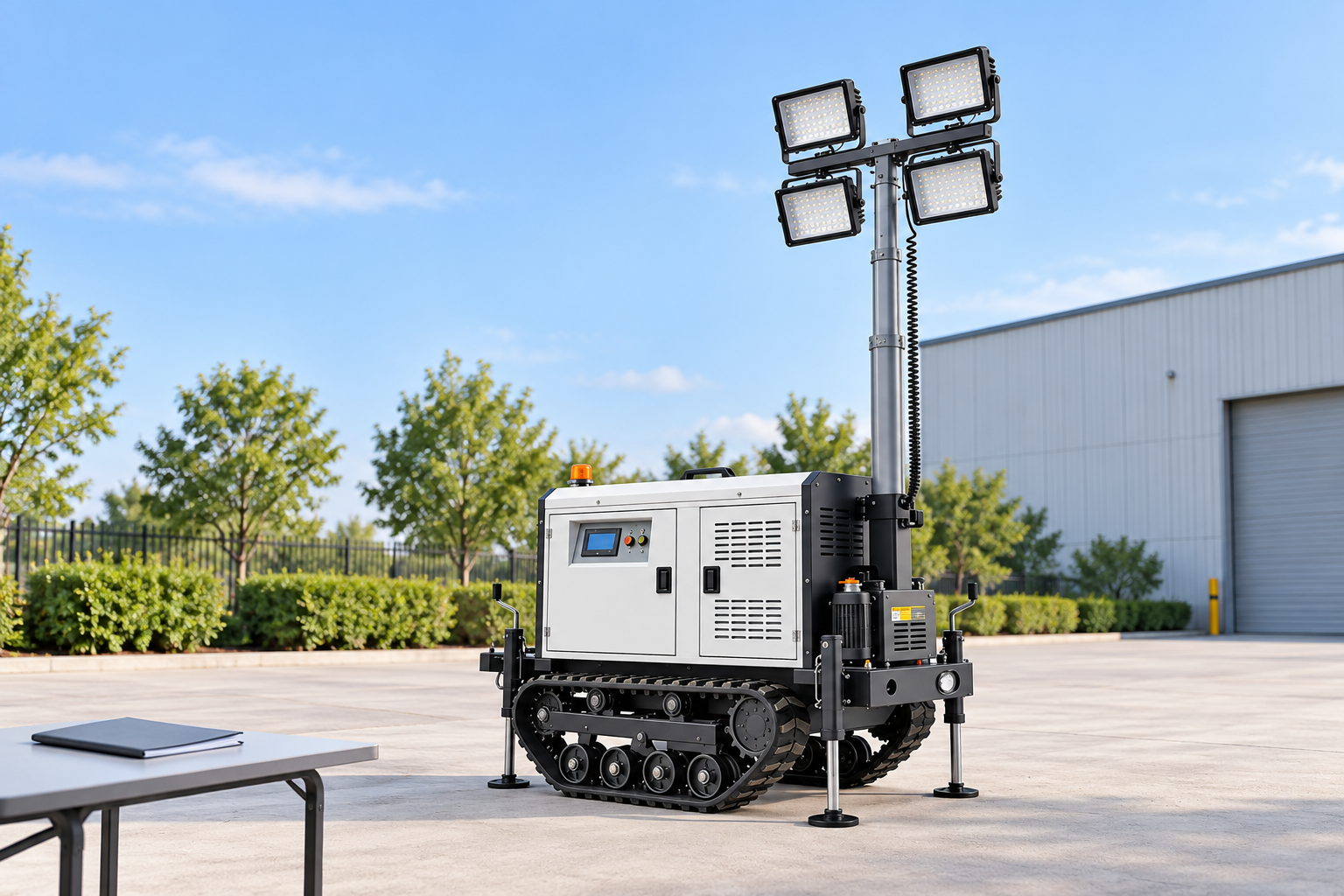
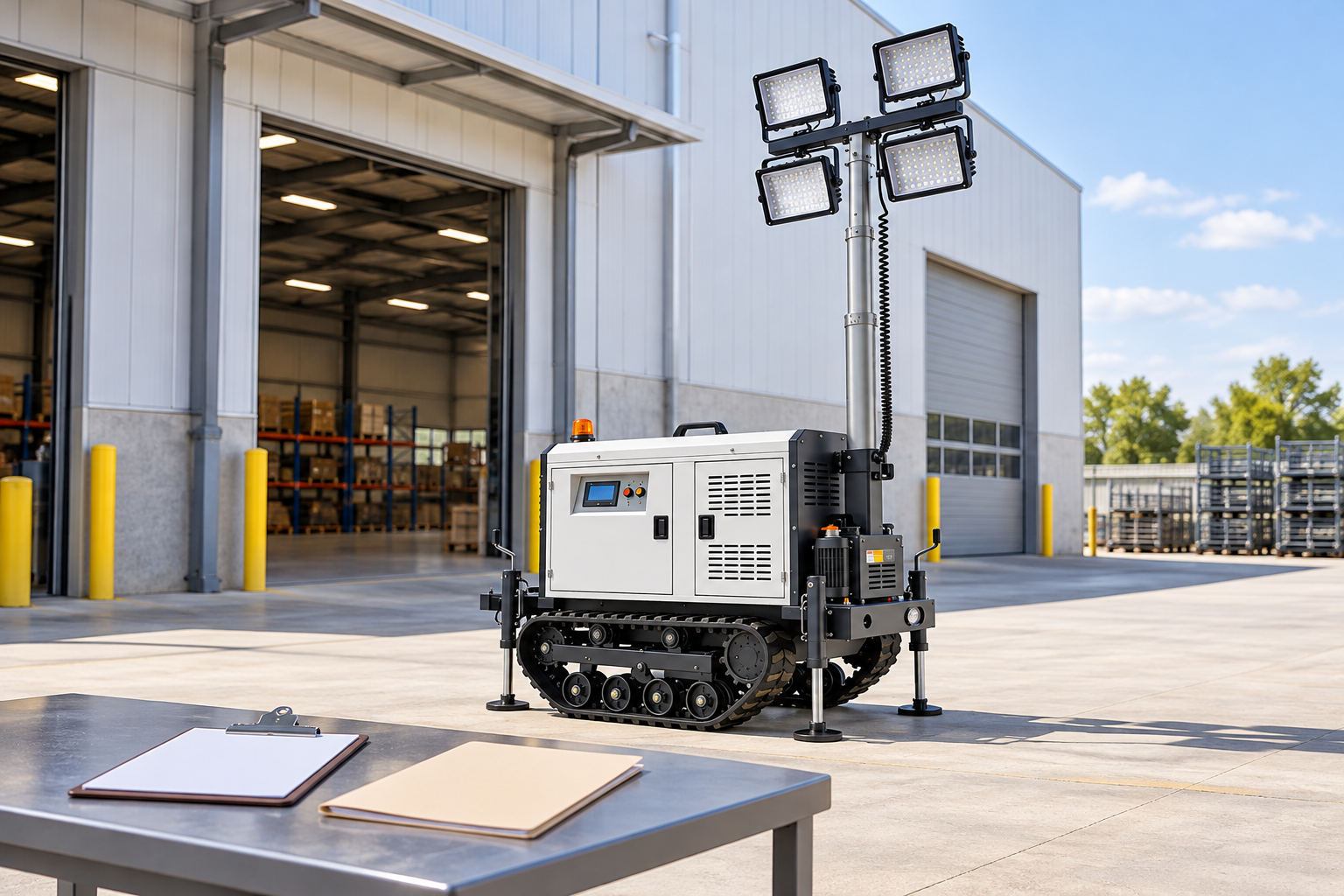
Include the tower's supports, mast operation, controls, and servicing space in the layout. A small-looking chassis may require a larger deployed footprint. Review ground conditions and overhead constraints using the exact model's instructions. Tracks do not establish permission to operate on an arbitrary slope, soft ground, or an underground service cover. The reference machine's appearance should not be converted into an unverified stability or ground-loading claim.
Keep equipment and cables away from approved pedestrian and vehicle routes wherever the reviewed arrangement allows. Unavoidable crossings need protection specified by the responsible camp team. Preserve emergency access and the route needed to shut down or service the tower. When cabins, stores, parked vehicles, or shared facilities move, repeat the relevant lighting and equipment-position checks. A camp layout can change quickly during mobilization, so the accepted drawing needs to remain current.
Define the nighttime failure response
A remote camp should know what happens when its temporary area lighting stops. Identify who receives the report, which activities are affected, and which approved lighting remains available. Building emergency systems and other required provisions cannot be assumed to be replaced by a portable tower in the yard. The camp operator should decide how occupants use the remaining routes and how restoration is authorized.
Plan ordinary interruptions as well as faults. Charging, refueling, battery exchange, inspection, or relocation can remove coverage without an equipment breakdown. Schedule them in the operating plan and provide the approved alternative where a route needs continuous availability. Check any replacement machine's footprint, mast procedure, power arrangement, and instructions before deploying it. Keep the changed configuration in the camp's equipment record rather than assuming a similar-looking rental is interchangeable.
Verify actual paths and views after installation
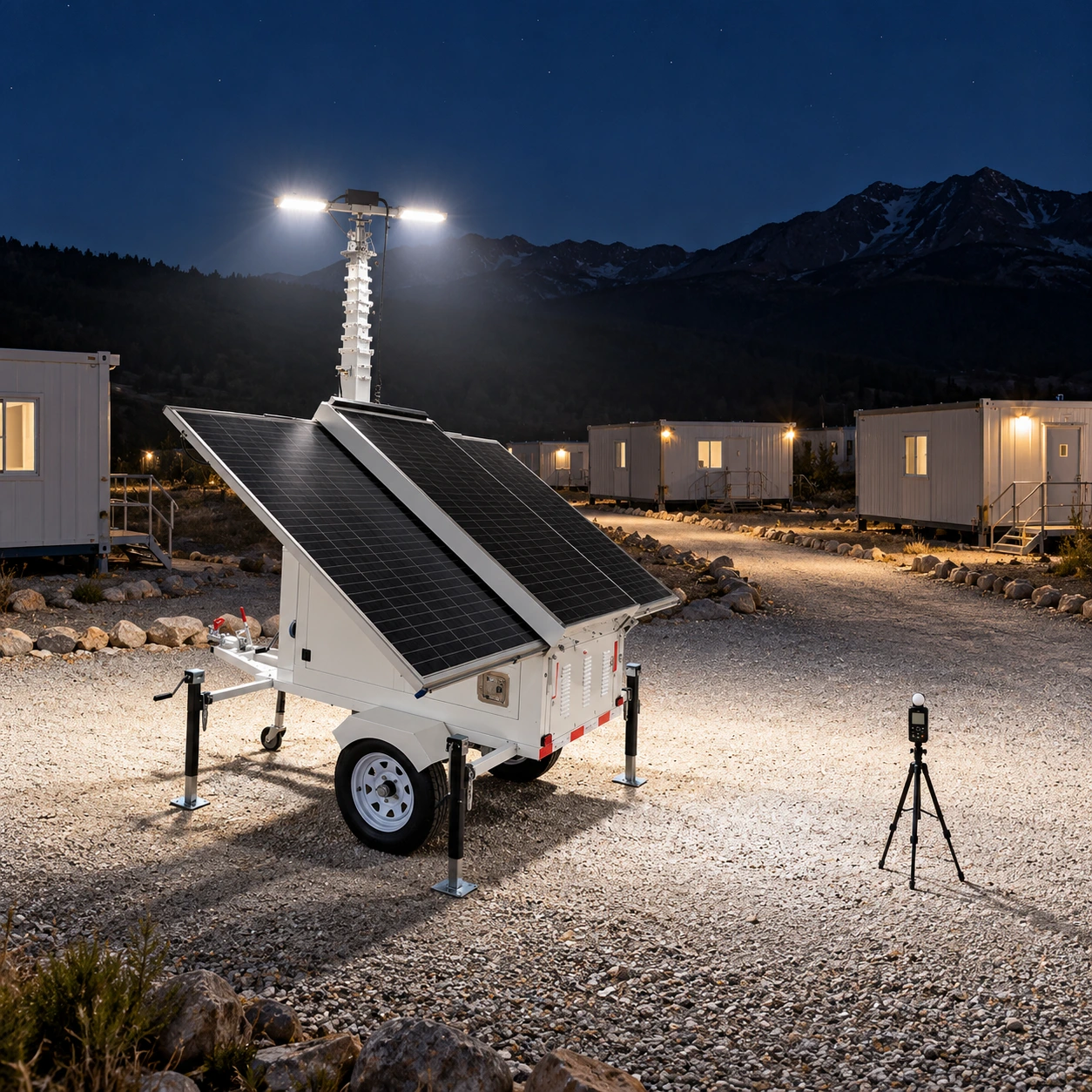
Agree on acceptance criteria before delivery. Request a layout based on the exact luminaires, optics, lamp mode, positions, aiming, and obstructions. Inspect the installed route after dark, including approaches from both directions, building entrances, and pedestrian-vehicle transitions. Where measurements are required, record the agreed working plane, instrument, positions, background lighting, and conditions. The camp authority sets the applicable requirements; this article supplies no universal tower count or lighting level.
Look for practical defects that a yard average may hide. A bright centre can coexist with an obscured step, a confusing doorway, or glare facing an approaching driver. Record the deficient point and correct the cause through the approved arrangement. Recheck after moving equipment or changing aiming, because an improvement for one view can worsen another. Retain photographs and the installed-position sketch alongside the configuration and operating-mode record for subsequent inspections.
Prepare a quotation that describes the camp
Send the supplier a current layout, occupancy and shift pattern, required outdoor tasks, power availability, permitted equipment positions, service constraints, and acceptance procedure. State whether the unit must be moved frequently or will serve a fixed yard. Request model-specific mast and support instructions, photometric information, runtime evidence, charging requirements, noise information where relevant, and spare-parts availability. Require written disclosure of substitutions that affect these decisions.
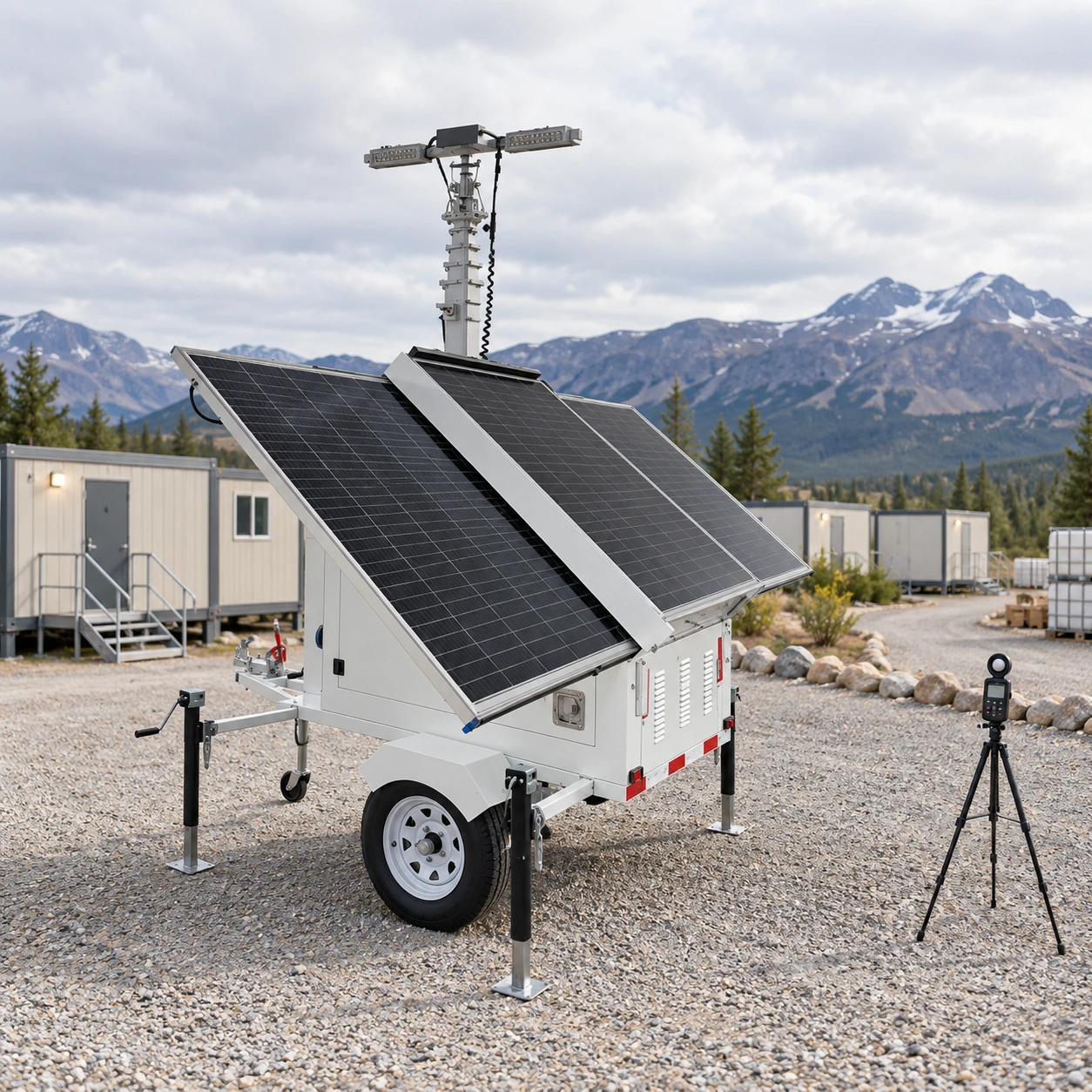
The Solar-powered mobile lifting lighting tower (trailer version) identifies the product family in the illustrations. Its photograph does not establish suitability beside accommodation or compliance with the camp's emergency arrangements. Use the mobile light tower overview, selection guide, equipment specifications, and safety guide for complementary equipment questions. The supplier and camp authority should resolve the actual configuration and site requirements before deployment. Compare quotations against the same camp plan instead of choosing by an isolated lumen, wattage, or runtime headline.
Sources and introductory generator education
The Department of Energy's LED guidance offers background on lighting technology, while CDC's carbon-monoxide guidance addresses combustion exhaust around occupied spaces. Use those sources for their stated scope. They do not establish the camp's layout, acceptable sound conditions, charging capacity, or emergency-lighting provisions. The camp operator must apply the relevant local requirements and current equipment instructions to those decisions.
The CDC video below introduces safe generator operation and is relevant when an engine-powered arrangement is under consideration. It supplements the written explanation and does not replace the approved camp setup, manufacturer's manual, or competent assessment of the proposed location.
Watch Use a Generator Safely by CDC
Frequently asked questions
Can one mobile tower light an entire remote camp?
That depends on tasks, obstructions, permitted positions, optics, and acceptance criteria. Separate outdoor area lighting from building and emergency functions before estimating the quantity.
Is a battery tower automatically suitable near accommodation?
No. Review runtime, charging arrangements, stability, glare, equipment position, and the camp's applicable requirements for the exact configuration.
What noise figure should a buyer request?
Request a model-specific result with its measurement method, distance, operating load, and configuration. Compare proposals under equivalent conditions rather than using an unexplained headline.
When should the camp layout be checked again?
Recheck after accommodation or shared facilities move, routes change, new obstructions appear, equipment is exchanged, or lamp aiming and operating mode are adjusted.