
Solar Carport Lighting: Design, Battery Sizing, and Procurement Guide
Plan solar carport lighting around parking tasks, fixture photometry, canopy geometry, seasonal solar yield, usable battery energy, controls, and maintenance access.
The canopy, photovoltaic array, battery, controls, luminaires, drainage, and structural system must be evaluated together. For commercial parking lots, fleet yards, campuses, and carport structures, begin with the operating task and the authority that controls it. Then compare configuration-specific evidence for parking and pedestrian tasks on defined measurement planes, canopy height, bay spacing and obstructions, monthly solar resource and shading from buildings or trees. A quotation is useful only when suppliers use the same site conditions, operating profile, and acceptance method. This guide explains how to turn the search for solar carport lighting into a documented engineering and procurement decision without treating a sales label as proof of suitability.

Quick answer: how to specify solar carport lighting
Write a one-page design basis before selecting equipment. Define the location, users, hours, weather, movement frequency, energy access, surrounding hazards, required records, and failure consequence. Name the standard, regulator, owner, or engineer that decides acceptance. Where a regulated signal, structural support, classified electrical area, or life-safety function is involved, obtain project-specific approval rather than relying on this general guide.
Ask every bidder to identify the exact model and option set behind each claim. Output, runtime, range, height, wind resistance, ingress protection, temperature and battery figures need units and test conditions. If the delivered bill of materials changes, repeat the affected review before installation.
Five decisions that control the project
| Decision area | Evidence required |
|---|---|
| Parking And Pedestrian Tasks On Defined Measurement Planes | State the configuration, condition, units, test method, acceptance limit, and responsible reviewer. |
| Canopy Height, Bay Spacing And Obstructions | State the configuration, condition, units, test method, acceptance limit, and responsible reviewer. |
| Monthly Solar Resource And Shading From Buildings Or Trees | State the configuration, condition, units, test method, acceptance limit, and responsible reviewer. |
| Usable Battery Energy At Temperature And End Of Life | State the configuration, condition, units, test method, acceptance limit, and responsible reviewer. |
| Controls, Dimming Profile And Emergency Operating Mode | State the configuration, condition, units, test method, acceptance limit, and responsible reviewer. |
The table is an evidence checklist, not a substitute for the controlling design. A useful submittal connects each requirement to a drawing, calculation, report, certificate, manual section, label, or field test. Record exceptions beside the requirement so commercial revisions cannot silently change the technical basis of the purchase.
1. Verify parking and pedestrian tasks on defined measurement planes
This item should be expressed as a measurable requirement for commercial parking lots, fleet yards, campuses, and carport structures. Record where it applies, the operating mode, environmental condition, tolerance, inspection method, and person who accepts the result. Avoid copying a model-family brochure into the specification: the evidence must match the final luminaire, power system, mount, controls, accessories and software supplied.
During review, test the weakest credible condition rather than the easiest demonstration. Include seasonal weather, reduced battery capacity, dirt, obstructions, component aging, alternate operating modes and foreseeable relocation. If a number cannot be checked at factory or site acceptance, replace it with an observable outcome or require the underlying calculation.
2. Verify canopy height, bay spacing and obstructions
This item should be expressed as a measurable requirement for commercial parking lots, fleet yards, campuses, and carport structures. Record where it applies, the operating mode, environmental condition, tolerance, inspection method, and person who accepts the result. Avoid copying a model-family brochure into the specification: the evidence must match the final luminaire, power system, mount, controls, accessories and software supplied.
During review, test the weakest credible condition rather than the easiest demonstration. Include seasonal weather, reduced battery capacity, dirt, obstructions, component aging, alternate operating modes and foreseeable relocation. If a number cannot be checked at factory or site acceptance, replace it with an observable outcome or require the underlying calculation.
3. Verify monthly solar resource and shading from buildings or trees
This item should be expressed as a measurable requirement for commercial parking lots, fleet yards, campuses, and carport structures. Record where it applies, the operating mode, environmental condition, tolerance, inspection method, and person who accepts the result. Avoid copying a model-family brochure into the specification: the evidence must match the final luminaire, power system, mount, controls, accessories and software supplied.
During review, test the weakest credible condition rather than the easiest demonstration. Include seasonal weather, reduced battery capacity, dirt, obstructions, component aging, alternate operating modes and foreseeable relocation. If a number cannot be checked at factory or site acceptance, replace it with an observable outcome or require the underlying calculation.
4. Verify usable battery energy at temperature and end of life
This item should be expressed as a measurable requirement for commercial parking lots, fleet yards, campuses, and carport structures. Record where it applies, the operating mode, environmental condition, tolerance, inspection method, and person who accepts the result. Avoid copying a model-family brochure into the specification: the evidence must match the final luminaire, power system, mount, controls, accessories and software supplied.
During review, test the weakest credible condition rather than the easiest demonstration. Include seasonal weather, reduced battery capacity, dirt, obstructions, component aging, alternate operating modes and foreseeable relocation. If a number cannot be checked at factory or site acceptance, replace it with an observable outcome or require the underlying calculation.
5. Verify controls, dimming profile and emergency operating mode
This item should be expressed as a measurable requirement for commercial parking lots, fleet yards, campuses, and carport structures. Record where it applies, the operating mode, environmental condition, tolerance, inspection method, and person who accepts the result. Avoid copying a model-family brochure into the specification: the evidence must match the final luminaire, power system, mount, controls, accessories and software supplied.
During review, test the weakest credible condition rather than the easiest demonstration. Include seasonal weather, reduced battery capacity, dirt, obstructions, component aging, alternate operating modes and foreseeable relocation. If a number cannot be checked at factory or site acceptance, replace it with an observable outcome or require the underlying calculation.
Photometric evidence and field verification
Lighting performance must be evaluated on the relevant horizontal, vertical or target surface. Request a complete-luminaire photometric file or a layout that states fixture identity, mounting position, tilt, orientation, light-loss assumptions, obstructions and calculation grid. Review minimums, uniformity, shadow, contrast, glare and spill light alongside any average value.
After installation, measure representative task, edge, transition and shadow points with a suitable calibrated meter. Preserve the measurement plane, weather, operating mode, fixture settings and instrument information. Also inspect the scene from the viewpoint of workers, drivers, pilots, mariners, neighbors or cameras as applicable. Recheck after relocation, maintenance, severe weather or a change in surrounding structures.
Power and runtime under the real duty cycle
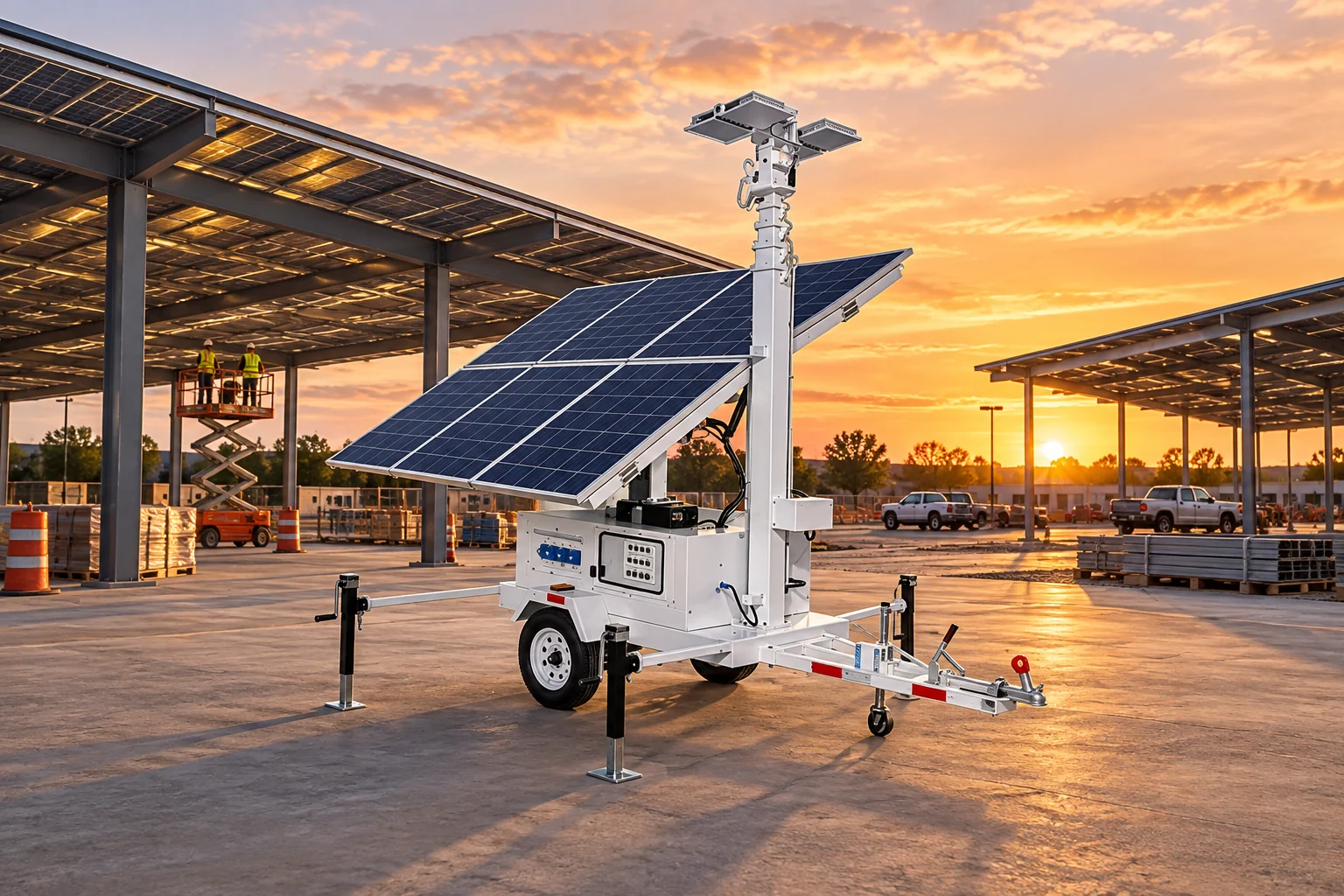
Separate power from energy. Watts or kilowatts describe instantaneous demand; watt-hours or kilowatt-hours describe stored or consumed energy. Build the load from complete fixtures, drivers, controls, communications, heaters and conversion losses, then apply the actual hours and dimming schedule. For solar equipment, compare demand with conservative monthly generation after shading, temperature, soiling and electrical losses.
Battery autonomy must state usable depth of discharge, temperature, aging allowance and end-of-life capacity. Fuel-powered equipment needs load-specific consumption, ventilation, exhaust control, service access and a refueling plan. Hybrid systems need clear start and stop logic. A headline runtime without these assumptions is not comparable procurement evidence.
Installation, placement, and safe access
Survey ground, slope, drainage, traffic, overhead hazards, buried services, public interfaces, emergency routes and maintenance access before placement. Confirm structural support, stabilization, clearances and exclusion zones from the current manufacturer instructions and site plan. Aim fixtures before raising a mast where practicable, and keep people outside pinch, fall and vehicle-impact zones.
Permanent work may require structural, electrical and geotechnical design. Temporary equipment still requires controlled setup and inspection. Protect cables and supports, lock controls where needed, and define the weather or operating trigger for lowering, isolating or removing equipment. Never improvise a bracket, ballast, anchor, grounding path or lifting point.
Common mistakes to avoid
- Assuming the photovoltaic nameplate predicts winter runtime
- Creating dark bands between structural bays
- Placing batteries where heat or flooding shortens life
- Omitting cleaning and service access above parked vehicles
These errors share one cause: selecting a component before defining the complete system and its acceptance evidence. Correct them by keeping a decision register that identifies the requirement, supplier response, reviewed evidence, deviation, responsible reviewer and final disposition.
Factory and site acceptance plan
- Confirm model, options, labels, serials, drawings and approved bill of materials.
- Inspect mechanical, electrical, optical and energy-storage assemblies before operation.
- Test controls, alarms, protection and defined failure behavior.
- Demonstrate the agreed operating cycle and measure lighting at specified points.
- Record defects, corrective actions, final settings, training and spare parts.
A sample is not proof of production consistency unless it represents the approved configuration. Link acceptance results to serial numbers and revision-controlled documents. Require approval before a later substitution changes fixtures, optics, drivers, battery cells, solar modules, mast, bracket, wiring, controls or firmware.
Lifecycle cost and supplier support
Compare delivered price with installation, transport, civil work, energy, cleaning, inspections, planned service, consumables, batteries, spare fixtures, communications, training, downtime and end-of-life handling. Use one operating profile and energy-price basis for all options. A low purchase price can be lost quickly if documentation is incomplete or replacement parts are unavailable.
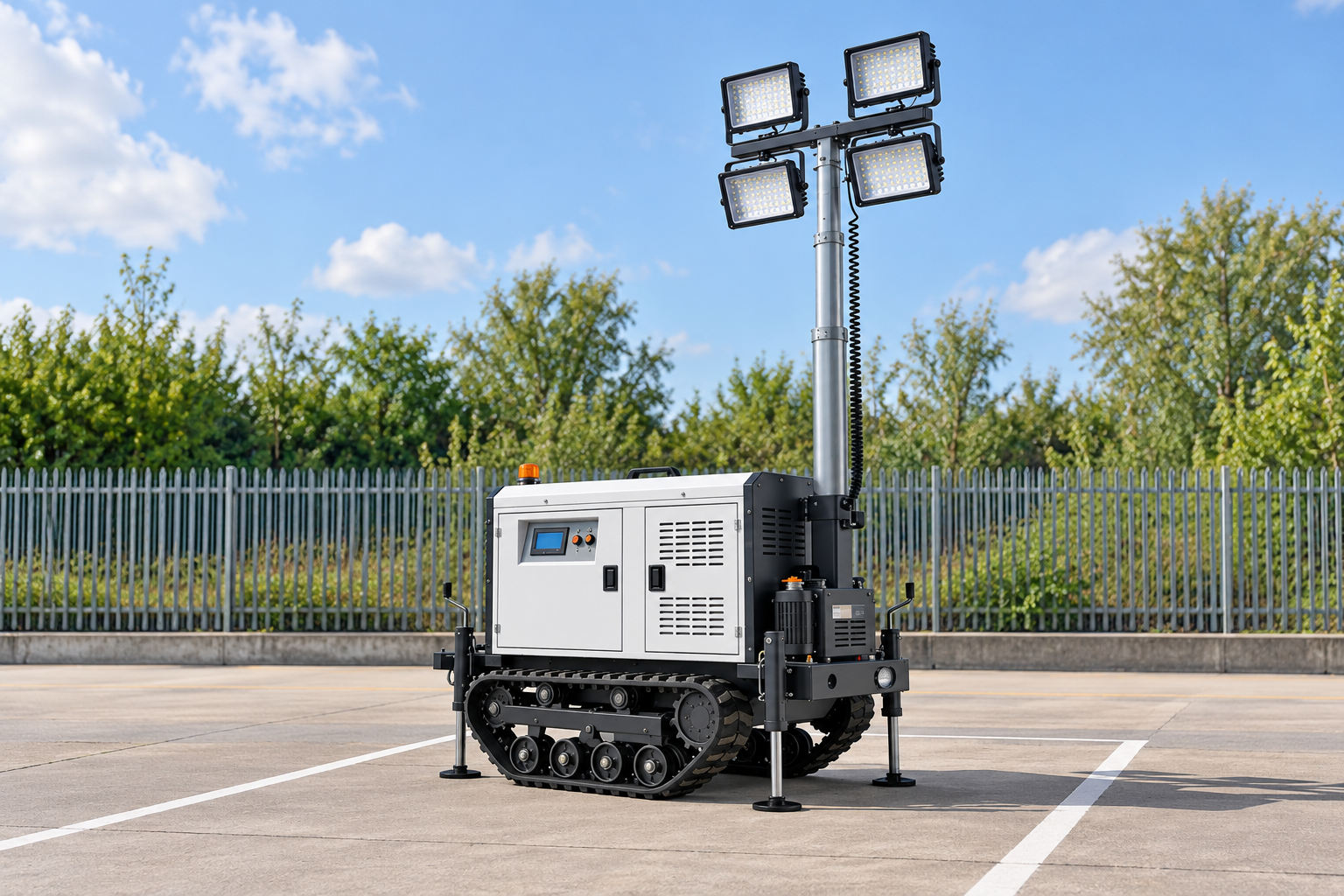
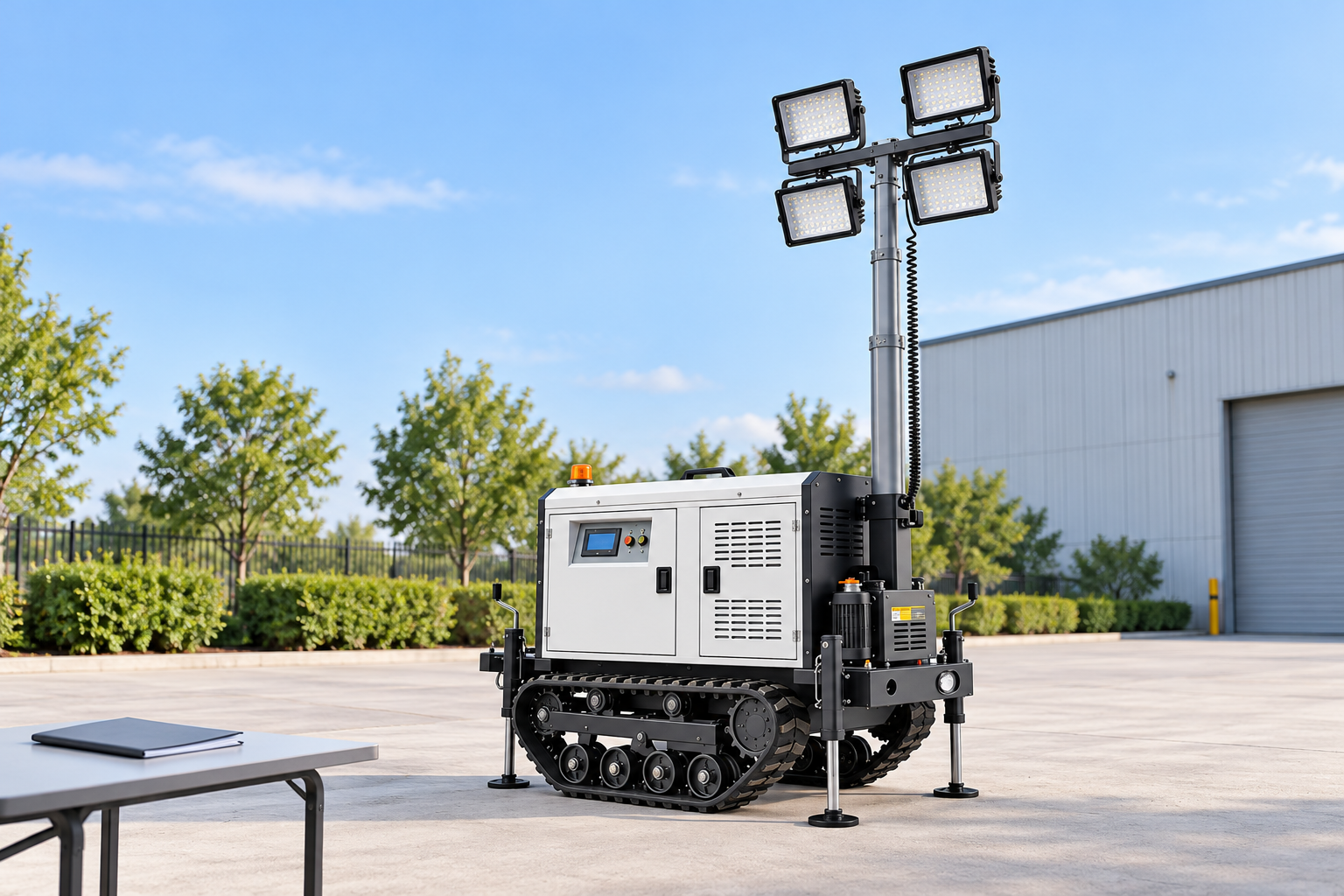
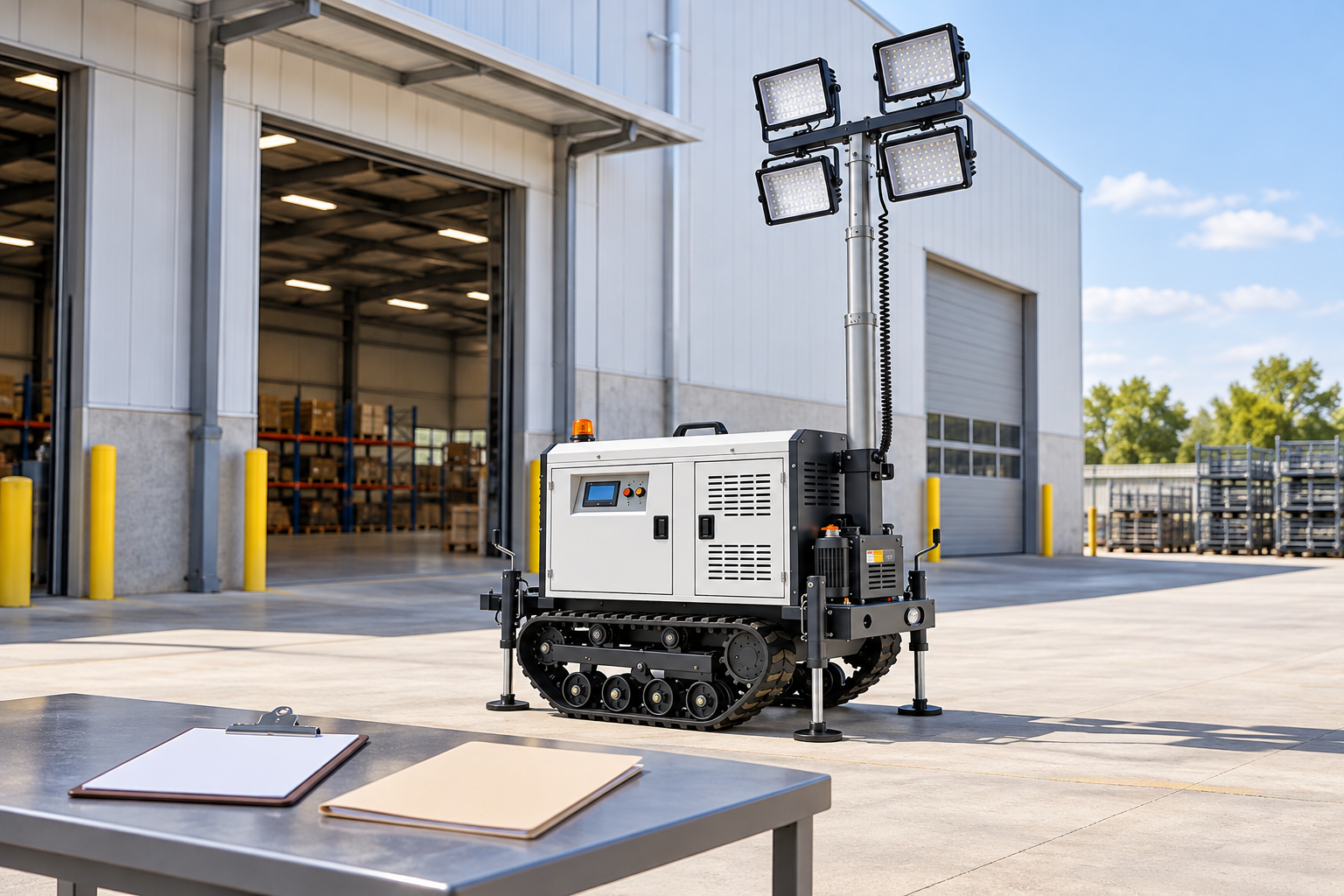
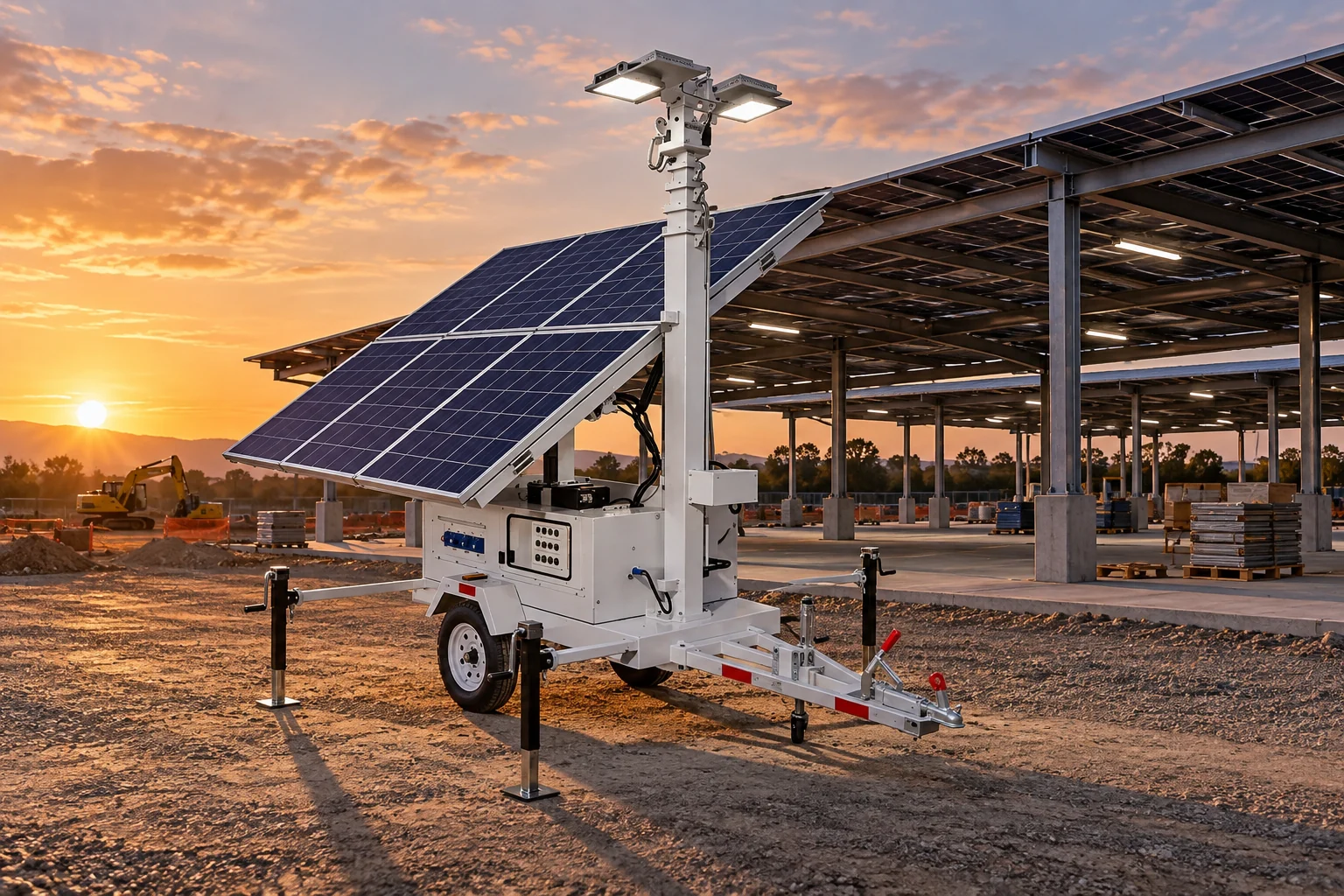
Ask who diagnoses faults, which parts are stocked, typical response times, warranty boundaries and which tasks require authorized personnel. Obtain manuals and a parts list before acceptance. Keyyou’s solar-powered mobile lighting tower may support temporary area-lighting work within this broader application, but final suitability must be verified against the project requirement and must not be confused with a regulated signal or certified function.
Related light-tower planning resources
Authoritative references
Video: a useful design principle
National Laboratory of the Rockies overview of sizing photovoltaic generation with batteries provides background for reviewing light distribution or energy balance. It does not replace the project’s governing standard, approved design, or manufacturer instructions.

Frequently asked questions
What is the first step when buying solar carport lighting?
Define the application, governing authority, site conditions, operating profile and measurable acceptance method before comparing models.
Can solar carport lighting be selected from watts or lumens alone?
No. Distribution, placement, losses, glare, environment, power architecture and configuration-specific evidence all affect useful performance.
How should runtime or autonomy be compared?
Use the same load, operating mode, temperature, battery aging, solar or fuel assumptions, losses and acceptance endpoint for every option.
When should the design be reviewed again?
Review it after a component substitution, relocation, changed operating hours, new obstruction, severe weather, maintenance, damage or revised project requirement.
Final takeaway
A defensible solar carport lighting decision connects a real task to configuration-specific evidence and a repeatable acceptance test. Define the controlling requirement first, verify the complete system under credible conditions, manage glare and placement, and retain serial-linked records for inspection and future changes. Where certification, aviation, maritime, mining, structural or electrical rules apply, the responsible authority and qualified professionals must make the final determination.