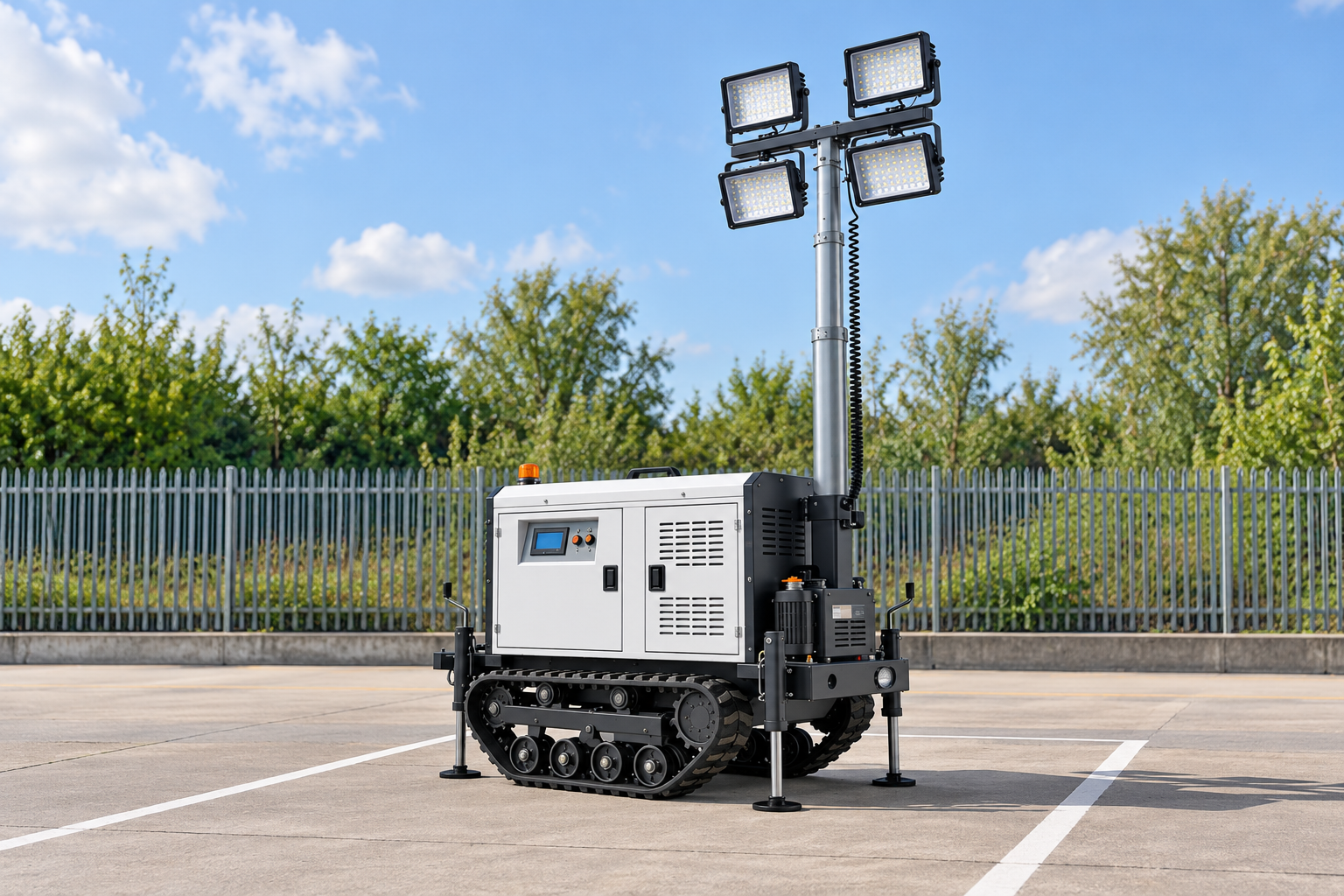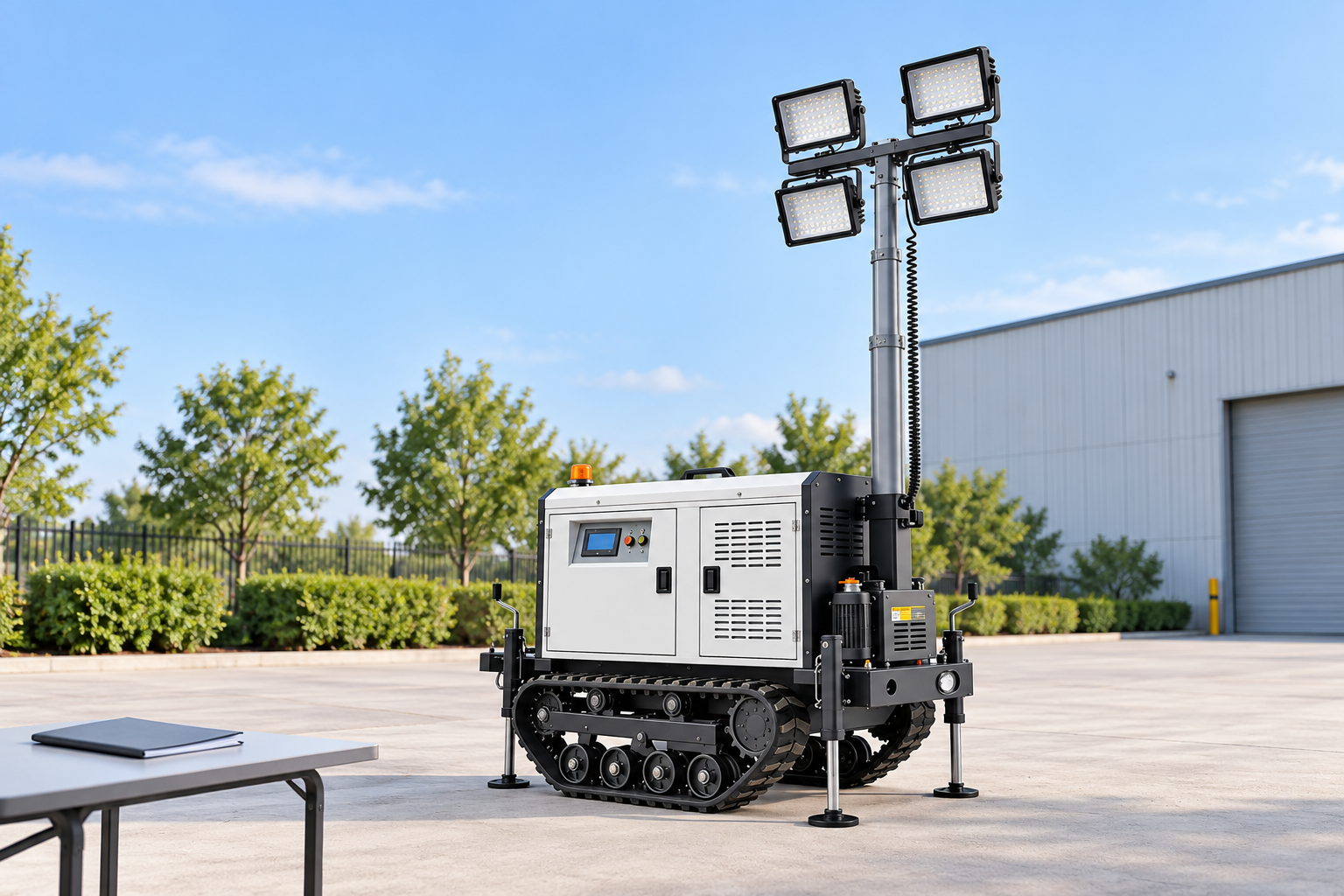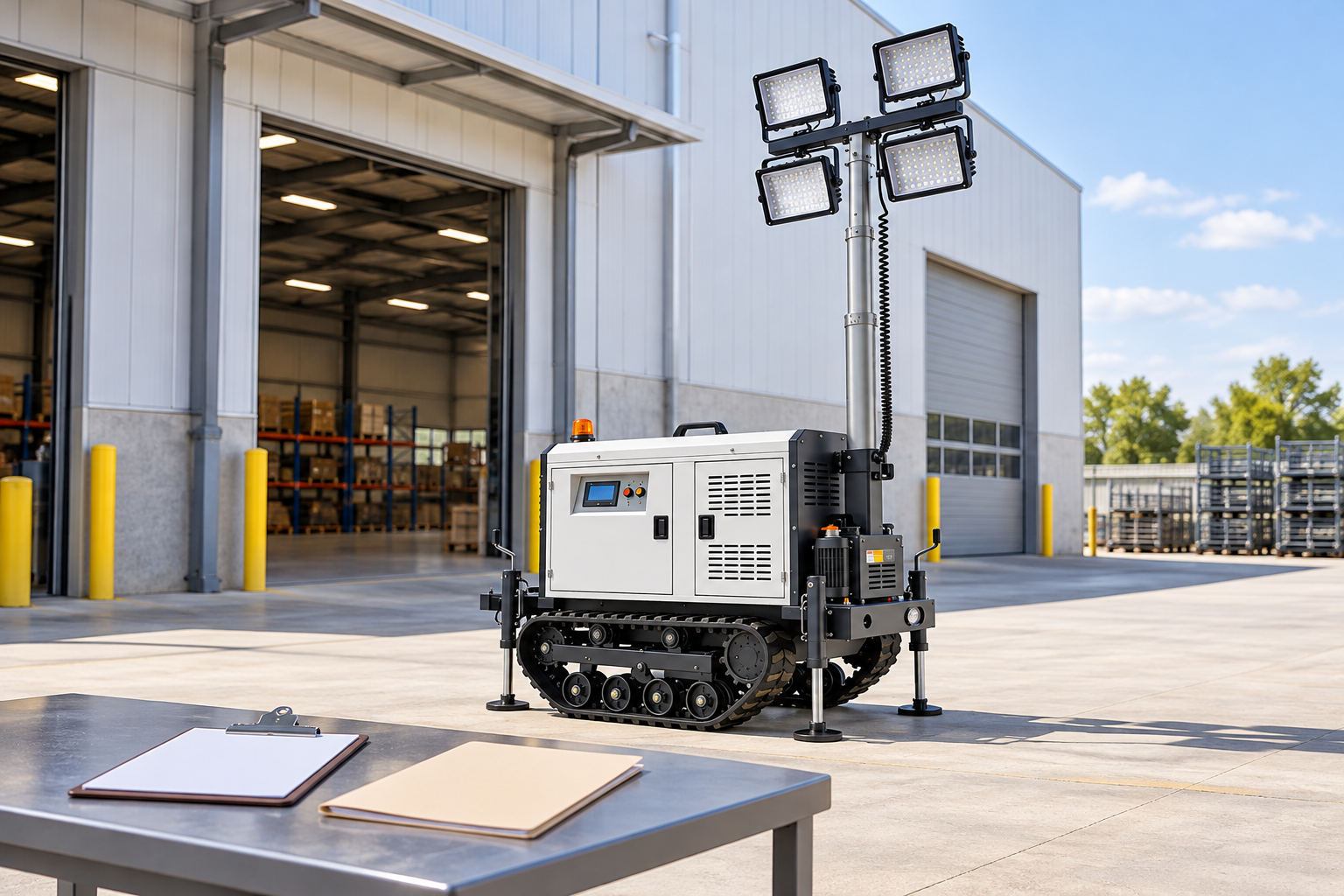

Telecom Tower Maintenance Lighting for Night Crews
Plan telecom tower maintenance lighting for ground crews, tool staging, access paths, cabinet work, lift positions, fall zones, and independent backup illumination.
Telecom tower maintenance lighting should separate ground support tasks from elevated work and fit the site’s approved access, lifting, electrical, and work-at-height arrangements. A mobile light tower may illuminate tool staging, cabinet approaches, vehicle access, or selected ground tasks. It should not be assumed to provide the required view for every task on the communications structure. Start with the work sequence and observer positions, then review permitted equipment locations, lamp direction, power, and the response to lighting failure. This guide supplies no fall-protection plan, RF boundary, electrical clearance, or approval for night climbing.
Distinguish maintenance lighting from obstruction lights
The aviation obstruction lighting fitted to a communications structure has a different function from temporary illumination for the maintenance crew. Do not treat a search result for a beacon or tower-lighting service as evidence that a mobile area tower can perform that function. Identify the task that the temporary equipment is intended to support. Any required obstruction system must remain subject to the responsible operator’s separate requirements and procedures.
Within the maintenance work, distinguish cabinet inspection, ground tool handling, access paths, vehicle movements, lift setup, and elevated tasks. Mark the observer’s position and the detail that must be visible for each activity. A bright ground area does not establish visibility at an elevated connection or platform. The responsible work team should decide which functions can use area lighting and which require another appropriately approved arrangement.
Start with the current site work plan
Obtain the site layout, access permissions, work sequence, equipment movements, restricted zones, and designated crew positions. Coordinate the temporary lighting proposal with the person responsible for the maintenance operation. Include the space needed by lifts, vehicles, materials, and tools at each stage. A convenient tower position during setup may obstruct the operation once the crew starts moving equipment.
Document where lighting can be installed and where the view can be checked safely. Work-at-height, falling-object, hoisting, electrical, and other site controls remain the responsibility of the relevant work authority. Do not step into a restricted ground zone to adjust a lamp or perform a lighting measurement. The proposal should support the approved maintenance sequence rather than informally changing its boundaries to accommodate a portable machine.
A maintenance-task decision checklist
The table below organizes evidence for a temporary lighting review. It is not an aviation-lighting specification, an elevated-work authorization, or a set of universal clearance and illumination values.
| Planning item | Evidence to review |
|---|---|
| Lighting function | Separate temporary maintenance illumination from aviation obstruction lighting. |
| Crew tasks | Map cabinet work, staging, vehicle access, and elevated-task assessment. |
| Equipment envelope | Approve the supports, mast operation, access, and restricted-zone boundaries. |
| Power and servicing | Document the complete maintenance window, operating mode, and approved supply or engine arrangement. |
| Changes and failures | Assign checks for task changes, adjustments, exchanges, and interruption response. |
Provide useful views for ground crew tasks
Ground tasks can include cabinet access, inspection, tool staging, material handling, and walking between permitted locations. Review the actual view at each task. A cabinet door, vehicle, fence, or equipment body can obstruct the light reaching the required detail. Identify tasks that need an approved close fixture rather than assuming more area-light output will reveal everything.
Check lamp direction from the crew’s approach and working position. Reflection from equipment labels or surfaces may make a close task difficult while the surrounding yard appears bright. Aiming adjustments should be coordinated and recorded so that one improved view does not create glare for another observer. Preserve the approved cable routes and access arrangements when adding a task-light provision. Do not improvise connections or mounts on communications equipment.
Review elevated-task visibility separately
Ask the responsible elevated-work team which views are required at height and how they will be verified within the approved procedure. A tower shining upwards can create glare for someone looking down or across the structure. The arrangement may also be obstructed by equipment and structural members. A ground-level photograph or measurement cannot by itself demonstrate adequate visibility for an elevated task.
Do not use a mobile light tower to lift people, support a work platform, hold materials, or improvise access. Its purpose and permitted operation come from the exact equipment instructions. If the task needs another lighting arrangement at height, have it selected and installed through the approved maintenance plan. Lighting does not establish fall protection, safe climbing conditions, a radio-frequency exposure boundary, or permission to enter a restricted working area.
Reserve the mast envelope and service footprint
Review the transport route, deployed supports, mast operation, controls, and servicing access. Include overhead structures and electrical constraints before extension. The responsible site authority must approve permitted equipment positions and any relevant clearances. Do not assess only the final upright mast; setup, aiming, service, and removal can require additional space or movement.
Use the exact model’s support, ground, mast, wind, and movement instructions. Tracks do not establish safe deployment on an arbitrary slope or soft ground. Keep the equipment footprint outside the site’s hoisting, falling-object, vehicle, and other restricted zones. If a tower must be relocated as work progresses, obtain the approved alternative position in advance and use the actual shutdown and movement procedure before the next task relies on its illumination.
Match power to the complete maintenance window
Estimate the operating profile from preparation through inspection, maintenance, testing, cleanup, and handover. Ask for runtime data at the intended lamp mode and conditions for the exact supplied configuration. A claim obtained with reduced output or a different battery and engine package does not prove the same performance during the planned night window. Record configuration and test assumptions with the quotation.
Review each power arrangement on its own terms. Engine-powered equipment needs an approved exhaust location, fuel procedure, service window, and access. Battery equipment needs a practical charging location, supply, and schedule. External power needs an approved connection, protection, and cable route that remains compatible with the maintenance sequence. A hybrid should identify when its engine starts and whether that operating state is permitted at the chosen location.
Check lighting changes through the work authority
An aiming adjustment or equipment move can affect several tasks at once. Identify who can approve changes and who checks the result before work resumes. Keep a record of lamp direction, output mode, position, and the tasks served. Avoid allowing separate crews to adjust the same unit independently without an agreed handover. A change helpful for cabinet work may hinder an elevated observer’s view or a vehicle approach.
Review the arrangement when lift positions, staged materials, vehicles, restricted zones, or the maintenance task change. The check should include the equipment position and deployed footprint as well as visibility. Any replacement unit needs review of its mast procedure, dimensions, power arrangement, and instructions against the site’s approved location. A similar-looking machine does not establish that the previous assessment still applies.
Plan failure and ordinary service interruptions
Agree on the response to lighting failure before the maintenance window starts. The work authority should determine which task stops, who is notified, which approved access remains available, and how restoration is authorized. Handheld lights should not automatically be assumed to replace every function of the accepted arrangement. A backup unit or other provision requires its own location, power, deployment, and visibility review.
Include refueling, charging, battery exchange, routine inspection, and relocation in the schedule. These ordinary activities can remove coverage even when equipment is working normally. Assign someone to check readiness before the shift and record visible damage, support condition, controls, and connections in accordance with the exact manual. Service access must respect the maintenance operation’s restricted zones and work sequence rather than creating an unplanned entry beneath active elevated work.
Verify the installed arrangement for named tasks
Agree on acceptance criteria before procuring lighting. Request a layout identifying the exact luminaires, optics, output mode, positions, aiming, and expected obstructions. Evaluate the installed result from approved observation positions at the relevant time. Where measurements are specified, record the working plane, locations, instrument, background light, and conditions. The site work authority determines applicable requirements; this guide does not prescribe a universal number of towers.
Record deficiencies at specific tasks rather than allowing a general yard average to obscure them. A bright open area can coexist with a hidden access step, unreadable cabinet label, or glare towards an elevated task. Obtain an approved correction and repeat the affected views. Keep the installed-position sketch, configuration, output setting, and photographs with the maintenance record so the next crew can identify a changed condition accurately.
Prepare a configuration-specific request for quotation
Send the supplier the maintenance task list, observer positions, approved equipment locations, working window, deployment constraints, power options, service arrangement, and acceptance procedure. Request the exact model, support and mast instructions, photometric information, runtime evidence, service documentation, and spare-parts availability. Require written disclosure of exceptions and substitutions affecting the final equipment arrangement.
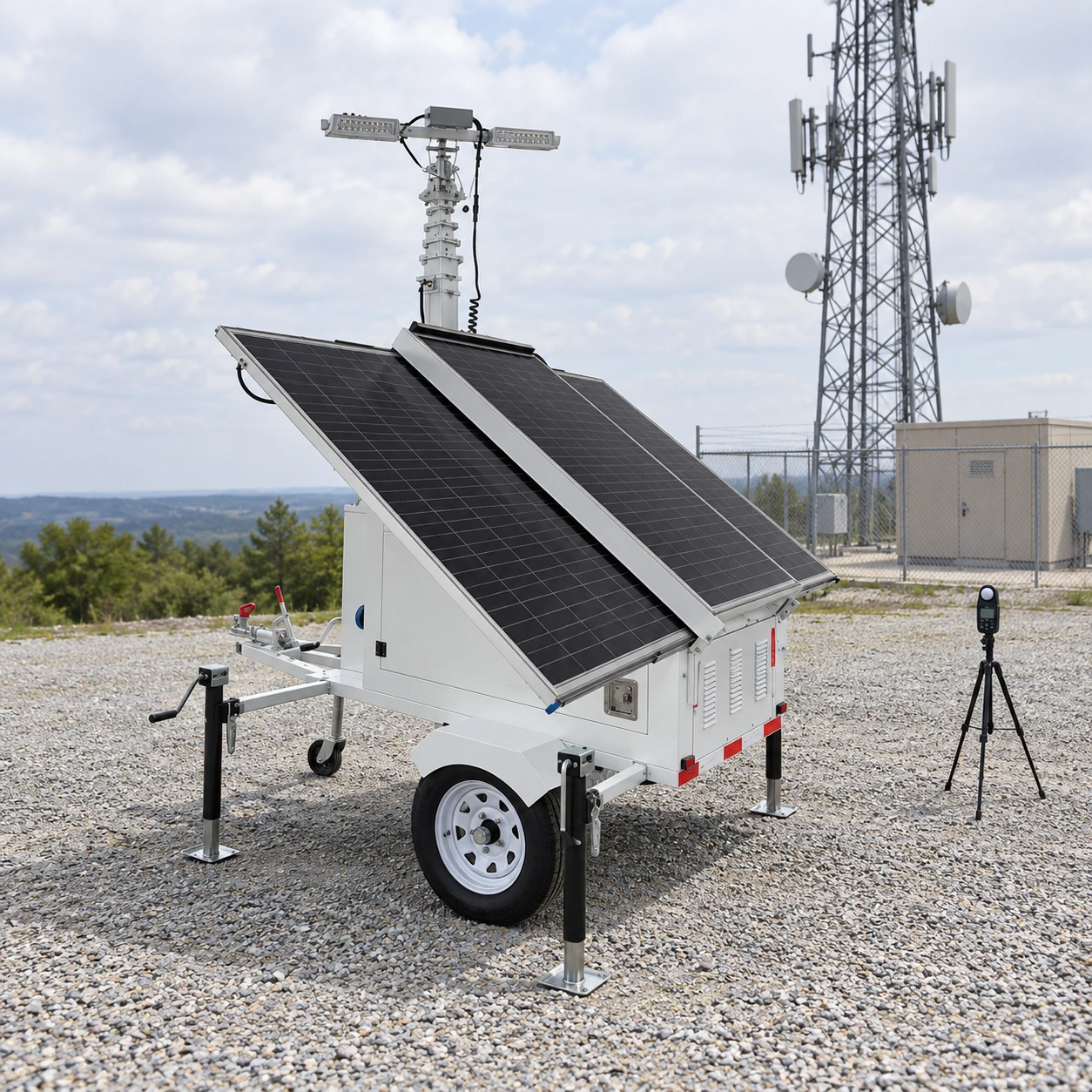
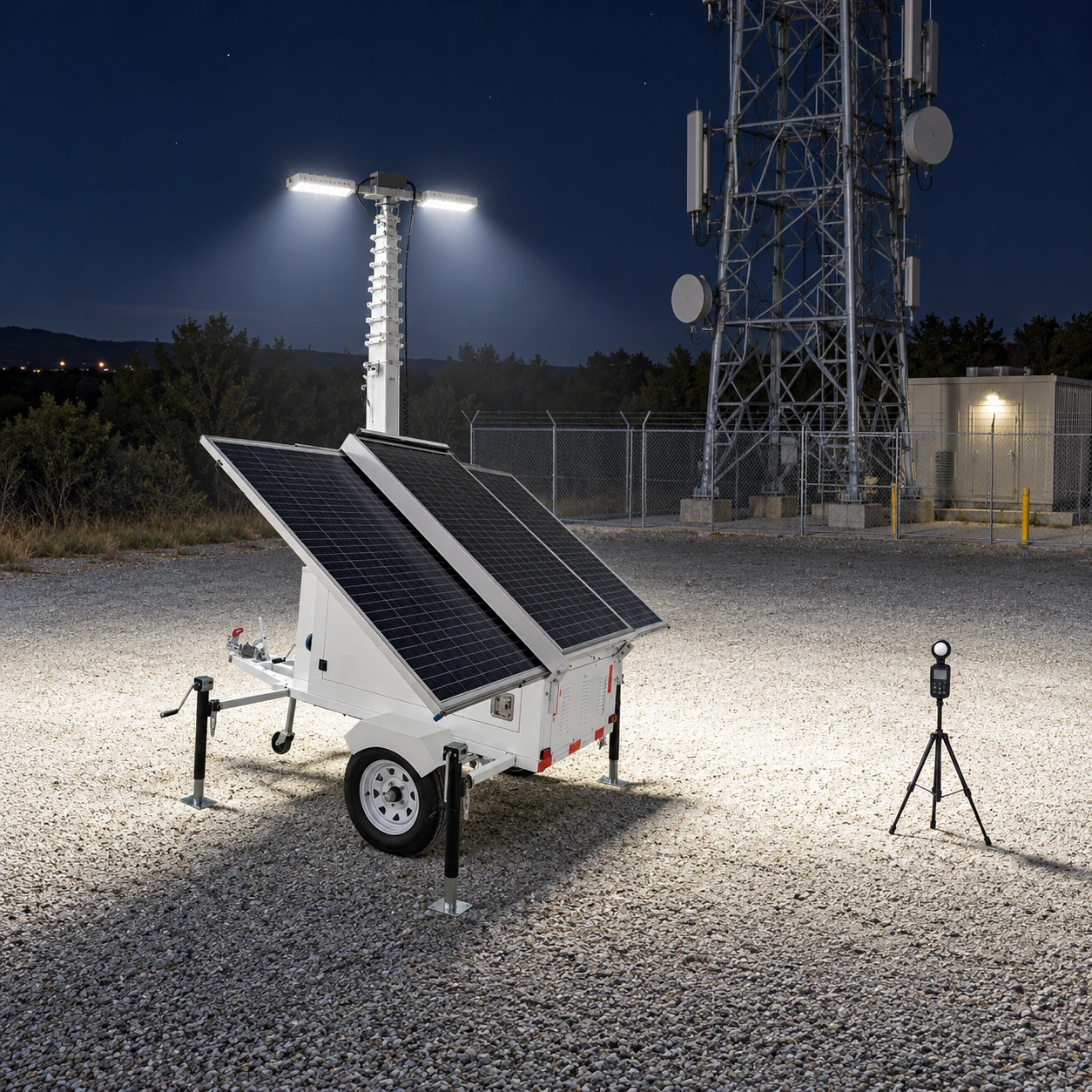
The Solar-powered mobile lifting lighting tower (trailer version) identifies the product family shown in this article. Its appearance does not establish an elevated-task lighting level, telecom operating approval, hoisting clearance, RF boundary, or permission for work at height. Use the mobile light tower overview, selection guide, equipment specifications, and safety guide for complementary procurement questions. The site authority and maintenance team must review the actual unit and installed arrangement before it is used for the approved tasks.
Reference scope and generator education
OSHA’s communication-tower overview identifies several hazards relevant to tower work, including falls, electrical issues, hoisting, weather, and falling objects. It supports keeping temporary lighting within the wider approved work plan. It does not supply a lighting layout or approval for the illustrated product. The maintenance operator and responsible personnel must establish the actual work controls and applicable local requirements.
For an engine-powered lighting proposal, CDC’s generator safety education introduces carbon-monoxide risk around enclosed and occupied spaces. Keep exhaust placement separate from the mast, elevated-work, and electrical reviews. The CDC video below supplements that discussion and does not replace current equipment instructions or the site’s approved installation and servicing arrangement.
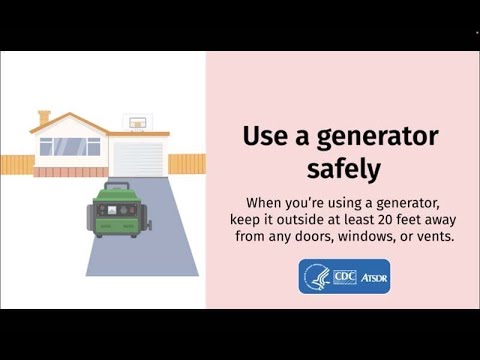
Watch Use a Generator Safely by CDC
Frequently asked questions
Can mobile maintenance lighting replace aviation obstruction lights?
No. These functions must be evaluated separately; the temporary area arrangement does not authorize a change to the structure’s required obstruction-lighting system.
Does bright ground lighting prove visibility for a task at height?
No. The responsible elevated-work team must assess its required views and lighting arrangement within the approved work procedure.
Can the lighting mast support people or materials?
Use the equipment only for its stated purpose and permitted operation. A mobile lighting mast is not an improvised access platform or material-handling device.
When should the maintenance lighting be checked again?
Recheck after equipment exchange, relocation, changed lift or material positions, altered tasks or restrictions, power changes, and adjustments to output or lamp direction.