

What Does It Mean When the MAINT REQD Light Comes On?
A practical guide to reminder versus fault warning, find the maintenance item that is due, and what to do when it appears, with decision checks, sources, and FAQs.
A MAINT REQD or maintenance-required light is usually a mileage- or time-based service reminder, not a diagnosis of a specific failure. It may indicate that scheduled maintenance—often an oil-related interval on some vehicles—is due. It is different from the check-engine, oil-pressure, brake and temperature warnings. Check the exact owner’s manual, review service history, complete the specified maintenance, and reset the reminder only by the manufacturer’s procedure after the work is done.
Reminder versus fault warning

A service reminder generally counts distance, time or an algorithmic interval. It may illuminate briefly before the due point and stay on afterward. A malfunction indicator uses diagnostic monitoring and may store fault codes. An oil-pressure warning can demand immediate engine shutdown, while a maintenance reminder usually does not. Symbols and wording vary across brands and years, so identify the exact lamp from the cluster illustration instead of relying on a generic photograph.
Find the maintenance item that is due
Open the maintenance schedule for the vehicle, powertrain, market and operating conditions. Match current mileage, elapsed time and previous documented service. Severe-use schedules may apply to frequent short trips, dust, towing, prolonged idling or extreme temperatures. Do not assume the reminder always means an oil change; inspection, tire rotation, filters or other items may share the interval. If history is missing, a qualified service provider can establish a conservative baseline.
What to do when it appears

Continue only if the manual describes it as a routine reminder and no urgent warning, abnormal noise, leak, overheating, low oil pressure, poor braking or drivability concern exists. Check fluid levels only by the safe procedures and on the conditions stated by the manufacturer. Schedule the required service, record the odometer and date, and retain parts and specification details. A reminder does not inspect the vehicle, so unrelated safety defects still require attention.
Why resetting it too soon is a problem
Resetting clears the visible interval without changing oil, inspecting components or documenting the work. The next owner or technician may then believe maintenance was completed. Similarly, disconnecting the battery can create other resets without resolving overdue service. Use the vehicle-specific button, menu or scan procedure only after the scheduled work is verified. If the reminder returns immediately, confirm the sequence and system configuration rather than repeating it indefinitely.
When multiple lights appear

A maintenance reminder with check-engine, ABS, brake, charging, oil-pressure or temperature warnings should not be treated as one routine event. Read each indicator and message separately. A flashing malfunction lamp, red oil-pressure light, overheating warning or changed braking may require stopping. Photograph the cluster, record operating conditions and avoid clearing fault codes before diagnosis. One service interval does not explain every simultaneous warning.
Build a reliable service record
Record date, mileage, exact fluids and parts, inspections, measurements, technician and next due condition. Update only the reminder that corresponds to the completed work. Digital history, invoices and a simple owner log reduce duplicated or missed service. Follow recalls and manufacturer service information separately; a maintenance reminder is not a recall notification. Consistent documentation matters more than guessing from the color of a wrench icon.
Decision table
| Check | Evidence needed | Decision purpose |
|---|---|---|
| MAINT REQD/service reminder | Scheduled service interval reached | Check schedule and history |
| Check-engine light | Emissions/powertrain fault detected | Diagnose stored fault |
| Oil-pressure warning | Possible loss of lubrication pressure | Stop as manual directs |
| Brake warning | Parking brake, fluid or brake fault possible | Follow urgent manual guidance |
| Temperature warning | Overheating risk | Stop safely and follow manual |
How to use this guide responsibly
This guide explains a decision process, not a substitute for the current product manual, professional diagnosis, engineering approval, medical care, or local legal requirements. Search results often compress a complex decision into a single answer. A safe conclusion needs the exact equipment or symptom, operating context, applicable jurisdiction, and evidence that can be checked. Keep model numbers, photographs, measurements, dates and instructions together so another qualified person can reproduce the decision.
Start with the lowest-risk observation. Do not defeat guards, interlocks, protective devices or warnings to obtain a reading. If the task involves energy, gas, structural loads, moving equipment, impaired vision or public safety, stop when conditions exceed your competence. The correct escalation is part of a successful diagnosis, not a failure to finish the job.
Evidence and documentation checklist
- Exact product, vehicle, appliance or system identity, including model and year where relevant
- Current manufacturer instructions and configuration-specific drawings
- Observed symptom or required outcome written in measurable terms
- Operating conditions, changes, previous work and environmental factors
- Applicable safety, electrical, structural, medical or road-use requirements
- Measurements recorded with instrument, units, test point and system state
- Decision, responsible person, corrective action and final verification
Do not convert a marketing phrase into a technical claim. Ratings only apply to the configuration and conditions stated by the issuer. When evidence conflicts, use the more conservative safe state while obtaining clarification from the manufacturer, authority or qualified professional.
Common mistakes to avoid
- Buying or acting from a keyword, photograph or marketplace title without identifying the exact system
- Changing several variables at once and losing the ability to identify the cause
- Using a measurement without units, load condition, reference point or instrument limitations
- Assuming a familiar symptom always has the same cause
- Bypassing protection or increasing a fuse, limit or rating to make a problem disappear
- Copying a competitor’s claim without checking primary documentation
- Treating a temporary improvement as proof that the underlying issue is resolved
Connection to professional area lighting
Keyyou manufactures mobile lighting equipment for temporary outdoor and industrial applications. The subject of this guide may sit outside that product range, so no Keyyou product claim is implied. Readers planning construction, remote-site or emergency illumination can review the portable tower lighting guide, the jobsite lighting planning guide, and the light tower inspection checklist. Those resources address large-area mobile lighting rather than the specialized device discussed here.
Authoritative references
Video explanation
The following video is included as a visual introduction. Verify every action against the exact product instructions and the safety boundaries in this article.
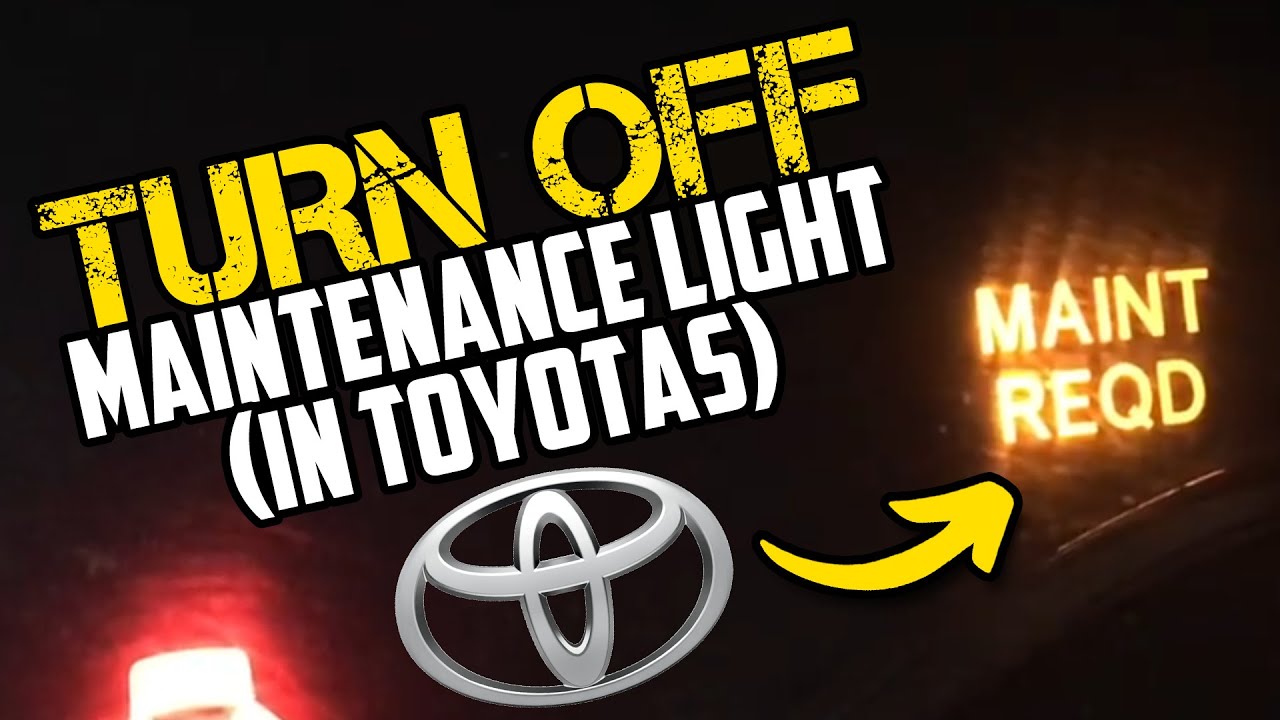
Watch Resetting a Toyota Maintenance Required Light on YouTube (PIF DIY).
Frequently asked questions
Can I keep driving with MAINT REQD on?
Usually it is a routine reminder, but confirm the exact manual and ensure no urgent warning or abnormal symptom is present.
Does MAINT REQD always mean an oil change?
No. The associated maintenance varies by model, market and interval.
Will the light reset itself after service?
Many systems require a defined reset procedure. The service should be completed and documented before resetting.
Is it the same as the check-engine light?
No. A check-engine light indicates monitored fault information; a maintenance reminder normally tracks a service interval.
Final takeaway
The final decision should account for reminder versus fault warning and find the maintenance item that is due. Verify the exact product or situation, follow the controlling instructions, document the evidence, and escalate any condition that exceeds the limits described in this guide.


