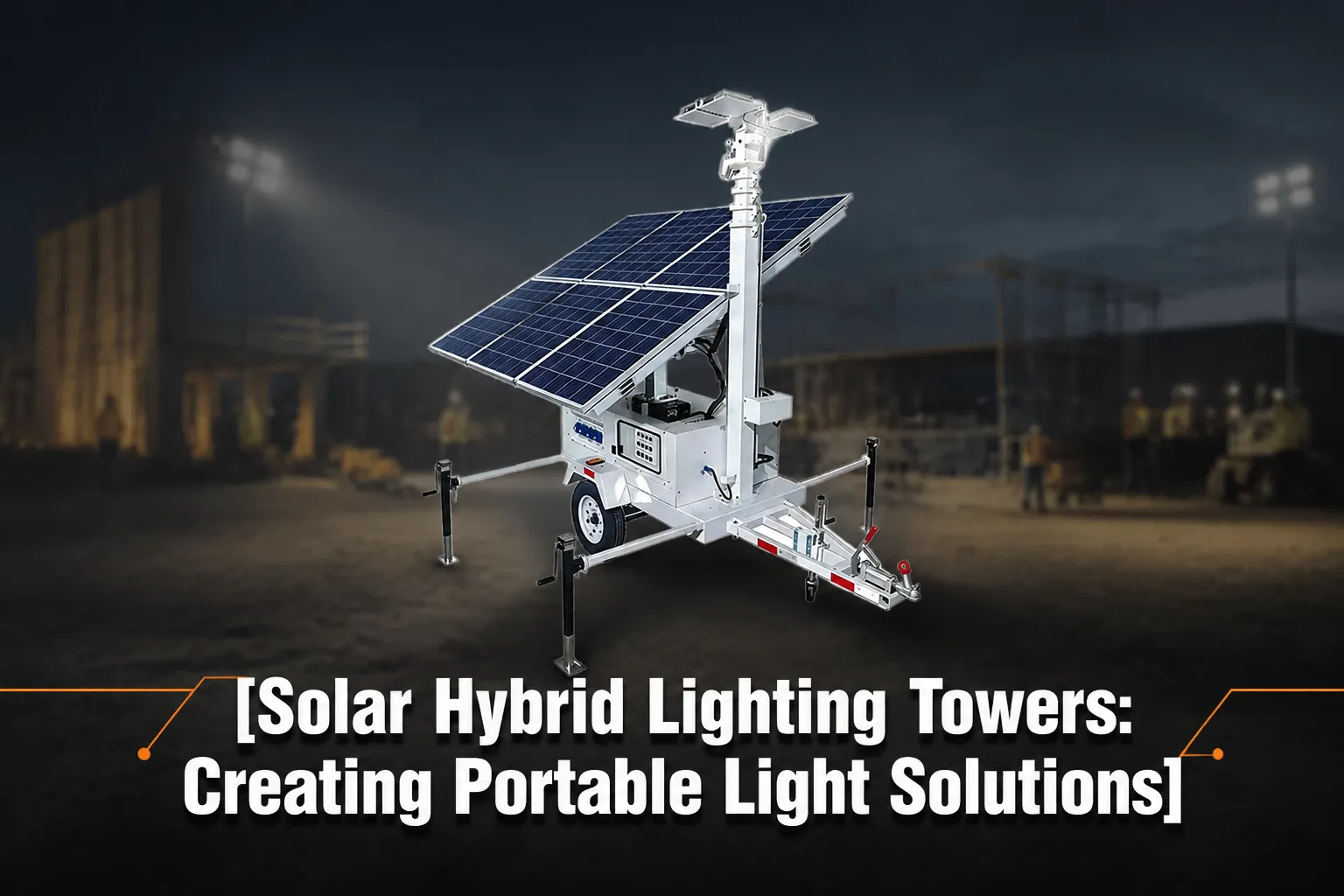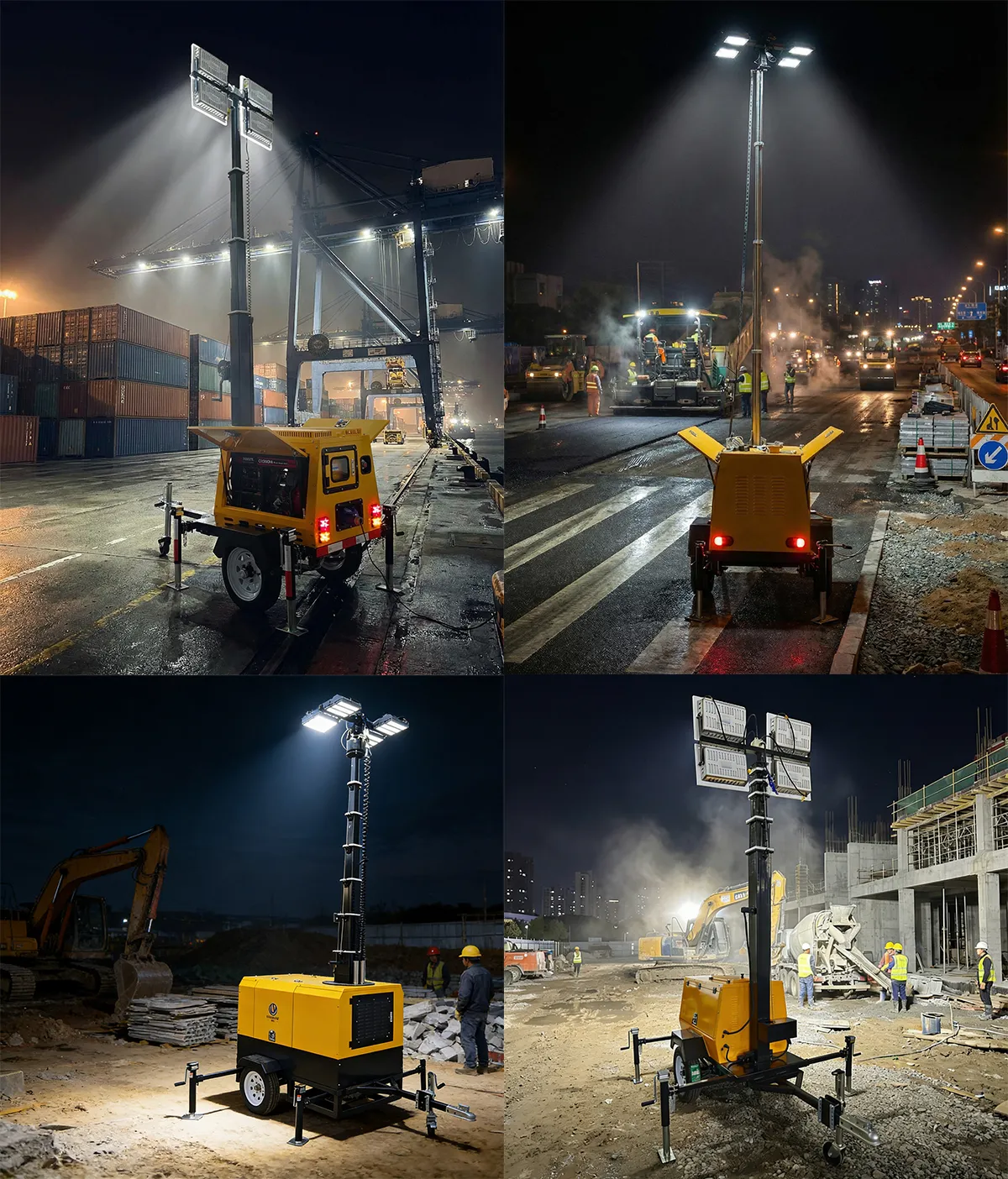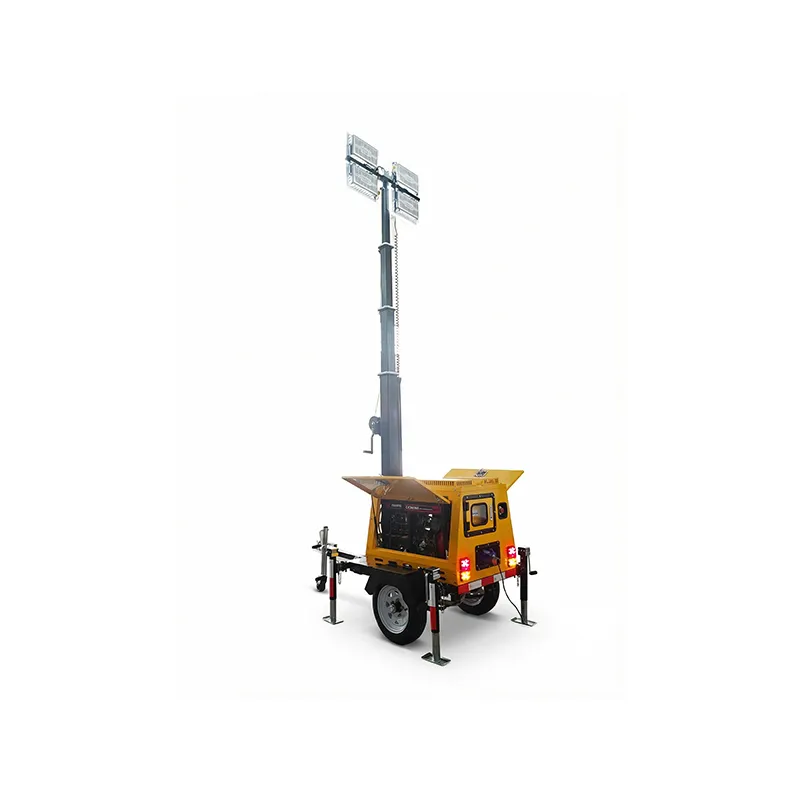

Skid-Mounted or Trailer-Mounted Light Tower: Which Deployment Fits?
Choose trailer mounting when units move often by road or tow vehicle; choose skid mounting when units stay long in one place, travel on other vehicles, and lifting equipment is available—then confirm weights, lifting points, and towing data against the offered unit’s documents. Mounting is a deployment decision, and the deployment record should be written before any catalog is opened.
Part 1. What does the skid vs trailer decision actually cover?
It covers how the light tower reaches the site and how it moves once there: towed on its own axle, or carried as a skid frame on another vehicle and placed by lifting equipment. It does not walk through the trailer purchase itself—that lives in the trailer-mounted light tower buying guide.
Cart-type and wheeled portable units form a third family for short in-yard moves, but this comparison stays on the skid-versus-trailer fork that dominates project deployments.
Part 2. How do the two mountings move on and between sites?
Write the movement pattern first. Motor-vehicle and equipment-handling rule families such as OSHA 1926.601 exist around site transport; the governing local rule defines the actual requirement.
| Movement question | Trailer-mounted | Skid-mounted |
|---|---|---|
| Arrival at site | Towed by a suitable vehicle | Carried on a truck bed or platform |
| Between-position moves | Re-hitched and towed | Lifted or dragged per manual |
| Road transport between sites | Possible where unit and rules allow | Always as cargo on another vehicle |
| Driver / operator need | Tow-capable driver | Lifting operator and rigging |
| Typical repositioning tempo | Frequent moves | Infrequent, planned moves |
Trailer units reward frequent repositioning; skid units reward stable long-stay positions where a crane, telehandler, or forklift already works on site.
Part 3. Which site conditions favor each mounting?
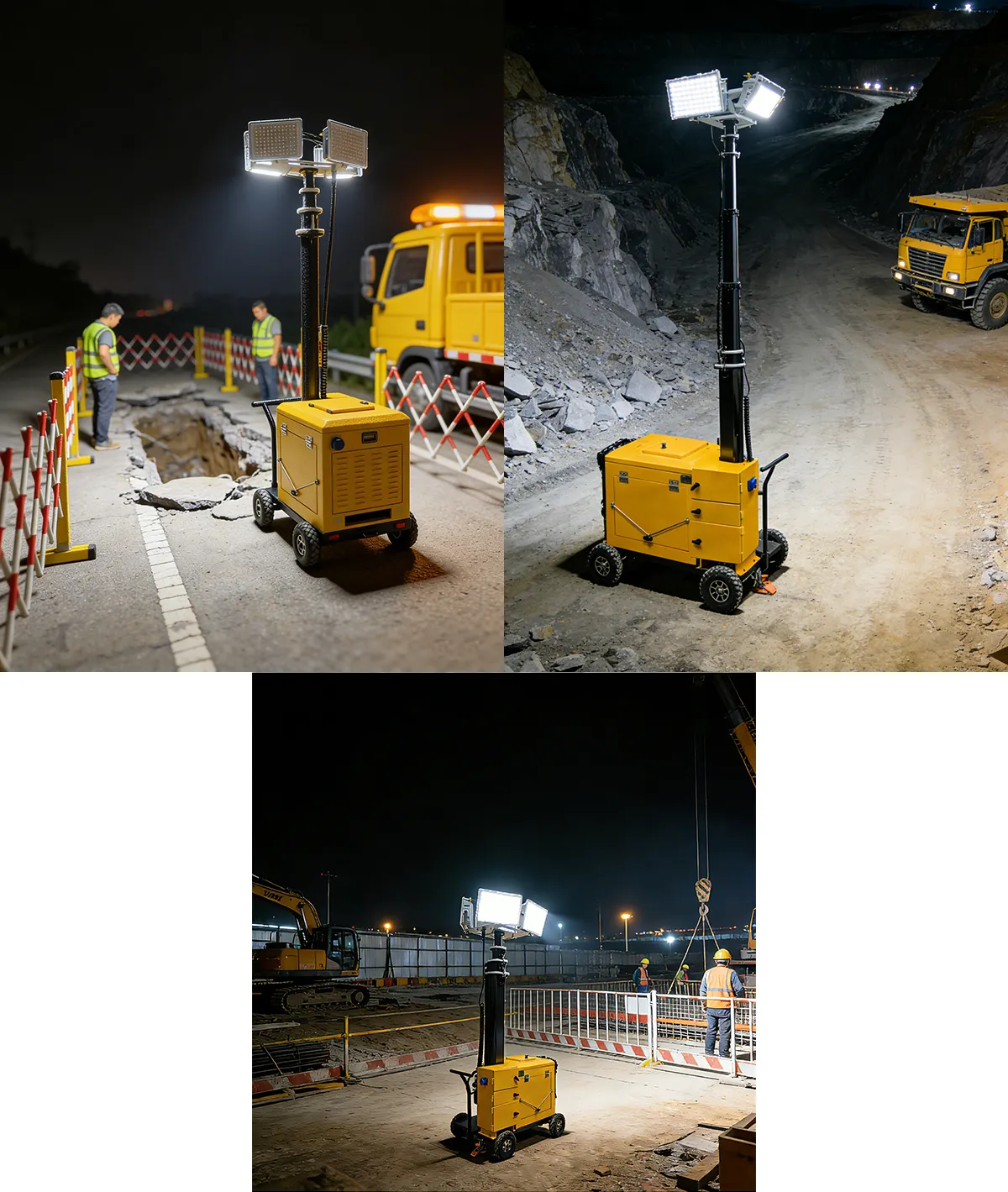
Ground and access decide more than preference does. Work-zone practice resources such as the FHWA practices library treat equipment positioning as a planned activity, and the same discipline applies to lighting.
| Site condition | Leans trailer | Leans skid |
|---|---|---|
| Firm haul routes across the site | Yes | Either |
| Soft, broken, or congested ground | Careful towing review | Lifted placement can help |
| Elevated or confined placements | Rarely practical | Lifting reaches them |
| Long single-position duty | Workable | Strong fit |
| No lifting equipment on site | Strong fit | Weak fit |
Record the governing conditions honestly. A mounting that looks cheaper on paper becomes expensive when every move needs equipment the site does not have.
Part 4. What lifting and handling inputs does a skid unit add?
A skid unit adds lifting questions that a trailer never asks: certified lifting points, unit weight with fluids, rigging method, and who operates the lift. Equipment-handling rule families such as OSHA 1926.600 show the kind of language inspectors apply to plant handling; the unit manual and local rules govern the specifics.
Important: Never lift a skid unit from undocumented points or assume its weight from a brochure line; request the manual pages that state both. Source: OSHA 1926.600 equipment handling language.
Part 5. How do teams compare total deployment effort?
- Count the planned moves per month across the project.
- Price the tow vehicle or the lifting equipment each move needs.
- Check who on site is qualified for towing or rigging.
- Add the pre-move procedure time—the trailer transport checklist shows what a dispatch review involves on the towed side.
- Compare the totals, not the unit prices.
Atlas Copco’s selection guidance puts application before catalog, and deployment effort is exactly where that rule bites.
Part 6. Which RFQ inputs settle an undecided mounting type?
Send repositioning frequency, transport mode, ground conditions, available lifting equipment, and storage plans, and ask for the weight, dimension, and handling document pages of each offered configuration.

Product recommendation: use the listed trailer electric-pole configuration as a document-review starting point on the towed side, and the listed cart-type smart configuration when compact in-yard movement matters more than towing. Neither page states verified weights or handling data for your site.
Fit Boundary
This comparison is suitable for narrowing the mounting decision and writing an RFQ. It is not suitable as a lifting plan, a towing-compliance ruling, or a Keyyou handling commitment. For a configuration discussion, send the deployment record.
Part 7. When is the mounting comparison not the real question?
Stop comparing mountings when the site cannot yet answer where units will stand or how often they move—that is placement work, not procurement work. Also stop when first setup is the actual risk: a chosen mounting still fails its first shift without the trailer setup checklist discipline applied to whichever unit arrives.
FAQs
What is the practical difference between skid-mounted and trailer-mounted light towers?
A trailer unit tows on its own axle; a skid unit travels as cargo and is placed by lifting equipment. Everything else in the decision follows from that difference.
When does a skid-mounted light tower fit a site better than a trailer unit?
Long single-position duty, placements a tow vehicle cannot reach, and sites where lifting equipment already operates all favor skid mounting.
How does repositioning differ between skid and trailer units during a project?
Trailer moves need a hitch, a route, and a tow-capable driver. Skid moves need a lift plan, rigging, and an operator—so skid moves are usually fewer and more deliberate.
What lifting equipment does a skid-mounted unit need?
Whatever the unit manual specifies for its weight and lifting points—commonly a forklift, telehandler, or crane with rated rigging. Request the manual pages before planning.
Does road transport change the skid vs trailer decision?
Yes. Frequent between-site road moves favor a towable unit where rules allow; skid units always ride on another vehicle as cargo.
How is this different from the trailer buying guide?
The buying guide walks through purchasing a trailer unit. This article decides the earlier question: whether trailer mounting is the right deployment at all.
What belongs in an RFQ when the mounting type is undecided?
Repositioning frequency, transport mode, ground conditions, lifting equipment availability, storage plans, and a request for weight and handling documents.