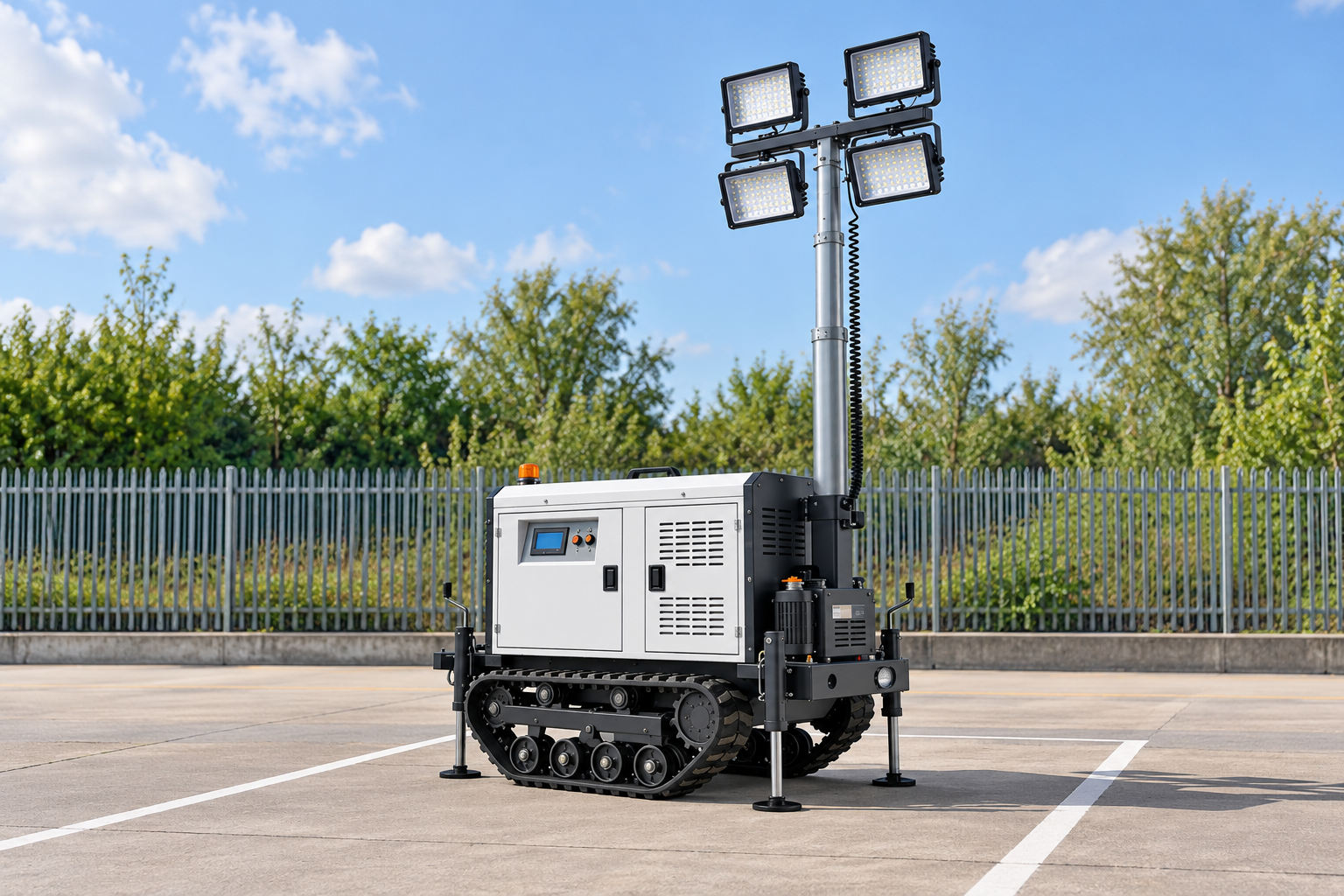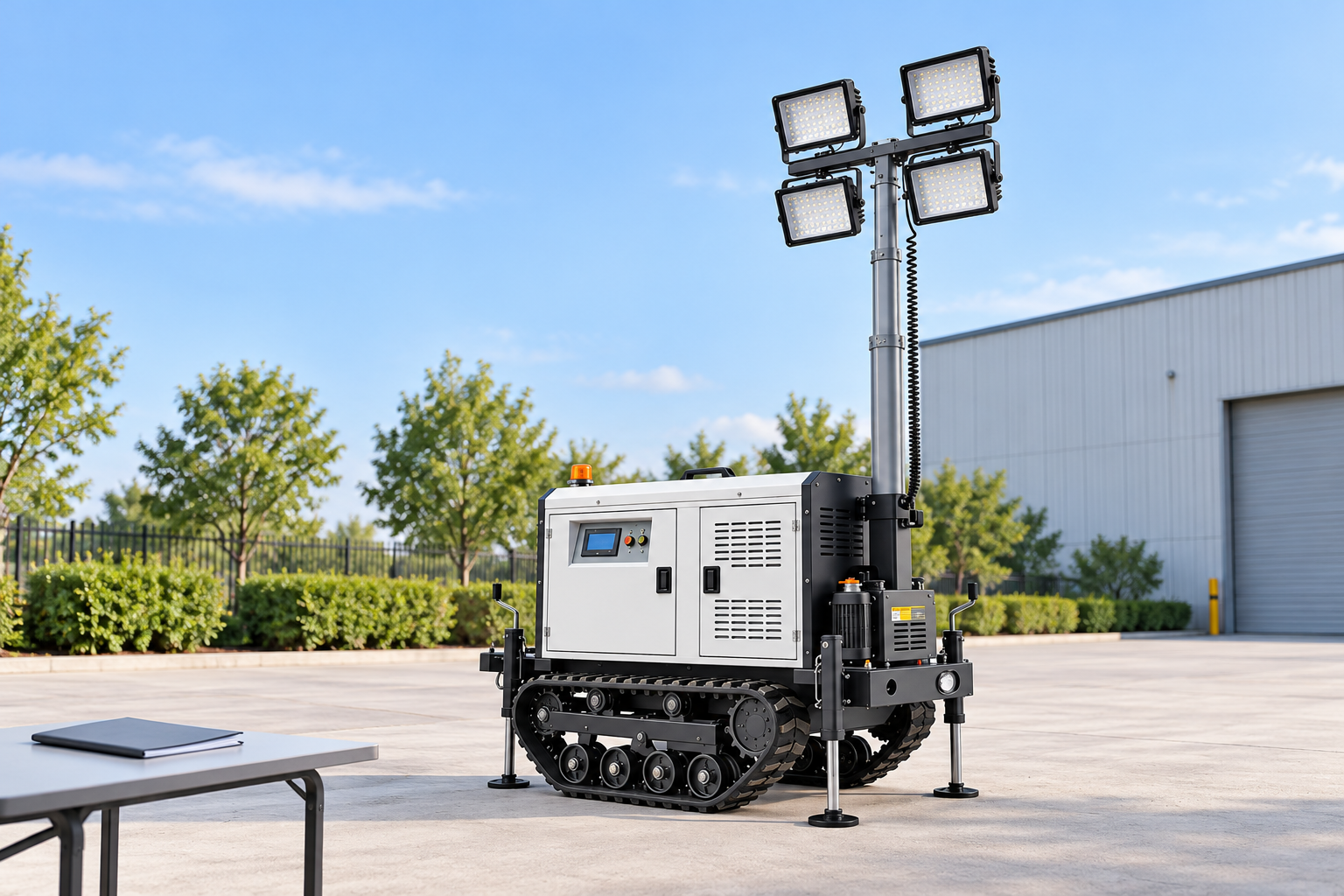

How Should Teams Plan Light Tower Placement Across a Work Area?
Plan placement by mapping task zones and travel paths, assigning unit positions that overlap beams across priority faces, walking the glare lines from driver and worker viewpoints, and confirming each position has access and support—then adjust on the first lit shift. Placement turns a chosen mast height into a working layout; it deserves its own planning pass.
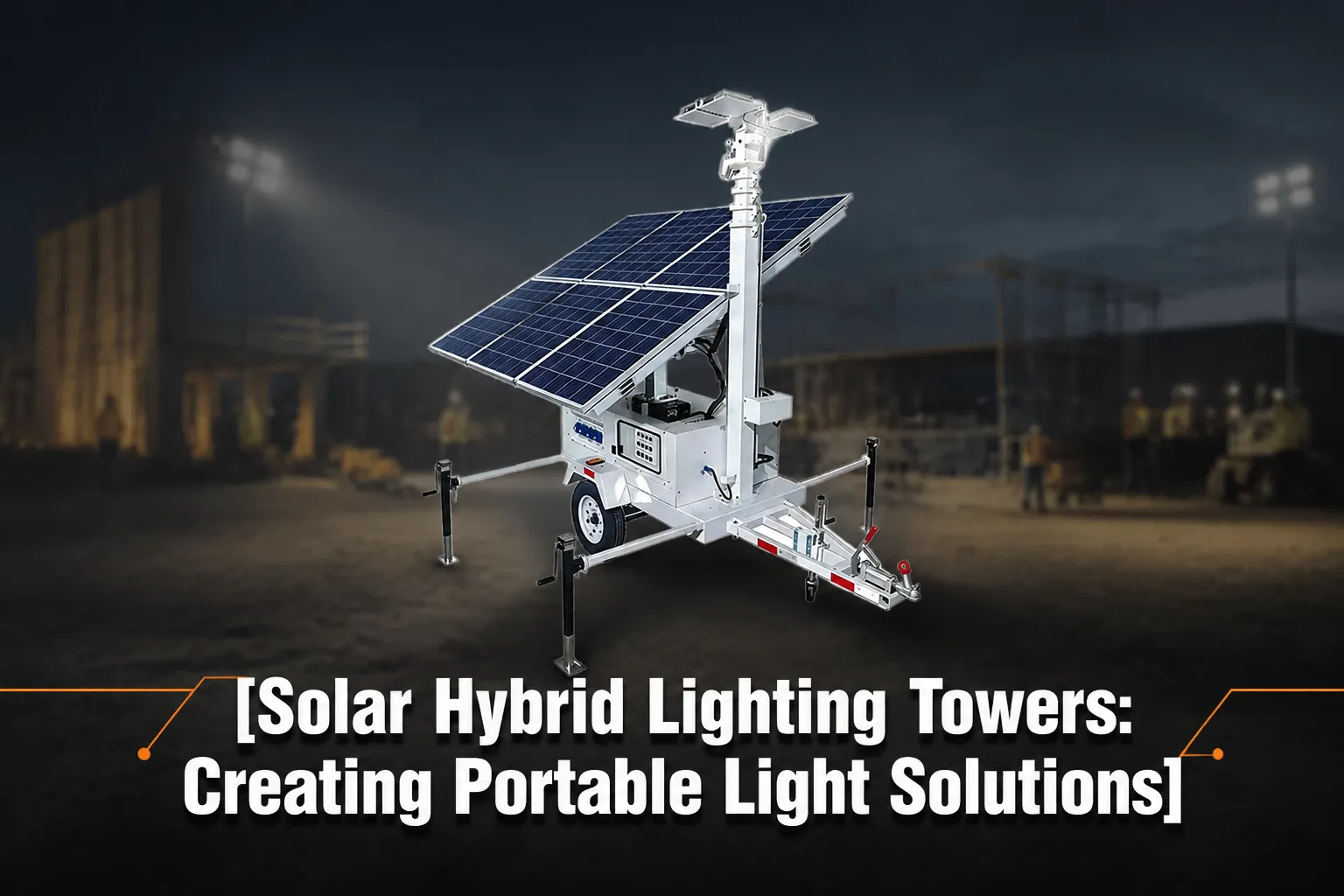
Part 1. What does placement planning decide?
It decides where each unit stands, which way each beam aims, and how beams share the work area. Height decisions come earlier—the mast height selection guide shortlists the elevation band—and placement then puts units on the ground so that band actually serves the tasks.
Placement is not a photometric design. It is the practical layout discipline that most temporary sites can run with a sketch, a walk, and one adjustment pass.
Part 2. Which site inputs must be mapped first?
Start from a task map, not a tower list. Example illumination minima in OSHA 1926.56 show how different tasks carry different light targets; apply whichever rule actually governs the site.
| Input | Why it matters | Record |
|---|---|---|
| Task zones and priority faces | Beams must land where work happens | Zone sketch |
| Travel and pedestrian paths | Shadows and glare cross them | Path overlay |
| Obstructions and parked plant | They cast the dark zones | Obstruction notes |
| Power or fuel access per position | Every position must be serviceable | Access notes |
| Governing lighting target | Sets the acceptance intent | Rule reference |
Part 3. How do teams position units against task zones?
Coverage articles such as JC Davis’s overview keep repeating the same point: usable coverage comes from height, output, aiming, and terrain together. Position units so each priority face receives light from an angle that works for the task.
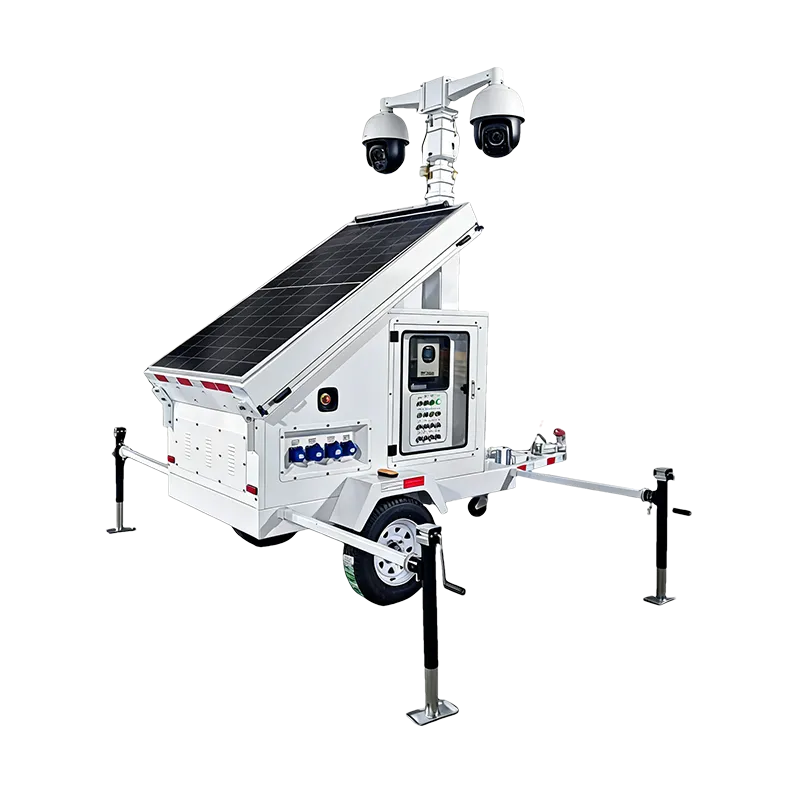
Practical positioning habits:
- Place units outside the active work face, aiming into it, not across it.
- Favor positions that light two zones at once only when both stay within the aiming plan.
- Keep every unit reachable for refueling or recharge without crossing live tasks.
- Mark each position on the sketch with its aiming direction.
Part 4. How do overlap and dark-zone control work?
Single-tower layouts breed hard shadows behind every obstruction. Work-zone lighting research, including the FHWA lighting chapter, treats uniformity as a core planning concern; overlapping beams from different directions is the field method that supports it.
| Layout habit | Dark-zone effect |
|---|---|
| Two units lighting one zone from different angles | Shadows filled from the second direction |
| Beam edges overlapping on priority faces | Fewer abrupt light-to-dark transitions |
| Units behind obstructions | Dark zones exactly where work happens |
| One tall unit doing everything | Wide reach, deep shadows behind plant |
Walk the area after dark on the first lit shift and mark where shadows land; one repositioning pass fixes most of them.
Part 5. How should glare and driver sightlines be managed?
Stand where the drivers and operators will be and look toward each planned unit. The FHWA practices library treats night-work layout as planned activity, and glare walks belong in that plan.
Tip: Aim beams down into task faces and keep them out of approach sightlines; re-aim any unit a driver squints at during the first shift walk. Source: FHWA work-zone lighting research.
Part 6. Which placement inputs belong in the site plan and RFQ?
Keep the placement sketch with the site plan, and send suppliers the task-zone map, planned unit count and positions, aiming notes, access constraints, and the governing rule reference when asking for configuration review.
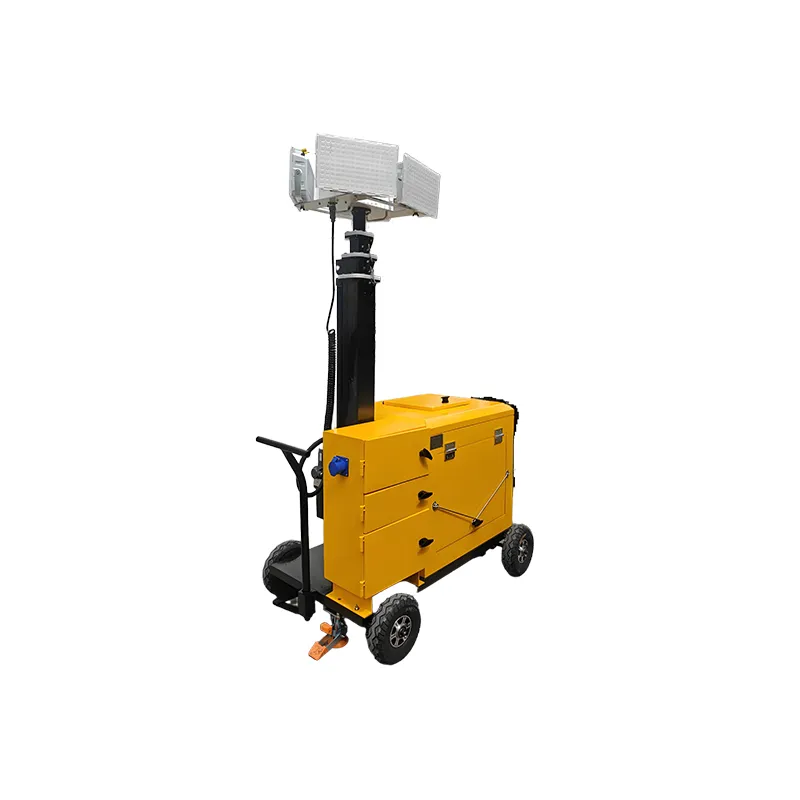
Product recommendation: use the listed cart-type smart configuration as a document-review starting point when layouts need frequent small repositioning inside the area. The page names a configuration; it does not state coverage or lux for your layout. Broader towed options sit under the trailer-style mobile light tower range.
Fit Boundary
This guide is suitable for building a placement plan and site sketch. It is not suitable as a photometric design, an illumination compliance ruling, or a Keyyou coverage commitment. For a configuration discussion, send the placement sketch.
Part 7. When is placement planning not enough?
Stop when the plan needs more units than the project can field—placement cannot fix an undersized plan, and the unit-count question goes back to load and coverage inputs.
Operating hours matter too. A good layout still fails a long night without the duty discipline in the night-shift operating plan, and each position must still pass the trailer setup checklist when units arrive.
FAQs
How do teams plan light tower placement to reduce dark zones?
Map task zones, position units outside work faces aiming in, overlap beams from different directions, and walk the area after dark to mark remaining shadows.
How many light towers does a work area need?
It depends on area geometry, task light targets, and unit capability documents—no fixed number is honest. The zone map plus supplier documents produce the count.
Where should a light tower stand relative to the task area?
Outside the active face, aiming into the work, with access preserved for refueling or recharge and no beam crossing approach sightlines.
How do teams control glare for drivers and workers?
Walk the planned viewpoints, aim beams down into task faces, keep beams out of approach lines, and re-aim anything that produces squint on the first shift.
Can placement fix an undersized lighting plan?
No. Placement distributes the light that exists. If targets remain unmet with sensible positions, the plan needs more or different units.
How is placement planning different from mast-height selection?
Height selects the elevation band a unit works at. Placement decides where units stand and how beams share the area after height is known.
What placement inputs belong in an RFQ or site plan?
Task-zone map, planned positions and aiming, unit count, glare notes, access constraints, and the governing lighting rule reference.