
Hand-Crank vs Electric Light Tower Mast: Buyer Comparison
Compare hand-crank and electric light tower masts by deployment effort, failure recovery, inspections, service needs, and lifecycle cost.
Choose between hand-crank and electric light tower masts by raise effort, power dependency for mast movement, nightly setup frequency, available labor, and service complexity—then confirm the selected model’s manual before purchase. This page compares mast-drive methods. It is not a guide to diesel versus grid-powered light towers.
Part 1. What decision does a hand-crank vs electric mast comparison resolve?
It resolves how the mast should be raised and lowered. It does not decide whether the tower’s lighting power comes from diesel, battery, or grid supply.
| Decision | Belongs here | Belongs elsewhere |
|---|---|---|
| Manual crank vs electric mast drive | Yes | — |
| Budget hand-crank product evaluation | No | Hand-cranked mobile lighting tower guide |
| Pneumatic vs hydraulic mast | No | Pneumatic vs hydraulic mast comparison |
| Pre-dispatch transport readiness | No | Trailer transport checklist |
| On-site first deployment | No | Trailer setup checklist |
Part 2. How do the two mast drives differ in daily operation?
A hand-crank mast is raised by manual winding and locking according to the model procedure. An electric mast uses a powered drive to raise or lower the mast under the operator controls defined for that unit.
| Facet | Hand-crank mast | Electric mast drive |
|---|---|---|
| Raise effort | Operator-powered cranking | Powered mast movement |
| Power dependency for the raise | Usually independent of an electric raise motor | Depends on the mast-drive power path defined for the unit |
| Typical buyer question | Labor time and physical effort | Control method, drive protection, and service access |
| Common trade-off language | Simpler mechanism vs slower raise | Faster powered raise vs added drive complexity |
Important: “Electric mast” is not the same decision as “electric-powered light tower.” One is the mast drive; the other is the lighting power source. Source: Atlas Copco mast-selection guidance; project power-source requirements.
Part 3. Which site conditions favor a hand-crank mast?
Atlas Copco notes that a manual mast can suit installs that are not time-critical and remain in place longer. Hand-crank systems also appeal when buyers want a simpler raise mechanism and are prepared for the labor cost of cranking.
Favor a closer look at hand-crank when:
- nightly raise/lower cycles are limited;
- trained labor is available for the cranking procedure;
- the team wants fewer powered-drive components to service;
- the shortlist still needs a full budget-oriented evaluation through the hand-cranked tower guide.
Part 4. Which conditions favor an electric mast drive?
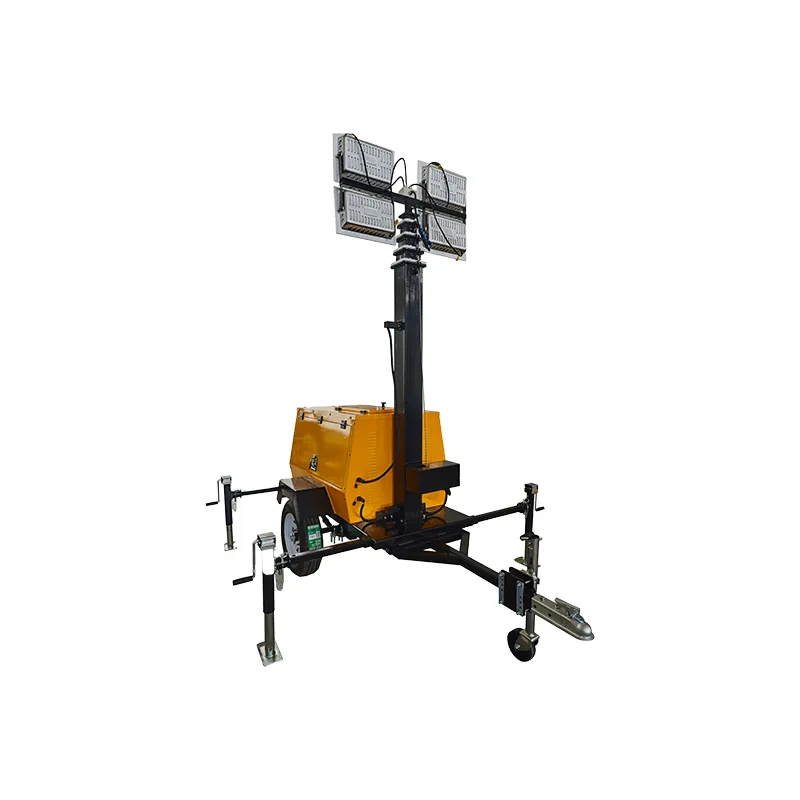
Favor a closer look at an electric mast drive when setup windows are short, the mast must be raised or lowered often, and reducing physical cranking effort is a project requirement. Confirm how the offered unit powers the mast drive and what happens if that power path is unavailable.
| Condition | Why it matters | Document to request |
|---|---|---|
| Frequent raise/lower cycles | Labor time accumulates quickly | Mast operating procedure |
| Limited cranking labor | Manual raise may not be practical | Operator staffing assumptions |
| Power path for mast drive | Electric raise still needs its defined energy source | Mast-drive power and protection notes |
| Service access | Motors, controls, and limit devices need a plan | Service and spare-parts list |
Part 5. Which labor, safety, and service questions belong on the scorecard?
OSHA vehicle-inspection guidance supports correcting apparent defects before service. OSHA aerial-lift guidance reinforces solid support and work-zone awareness during mast movement.
Ask both options:
- How many trained people are required for a normal raise?
- Which locks, pins, or interlocks must be confirmed before and after movement?
- What visible defects stop the raise immediately?
- Which service tasks stay with the site team versus authorized service?
- How is an incomplete raise or failed hold escalated?
Part 6. Which RFQ inputs separate the two options?
Ask for expected raise/lower frequency, available labor, mast-drive power constraints, preferred drive family, service capability, and the operator manual for the offered configuration.
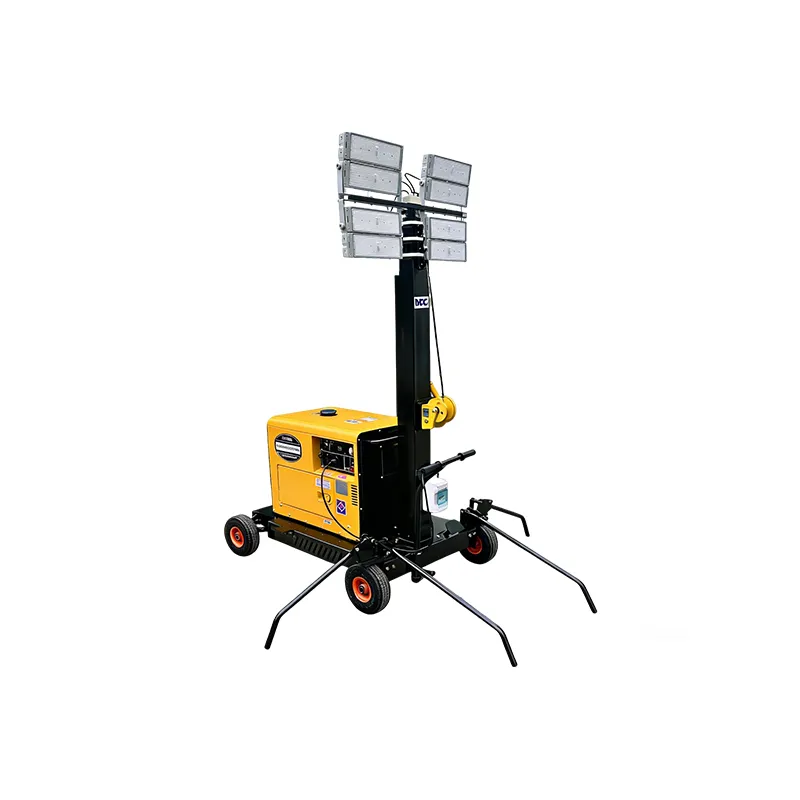
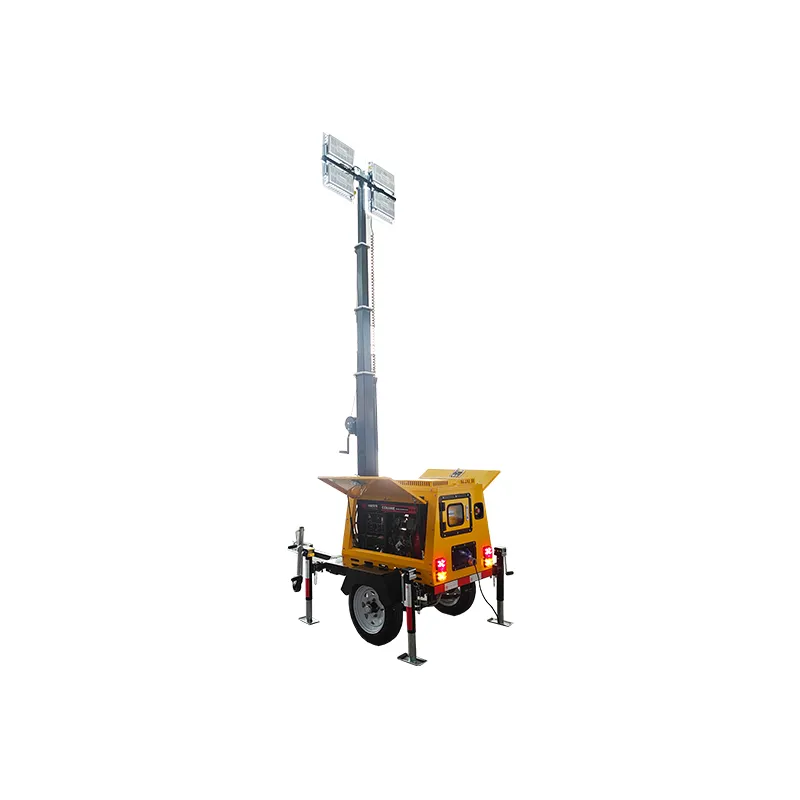
Product recommendation: review the listed trailer hand-cranked configuration and the listed trailer electric-pole configuration as document-start points when those constructions match the shortlist. Neither page proves raise time, crank force, or site approval. Browse the trailer-style mobile light tower range for related chassis options.
Fit Boundary
This comparison is suitable for choosing a mast-drive method. It is not suitable as a lighting power-source guide, a setup training manual, a wind calculator, or evidence of a Keyyou performance commitment. For a configuration discussion, send the mast-drive requirements.
Part 7. When is this comparison not enough?
Stop and request document review when raise frequency is unknown, labor is undefined, the mast-drive power path is unclear, manuals are missing, or the project still needs pneumatic-versus-hydraulic, transport, or setup decisions. A mast-drive shortlist is only the first selection cut.
Compare mast systems over the full service life
The purchase decision should include every raise and lower cycle, not only the first demonstration. Estimate how many times the tower will be deployed per shift and year, who performs the task, what power is available, how the unit is transported and which technicians can service the mechanism. A hand-crank system can be appropriate for occasional use and simple fleet support. Electric actuation can reduce repetitive effort where frequent deployment justifies the controls, wiring and backup procedure.
Ask each bidder to demonstrate raising, holding, lowering, transport locking and recovery after a power loss. The operator should not need to improvise with an external power source or bypass. Record pinch points, exclusion zones, inspection locations and the condition that prevents travel with the mast unsecured. Any claimed cycle time should identify the tested configuration, load, temperature and power condition.
Acceptance questions for either mast
- Does the delivered luminaire and cable load match the mast’s approved configuration?
- Can the mast be lowered safely after a battery, control or engine failure?
- Which wear parts, cables, fasteners, limit devices and locks require inspection?
- What defect criteria remove the mast from service?
- Which tasks may an operator perform, and which require a qualified technician?
- Are the manual, labels, parts list and training materials specific to the delivered revision?
Maintenance must control every energy source, including electrical power, stored mechanical energy and gravity. The NIOSH hazardous-energy guide recommends identifying energy sources across the machine lifecycle. Use the manufacturer’s current isolation and support procedures before adjustment or repair.
For fleet comparison, calculate delivered cost, setup labor, inspections, battery or winch components, repair access, parts lead time, downtime and residual value under the same annual cycle count. This prevents a low purchase price or fast showroom demonstration from hiding a poor lifecycle fit.
Questions to include in the quotation
Require the supplier to identify the exact mast, actuator, controls, cable system and luminaire load included in the quotation. Ask for the maximum permitted operating condition, transport lock arrangement, inspection frequency, spare-parts list, warranty exclusions and expected response time. If an electric actuator depends on the starting battery, clarify the minimum battery condition and recovery method. If a manual winch is proposed, clarify rated load, cable or strap inspection criteria and replacement procedure.
Keep the approved drawing, demonstration record, exceptions, training evidence and maintenance instructions with the machine. If a later repair changes the winch, motor, switch, limit device, cable or luminaire load, review the affected safety and performance assumptions before returning the tower to service.
During a site trial, include the least experienced authorized operator who is expected to use the tower. Observe reach, posture, visibility of controls and the effort needed to secure the mast for transport. Record any step that is easily misunderstood and require it to be addressed in labels or training.
FAQs
What is the difference between a hand-crank and an electric light tower mast?
A hand-crank mast is raised manually. An electric mast uses a powered drive for mast movement. Exact controls and limits come from the selected model manual.
When is a hand-crank mast still the better fit?
When raises are infrequent, labor is available, and the team prefers a simpler raise mechanism with a documented manual procedure.
Does choosing an electric mast mean the tower is grid-powered?
No. Mast drive and lighting power source are separate decisions. Confirm both in the RFQ.
Which option fits frequent nightly setup better?
Powered mast drives are usually reviewed first when raise/lower cycles are frequent and time-sensitive. Confirm the offered electric-mast package against that pattern.
How should this article be used with the hand-cranked tower guide?
Use this page to decide whether hand-crank remains on the shortlist, then use the hand-cranked guide for deeper single-system evaluation.
What should stop a mast-drive decision?
Stop when manuals are missing, labor or raise frequency is undefined, the mast power path is unclear, or defects remain open.
What belongs in an RFQ for this comparison?
Raise/lower frequency, labor plan, mast-drive power constraints, preferred drive family, service capability, and requested manuals.